
In 2025, hotels face more pressure than ever to keep guests satisfied while also running operations smoothly. That’s where digital signage in hotels comes in. It’s no longer just a fancy screen; it’s a powerful tool that changes how hotels share information, welcome guests, and even increase revenue.
Digital Signage in Hotels refers to the use of electronic displays, such as large screens, monitors, or interactive kiosks, to dynamically communicate information and media to guests and staff.
Picture this: you walk into a hotel lobby & instead of dusty brochures and static posters, you’re greeted by vibrant digital screens showing personalized welcome messages, real-time weather updates, and exciting local attractions. This isn’t science fiction; this is the POWER of digital signage transforming the hospitality industry right before our eyes. Hotels worldwide are discovering that traditional paper signs can’t compete with the dynamic, engaging experience that digital displays offer.
This guide is designed for hotel managers, property owners, hospitality leaders, and tech decision-makers who aim to elevate digital communication to the next level. Today’s digital signage in hotels goes way beyond basic room directories. It creates real experiences, helping guests feel more connected while making staff jobs easier.
In the pages ahead, we’ll look at why digital signage has become a must-have for modern hotels. We’ll cover smart placement strategies that get the most out of your screens, the key features every system should have in 2025, and the best ways to roll out a solution that works without headaches.
Why Digital Signage in Hotels is Essential for Modern Hotels
Enhanced Guest Experience and Satisfaction
Digital signage in hotels transforms how guests interact with their environment from the moment they step through the entrance. Modern travelers expect seamless, technology-driven experiences that match their daily digital interactions. Hotel Digital signage delivers real-time information about amenities, events, and local attractions while reducing the friction often associated with traditional hospitality communication methods.
Interactive displays in hotel lobbies enable guests to explore dining options, spa services, and nearby attractions without needing staff assistance. This self-service approach appeals particularly to millennials and Gen Z travelers who prefer independent exploration of available services. The visual appeal of dynamic content creates memorable first impressions that influence guest satisfaction scores and online reviews.
Room-specific digital displays provide personalized welcome messages, local weather updates, and customized recommendations based on guest preferences. This level of personalization creates emotional connections that extend beyond basic accommodation services, leading to increased guest loyalty and repeat bookings.
Streamlined Communication and Information Delivery
Digital signage in hotels eliminates the inefficiencies of printed materials and verbal communication chains. Real-time updates about restaurant hours, pool closures, or special events reach guests instantly, without requiring staff intervention or the distribution of printed notices. This immediate communication capability proves invaluable in unexpected situations such as weather alerts or facility maintenance.
Multilingual content display accommodates international guests without language barriers. Digital systems can automatically rotate between languages or allow guests to select their preferred language via touchscreen interfaces. This inclusive approach reduces misunderstandings and creates welcoming environments for diverse guest populations.
Emergency communication becomes more effective with strategically placed digital displays that can broadcast critical information instantly across all hotel areas. During evacuations or safety incidents, clear visual instructions complement audio announcements to guide guests efficiently.
Competitive Advantage in the Hospitality Market
Hotels implementing comprehensive digital signage solutions differentiate themselves in increasingly crowded markets. Properties with modern technology infrastructure appeal to tech-savvy business travelers and leisure guests who associate digital innovation with superior service quality. This technological edge often translates into higher average daily rates and occupancy levels.
The visual sophistication of digital signage in hotels creates Instagram-worthy moments that generate organic social media marketing. Guests frequently photograph and share striking digital displays, extending the hotel’s marketing reach without additional advertising costs. This user-generated content provides authentic testimonials that influence potential guests’ booking decisions.
Revenue optimization opportunities multiply through the strategic placement of digital signage in hotels. Displays can promote premium services, upsell room categories, or highlight partner businesses, such as local restaurants and tour operators. The dynamic nature of digital content allows hotels to adjust messaging based on occupancy levels, seasonal demands, or special events, maximizing revenue potential across all operational periods.
Key Benefits of Digital Signage in Hotels
Reduced Staff Workload and Operational Costs
Digital signage in hotels transforms daily operations by automating routine information-sharing tasks that typically consume valuable staff time. Front desk personnel no longer need to repeatedly answer basic questions about hotel amenities, restaurant hours, or local attractions, as this information is displayed prominently throughout the property. The technology handles check-in procedures, wayfinding assistance, and service requests automatically, allowing staff to focus on personalized guest interactions and complex problem-solving.
The cost savings become apparent quickly as hotels reduce printing expenses for traditional signage, menus, and promotional materials. Updates to room rates, special offers, or event schedules are instantly reflected across all displays, without requiring new printed materials or manual replacements. Maintenance costs decrease significantly compared to static signage that requires frequent physical updates and eventual replacement due to wear and tear.
Staff productivity increases when employees can manage multiple displays remotely from a central system rather than walking throughout the property to update individual signs. This streamlined approach reduces labor hours while ensuring consistent messaging across all hotel touchpoints.
Increased Revenue Through Targeted Promotions
Digital signage in hotels creates new revenue opportunities through strategic promotional content that reaches guests at optimal moments. Restaurants can showcase daily specials and happy-hour promotions as guests pass through lobby areas during peak dining times. Spa services, room upgrades, and local tour packages gain visibility through eye-catching displays positioned in high-traffic areas.
The technology enables dynamic pricing strategies, automatically updating room rates and package deals based on occupancy levels, seasonal demand, or special events in the area. Cross-selling becomes more effective when displays highlight complementary services like airport transfers for guests checking out or breakfast packages for late arrivals.
Location-based targeting maximizes promotional impact by displaying relevant offers based on where guests encounter the signage. Pool area displays promote poolside dining and beverage service, while elevator screens highlight in-room dining options and entertainment packages. This strategic approach generates measurable increases in ancillary revenue streams.
Real-Time Updates and Dynamic Content Management
Modern digital signage in hotels operates through cloud-based management systems that enable instant content updates across entire properties or hotel chains. Weather conditions, local events, transportation updates, and emergency information can be broadcast immediately to all displays, keeping guests informed and safe.
Content scheduling allows hotels to automatically adjust messaging throughout the day, displaying breakfast promotions in the morning, local attraction information during midday hours, and restaurant specials in the evening. This automated approach ensures relevant information reaches guests at the most appropriate times without manual intervention.
Integration with hotel management systems enables real-time synchronization of room availability, rates, and service offerings. When the spa books to capacity, the displays automatically remove spa promotions and highlight alternative amenities. This dynamic approach prevents guest disappointment while maximizing revenue from available services.
Improved Brand Image and Professional Appearance
Digital signage in hotels elevates aesthetics by replacing outdated poster boards and paper signs with sleek, professional displays that align with modern guest expectations. High-resolution screens showcase property amenities, local attractions, and brand messaging with visual impact that static signage cannot match.
Consistent branding across all digital touchpoints reinforces hotel identity and creates memorable guest experiences. Custom templates ensure all content maintains brand colors, fonts, and messaging standards while allowing flexibility for location-specific information and promotions.
The technology demonstrates innovation and attention to detail that today’s travelers expect from quality accommodations. Hotels that embrace digital signage in hotels position themselves as forward-thinking establishments that prioritize guest experience and operational efficiency. This technological sophistication influences booking decisions and enhances online reviews, contributing to long-term reputation-building and a competitive advantage in the hospitality market.
Strategic Placement Areas for Maximum Impact
Lobby and Reception Areas for Welcome Messages
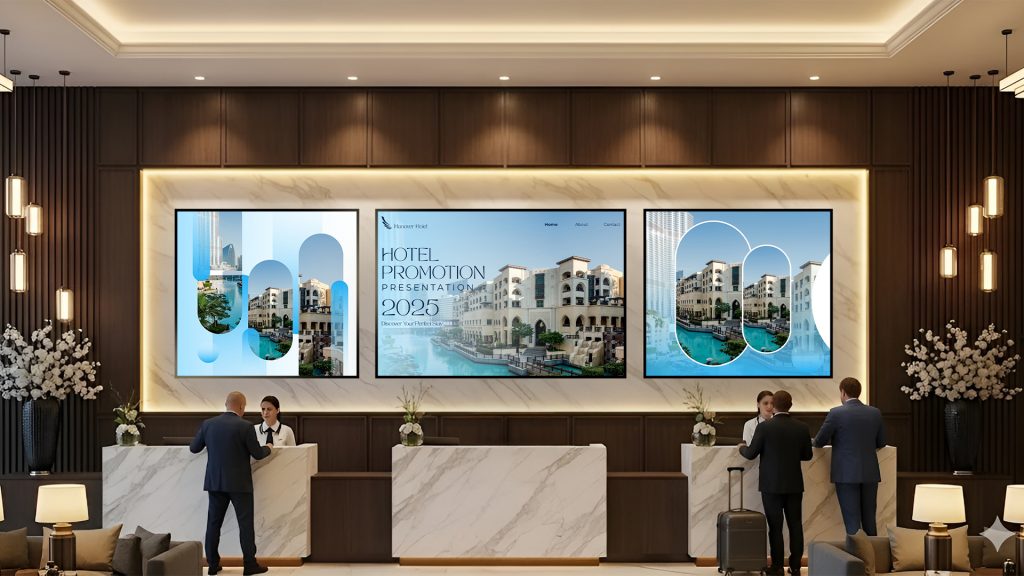
The lobby serves as the first-impression gateway, where digital signage in hotels creates an immediate impact. Large-format displays positioned behind reception desks showcase welcome messages, local weather updates, and hotel amenities in multiple languages. These screens work particularly well for displaying current promotions, spa packages, or restaurant specials to catch guests’ attention during check-in.
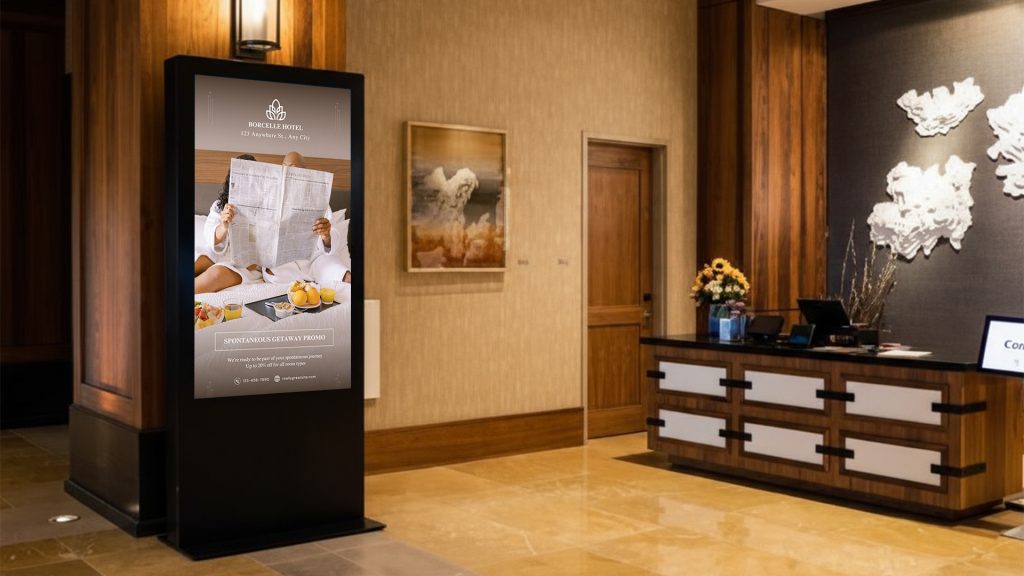
Strategic positioning includes wall-mounted displays visible from entrance points and freestanding kiosks near seating areas. Interactive touchscreens allow guests to explore hotel services, make restaurant reservations, or access information about local attractions independently. The lobby’s digital signage should feature elegant design elements that complement the hotel’s aesthetic while providing practical information about wifi passwords, breakfast hours, and concierge services.
Elevators and Corridors for Wayfinding and Promotions
Elevator interiors offer captive-audience opportunities, where hotel digital signage delivers targeted content during short rides. Vertical displays show floor directories, event schedules, and promotional content that guests can absorb during their brief journey. Content rotation keeps information fresh for repeat visitors while ensuring maximum exposure for hotel amenities.
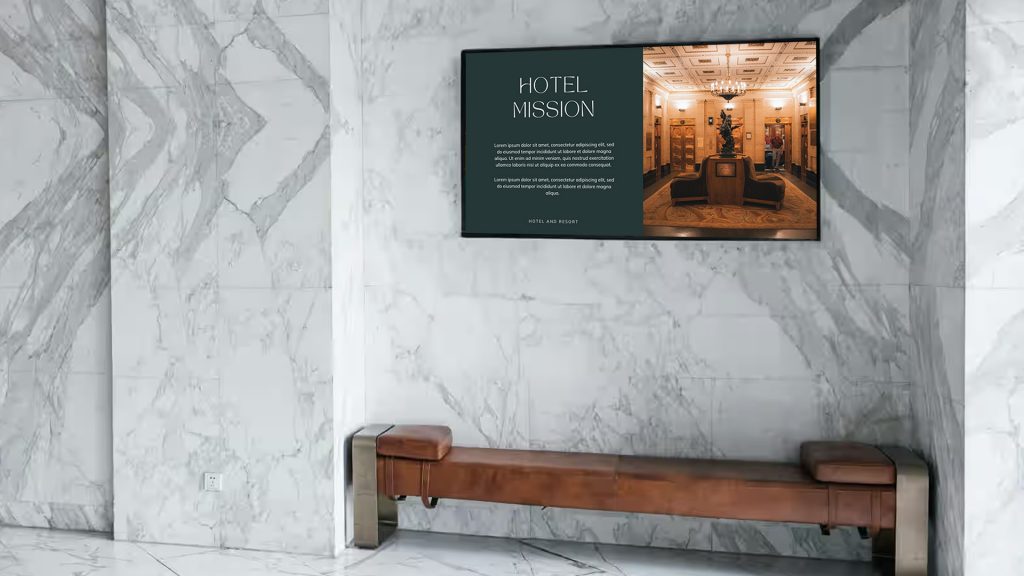
Corridor placements guide guests efficiently through the property using directional arrows, room-number indicators, and emergency-exit information. Digital displays replace traditional static signage with dynamic wayfinding solutions that can be updated instantly. These installations are especially valuable on larger properties where guests might struggle with navigation, thereby reducing calls to reception and improving overall satisfaction.
Restaurant and Bar Spaces for Menu Displays
Restaurant environments benefit enormously from dynamic menu boards that update pricing and availability in real-time. Digital signage in hotels eliminates printing costs while enabling instant updates to daily specials, wine selections, and sold-out items. Large displays positioned above bars showcase cocktail menus, happy hour promotions, and food pairings that encourage additional purchases.
Tablet-style displays at individual tables enable guests to browse full menus, place orders, or request service without waiting for staff to attend to them. Digital wine lists with detailed descriptions and pairing suggestions enhance the dining experience while potentially increasing average check values. The flexibility to switch between breakfast, lunch, and dinner menus automatically keeps content relevant throughout operating hours.
Conference Rooms and Event Spaces for Corporate Guests
Corporate venues require sophisticated digital signage solutions that cater to business travelers and event planners. Room entrance displays show meeting schedules, attendee names, and event details to help guests quickly locate their designated spaces. Interactive directories outside conference areas list daily agendas, speaker information, and networking opportunities.
Interior meeting room displays serve multiple functions, including presentation support, agenda tracking, and break notifications. These systems integrate with hotel booking software to automatically update room assignments and eliminate scheduling conflicts. For larger events, digital signage in hotels coordinates between multiple spaces, showing overflow room locations and real-time capacity updates that keep events running smoothly.
Pool and Spa Areas for Relaxation Content
Leisure spaces in hotels benefit from digital signage that enhances the relaxation experience rather than overwhelming guests with information. Pool area displays show weather forecasts, UV indexes, and poolside service menus without disrupting the peaceful atmosphere. Waterproof installations withstand humid environments while displaying swimming pool hours, safety regulations, and towel service information.
Spa reception areas use calming digital displays to showcase treatment menus, therapist availability, and wellness packages. These screens create ambiance through nature imagery or abstract visuals while providing practical information about booking procedures and cancellation policies. The content strategy focuses on maintaining tranquil environments while subtly promoting additional services that complement the wellness experience.
Essential Features to Look for in 2025
Mobile Integration and Guest Interaction Capabilities
Mobile integration transforms static digital signage into interactive guest service platforms. QR code integration allows guests to access detailed information, make reservations, or connect directly with hotel services from their smartphones. This seamless connection between digital displays and personal devices creates a personalized experience that extends beyond the physical screen.
Interactive touch capabilities enable guests to access maps, browse restaurant menus, check event schedules, and receive personalized recommendations. Digital signage in hotels serves as a comprehensive concierge service, reducing front-desk inquiries while providing 24/7 assistance. Guests can access multilingual content, which accommodates international visitors and improves overall satisfaction.
Social media integration allows hotels to display user-generated content, encouraging guests to share their experiences while creating authentic promotional material. Real-time social feeds showcase positive reviews and guest photos, building trust with prospective visitors and enhancing the property’s reputation.
AI-Powered Personalization and Analytics
Artificial intelligence revolutionizes Digital signage in hotels by delivering personalized content based on guest demographics, preferences, and behavior patterns. Advanced systems can recognize returning guests and display customized welcome messages, preferred language options, and tailored recommendations for dining, spa services, or local attractions.
Predictive analytics help hotels optimize content timing and placement. The system learns when guests are most likely to engage with promotional offers and adjusts display schedules accordingly. Restaurant promotions appear during peak times for dining consideration, while spa services might be featured during traditional relaxation periods.
Comprehensive analytics provide insights into content performance, guest engagement patterns, and ROI measurement. Hotels can track which messages generate the most interaction, identify peak engagement times, and measure the effectiveness of promotional campaigns. This data-driven approach enables continuous optimization of digital signage strategies.
The integration of occupancy sensors and demographic recognition technology enables dynamic content adjustments based on real-time foot traffic and audience composition. Business-focused content appears on weekday mornings, while leisure activities are promoted on weekends, ensuring maximum relevance and engagement for each guest segment.
Implementation Best Practices and Setup Process
Content Strategy Development and Planning
Developing a content strategy for Digital signage in hotels requires careful planning to align with guest expectations and operational goals. The foundation starts with defining clear objectives for each display location, whether that’s improving guest experience, driving revenue, or enhancing operational efficiency.
Guest journey mapping becomes essential when planning digital signage content. Consider touchpoints from arrival through departure and identify where digital displays can provide maximum value. Welcome messages, wayfinding information, local attractions, and real-time updates about hotel services should all be strategically timed and placed.
Content categorization helps maintain organization and relevance. Create distinct content buckets: promotional materials for hotel amenities, local area information, emergency notifications, and branded entertainment. Each category requires different update frequencies and approval processes.
Brand consistency across all hotel digital signage ensures a cohesive guest experience. Establish visual guidelines, including color schemes, fonts, logo placement, and messaging tone, that reflect the hotel’s personality and market positioning.
Dynamic content scheduling allows for automated updates based on time of day, season, or special events. Breakfast promotions should appear during morning hours, while spa services might be highlighted during afternoon periods when guests are more likely to book relaxation treatments.
Hardware Selection and Installation Guidelines
Selecting appropriate hardware for Digital signage in hotels requires balancing durability, functionality, and aesthetic appeal. Commercial-grade displays designed for continuous operation should be prioritized over consumer models, as they’re built to handle 24/7 usage common in hospitality environments.
Screen size considerations vary by location and viewing distance. Lobby displays benefit from larger screens (55-75 inches) to capture attention across spacious areas, while elevator screens can effectively operate with smaller 32-43-inch displays. Resolution should be at least 4K to ensure a crisp, professional appearance that reflects hotel quality standards.
Environmental factors significantly impact hardware selection. Areas with high humidity, such as pool decks, require weatherproof enclosures, while locations near kitchens need displays that can withstand temperature fluctuations. Brightness levels should accommodate ambient lighting conditions – lobby displays need higher brightness to compete with natural light streaming through windows.
Installation planning involves coordination with existing infrastructure. Power requirements, network connectivity, and mounting considerations should be evaluated during site surveys. Professional installation ensures proper cable management, secure mounting, and optimal viewing angles that don’t create neck strain for guests.
Content management system compatibility must align with the chosen hardware. Some displays include built-in media players, while others require external devices. Cloud-based systems offer remote management capabilities, allowing staff to update content across multiple locations from a central dashboard.
Staff Training and Ongoing Maintenance Requirements
Staff training programs should cover both technical operation and content management aspects of digital signage in hotels. Front desk personnel need to understand how to update basic information, such as event schedules or dining hours, while maintenance staff need to know how to troubleshoot common hardware issues.
Role-based access control ensures appropriate staff members can modify relevant content without compromising system security. Marketing teams might have full creative control, while operational staff focus on schedule updates and emergency messaging capabilities.
Content approval workflows prevent inappropriate or outdated information from appearing on displays. Establish clear protocols for which content can be published immediately and which materials require management review. Emergency messaging procedures should allow authorized personnel to override regular content during critical situations.
Regular maintenance schedules keep hotel digital signage operating optimally. Daily checks should include verifying that all screens are functioning and displaying current content. Weekly tasks involve cleaning screens and checking for loose connections. Monthly reviews should assess content performance and system updates.
Technical support protocols help staff respond quickly to display malfunctions. Create troubleshooting guides covering common issues such as network connectivity problems and frozen screens. Establish vendor contact information for hardware repairs and software support to minimize downtime.
Documentation of all system components, login credentials, and maintenance histories serves as a valuable reference for staff transitions and troubleshooting.
Measuring Success and ROI Optimization
Analytics tracking provides measurable insights into the effectiveness of digital signage in hotels within hotel operations. Modern content management systems offer detailed reporting on content engagement, viewing duration, and interaction rates that help optimize messaging strategies.
Revenue attribution becomes possible when promotional content includes trackable elements like QR codes or specific booking references. Spa promotion campaigns can measure direct bookings generated through digital displays, while restaurant specials can track increased foot traffic during targeted time periods.
Guest feedback collection through surveys or comment cards should include questions about the usefulness and visibility of digital signage in hotels. This qualitative data complements quantitative analytics to provide a comprehensive understanding of performance.
Operational efficiency metrics demonstrate value beyond direct revenue generation. Reduced front desk inquiries about directions or amenities indicate successful wayfinding content. Decreased costs of printed materials demonstrate the environmental and financial benefits of digital communication methods.
A/B testing different content formats, messaging styles, and placement strategies helps identify optimal approaches for specific hotel demographics and locations. Test promotional versus informational content ratios to find the mix that best serves guest needs while supporting business objectives.
Regular ROI assessments should compare the investment costs of digital signage in hotels against measurable benefits, including increased revenue, reduced operational costs, and improved guest satisfaction scores. These evaluations inform future expansion decisions and budget allocations for digital signage in hotels.
Performance benchmarking against industry standards helps hotels understand their digital signage in hotels success relative to competitors and identify areas for improvement or investment.
Conclusion
Digital signage in hotels isn’t just a trend; it’s now a must-have. It makes stays smoother for guests, helps staff work smarter, and turns every corner of a hotel into a chance to connect and impress. From lobbies to dining areas, the right screens in the right spots can boost guest satisfaction and even grow revenue.
The secret to success is simple: pick quality displays, use easy tools for content, and choose a system that works well with what you already have. That’s exactly where Disploy comes in, helping hotels create seamless, eye-catching, and guest-friendly digital signage that delivers results. Hotels that take the step now will stand out. Those who delay risk falling behind. The choice is clear, the future of hospitality is digital, and Disploy makes it easier than ever to get there.