
What are Digital drive-thru menu boards?
They’re the bright, digital screens you see at fast-food places. They show menus, deals, and prices to people in their cars. They’re super useful because restaurants can change prices, items, and specials in real time. They can adjust things based on the time of day, what’s in stock, or even the weather. Basically, they turn a plain old menu into a money-making machine that encourages people to spend more and improves the overall experience.
For today’s fast-food spots, the drive-thru is where the money is. A lot of places still use those old-school menus that don’t do much to help sales. If you want a menu board that does more than just list prices, it’s time to go digital. It’s not just a fancy upgrade; it’s like adding a sales expert to your team. By showing the right stuff at the right time with great pictures, restaurants are changing how people order. Instead of just taking orders, they’re actively selling, which can increase sales by up to 30%.
Think about it: You’re at your favorite drive-thru, ready to order your usual. But this time, the menu is a bright, cool screen that seems to know what you want. It shows yummy pictures of today’s deals, specials that are perfect for the time of day, and other tempting items. This is what digital drive-thru menus do, and they’re changing how restaurants make their money.
In the food business, every customer matters. Missing just one sale can mess up your monthly goals. Those old static menus can cost restaurants a significant amount of money each month, and many owners are unaware of the expense. The fix is a digital drive-thru menu board that not only grabs attention but also guides customers toward buying the more expensive items.
This guide will examine how digital drive-thru menu boards are changing the fast-food industry. We’ll explore why good visuals matter, share stories of restaurants that increased revenue, and offer tips for setting up these systems. If you’re a restaurant owner fighting slow sales or a manager trying to get the most out of your drive-thru, you’ll see how digital menus can be your best sales tool.
The Hidden Costs of Static Menu Boards
Ever wonder if your old menus are costing you money? Most restaurant owners focus on food costs and staff, but they forget one of the big money losers: boring, old menus. Static menus cause problems that hurt your profits more than you think.
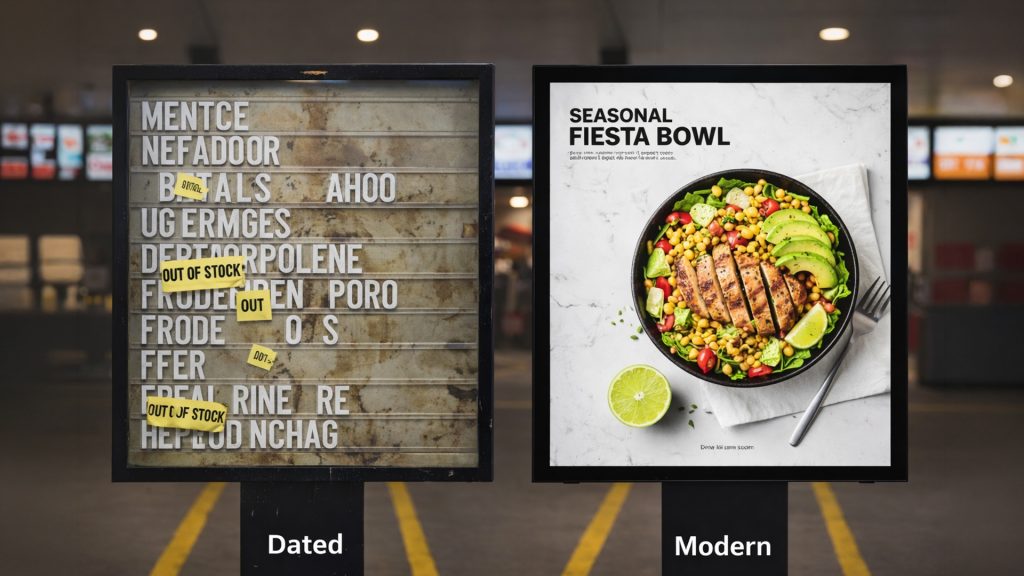
Think about how hard it is to change them. If you want to sell a new item, run a deal, or change a price, you have to replace the whole thing or change the letters. This can take a while, and you’re losing sales in the meantime. Imagine waiting three days to tell people about your awesome new burger because you’re waiting for the sign to arrive. During busy times, when tons of cars go through, every missed chance to upsell adds up fast.
Also, those old menus don’t look great. Faded colors, missing letters, and old pictures give a bad first impression, and people might just leave. Studies show that customers decide what to buy within seconds of seeing a menu. If your menu looks bad, they might go somewhere else. Plus, if people can’t see the menu well in different light, they take longer to order, get annoyed, and slow down the line when it’s busy.
Static menus also make it hard to change prices or react to what’s in stock. If you run out of something popular, you can’t tell people about other options right away. This costs you money every day and stops you from making as much profit as you could.
Psychology of Visual Merchandising in Drive-Thrus
To sell more at drive-thrus, it helps to know what makes customers tick. Digital menus use tricks that affect what people buy. The brain understands pictures way faster than words, so great pictures on digital screens can quickly show value and make people want things in a way that words just can’t.
Colors matter a lot in food marketing. Digital menus let you use bright reds and oranges to make people hungry, warm yellows to make them feel happy and comfortable, and contrast to draw attention to the items that make you the most money. You can change these colors during the day to fit the mood. In the morning, use bright colors for commuters. In the evening, use warmer colors for families.
Movement and animation are great for grabbing attention and guiding people. Little things, like steam from coffee or melting cheese, can make food look more appealing and fresh. You can’t do this with static menus, so digital menus have a big edge.
You can put the high-profit items where people will see them, use bigger pictures for the stuff you want to push, and guide customers to make the best choices. You can also use limited-time messages to create a sense of urgency.
You can even show customer favorites or most popular badges that change based on what people are buying. This makes people want to try what everyone else is getting, which can lead to more sales for you.
Real-World Success Stories & Revenue Impact
Digital drive-thru menu boards can really change things. McDonald’s, which started using digital menus early, said sales rose 4-6% at locations that switched from static menus. Since McDonald’s makes millions each year, even a 4% increase is a lot of extra money.
Taco Bell also saw great gains with digital menus. Their Fourth Meal campaign used digital menus to promote late-night items with messages and pictures that were right on target. This helped them increase late-night sales by 13% in six months. Being able to change the menu based on the time of day lets them make more money during previously slow hours.
A burger chain in Texas saw amazing results after putting digital menus in its five locations. In eight months, the average customer spent 23% more and purchased 31% more add-on items. They used animations to show off combo meal upgrades and limited-time offers. People who used to just order a burger were now getting fries, drinks, and desserts too.
A pizza chain, Papa Murphy’s, found that digital menus made it much easier to sell seasonal items and limited-time offers. Their Pizza of the Month campaigns, which featured compelling photos and descriptions on digital screens, sold 40% more than the same deals advertised on static menus. The yummy look of melted cheese and colorful veggies made people want to buy more.
These stories have a few things in common: better visuals, greater flexibility in deals, and the ability to influence what people buy through smart content. You can usually recoup the cost of digital menus in about a year or two, making it one of the best improvements you can make to your restaurant.
Implementation Strategies for Maximum ROI
To get the most out of digital drive-thru menus, you need to plan carefully. Think of it as setting up a whole system, not just replacing signs. Your plan should focus on what to show, when to show it, and how to improve the customer experience.
Start by reviewing your sales numbers to see where you can improve. Which items make you the most profit but don’t sell as well? When are sales the slowest? Knowing this will help you create content that targets those areas. Make a calendar that rotates deals, seasonal items, and upsell chances based on past sales and what you have in stock.
It’s important to train your staff. They need to know how the system works and how to use it to sell more. Train managers on how to schedule content, change prices, and run deals. Front-line workers should know how digital menus help them upsell and how to answer questions about the items on display.
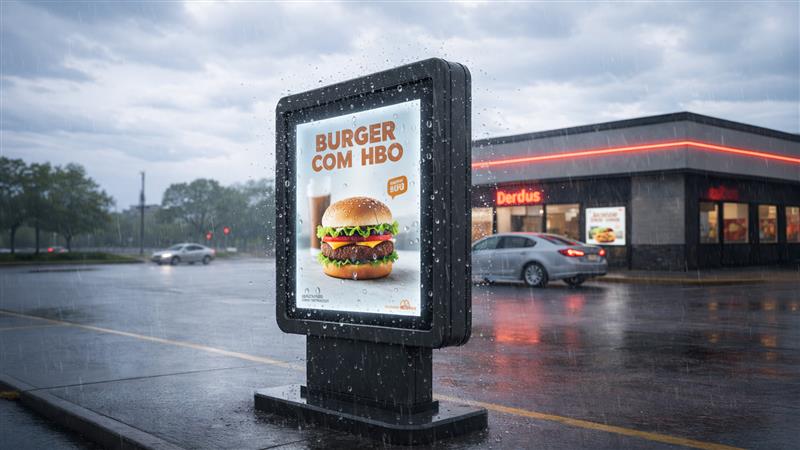
For the tech stuff, make sure you pick the right screen size, resolution, and brightness so people can see it in all weather. The menus should be easy to read from a distance, even in bright sunlight or at night. Think about weather protection, power, and internet so they work reliably.
Set up a content plan before you install the menus. Create templates for different deals, seasonal campaigns, and daily specials. Invest in great photos that make your food look amazing. Set up a system for quickly changing prices, adding items, and scheduling content without needing someone with tech skills.
Measuring Success & Optimizing Performance
To know if your digital drive-thru menus are working, you need to track the right things. Making more money is the main goal, but other things can help you get there.
The average amount each customer spends is important. Digital menus should increase this number by prompting people to add items, upgrade sizes, or choose better options. Track this each week and compare different deals to see what works best.
How well you’re upselling tells you how much your content is affecting customers. See how many people are adding desserts, drinks, or sides to their orders. Compare these numbers before and after implementing digital menus, and try different visuals to see what works best. Some restaurants see their upsell rates improve significantly with good digital menu design.
Order accuracy and speed are also worth considering. Clear menus can reduce confusion and help workers take orders faster. Track how long orders take and how many complaints you get to make sure your new system is improving things, not just selling more.
Customer feedback can tell you a lot about your digital menus. Ask people what they think or look at online reviews. If they say the menu is clear, looks good, and makes them aware of deals, then you know it’s working.
Try out different content and see what works best. Try different messages, pictures, or layouts and see how they affect sales. This will help you make sure your digital menus keep making you money over time, even as things change.
Digital drive-thru menus are among the best ways to increase revenue in the restaurant business today. Places that switch from static to digital menus see big improvements in sales, customer satisfaction, and overall performance. McDonald’s saw sales rise 4-6%, and other chains saw increases of 30% or more.
Customers respond to high-quality images, dynamic content, and smart messages, which lead to larger orders and higher profits. Digital menus let you use these tricks while still changing your marketing based on what you have in stock, the weather, and your goals.
Setting things up doesn’t have to be hard. Focus on understanding your sales, investing in good content, training your team, and tracking the right numbers. Remember, digital menus are a sales and marketing system that needs attention to work its best.
It’s not a question of whether digital drive-thru menus can make you more money; they can. The real question is whether you can afford to keep losing sales to old menus while your competitors get ahead with better experiences. Every day you wait is another day of missed chances, lost upsells, and less competitiveness.
Start today by assessing how your digital drive-thru menu is performing, reviewing different menu options, and making a plan. Your customers want a better experience, your workers will appreciate better tools, and your profits will show the difference. Restaurants that use digital drive-thru menus will be the ones that succeed in the future.
Conclusion
Digital drive-thru menus represent the most effective strategy for boosting sales at quick-service restaurants (QSRs) today. The evidence is clear: transitioning from static to digital menus demonstrably increases sales, enhances customer satisfaction, and improves operational efficiency. Industry giants like McDonald’s have reported sales growth, with other chains posting even greater gains.
The underlying principle is simple: compelling visuals drive food sales. Customers are naturally drawn to high-quality images and engaging, dynamic content, which directly results in larger average orders and higher profits. Digital menus enable you to leverage these visual selling techniques instantly. Furthermore, they provide the flexibility to tailor your marketing in real-time based on inventory levels, weather conditions, and specific business objectives. Investing in this technology is a near-certain path to increased revenue.
Delaying this upgrade means missing crucial upsell opportunities, sacrificing potential revenue, and falling behind competitors. Don’t let outdated menu boards restrict your growth. It’s time to activate your digital sales engine.
Take the decisive step today: Join the ranks of QSR industry leaders who are already realizing sales increases of up to 30%. Request a free trial of the Disploy digital menu board and immediately experience the powerful effect of superior visual merchandising on your drive-thru performance and overall profitability. Act now to evaluate, optimize, and realize the future of outdoor signage.