Digital signage is no longer static noise but a potent and dynamic tool for understanding consumer behaviour and generating critical metrics such as conversion and impulse buying in the retail and hospitality sectors. This article, using actual-life evidence, has shown the reason why digital signage has become an invaluable marketing tool.
Its touch is felt throughout the buyer process:
- Awareness & Attention: The vivid moving visuals are more attention-grabbing than plain painted posters, springing out in visual noise.
- Consideration & Engagement: Instantaneous and involving content, and customized messaging provides timely contextually relevant information to inform buying.
- Conversion & Impulse Purchases: Final sales are triggered by strategic placement and impressive looking, leading to high margin impulse purchases.
A combination of Digital Signage will provide a smooth, quantifiable channel of communication that has a direct relation with better sales and business results.
The Digital Signage 101: It is not a Fancy Poster.
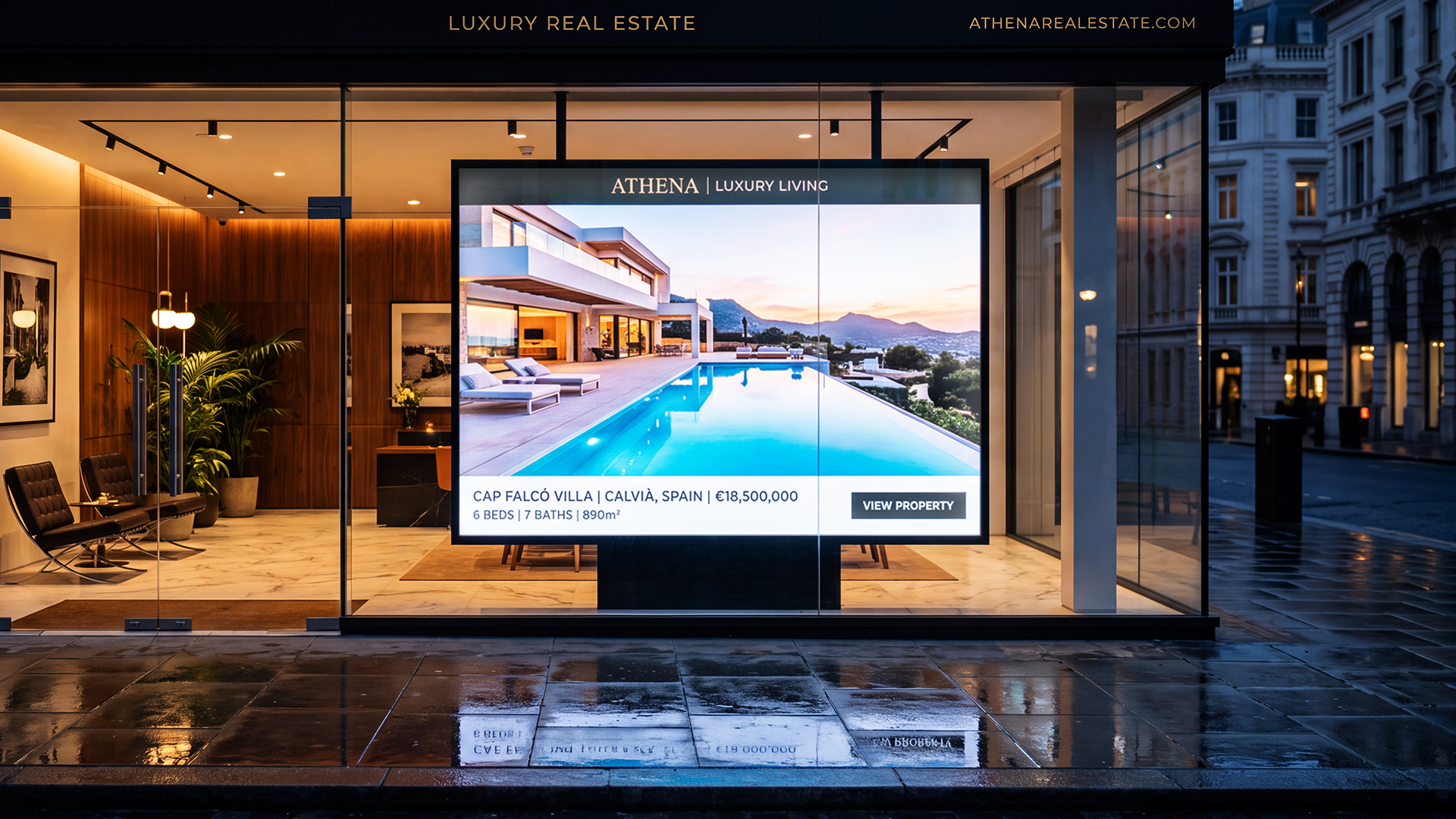
Any form of electronic signage, from a small shelf-edge display to a massive video wall, used to deliver dynamic content, videos, animations, real-time feeds, or an interactive widget, is referred to as digital signage. It is a modern, eye-catching communication tool to a particular population in various physical locations, unlike the unalterable printed posters, malleable high-impact graphics. The technology has turned out to be fundamental to the modern retail sector, corporate communication sector, public information sector, and transportation sector.
The Relevance of Digital Signage in the Current
Digital signage has become more than a new technology for physical businesses and is now a significant part of the infrastructure. Its relevance is fixed by some factors:
Market Ubiquity and Growth
The market of digital signage is expanding at a high pace, indicating its effectiveness. Another analysis by Grand View Research also projects that the world installations will be 21 million units by the year 2026. This expansion is instigated by the reduced cost of hardware and the increase in the ease of content management that is affordable to businesses of all sizes.
There is no match to unchangeability and responsiveness
Among the strongest opportunities of digital signage can be included its flexibility. Its content is not fixed in the sense that it can be modified immediately or even updated in a few seconds by the use of a centralized Content Management System (CMS). This agility allows for:
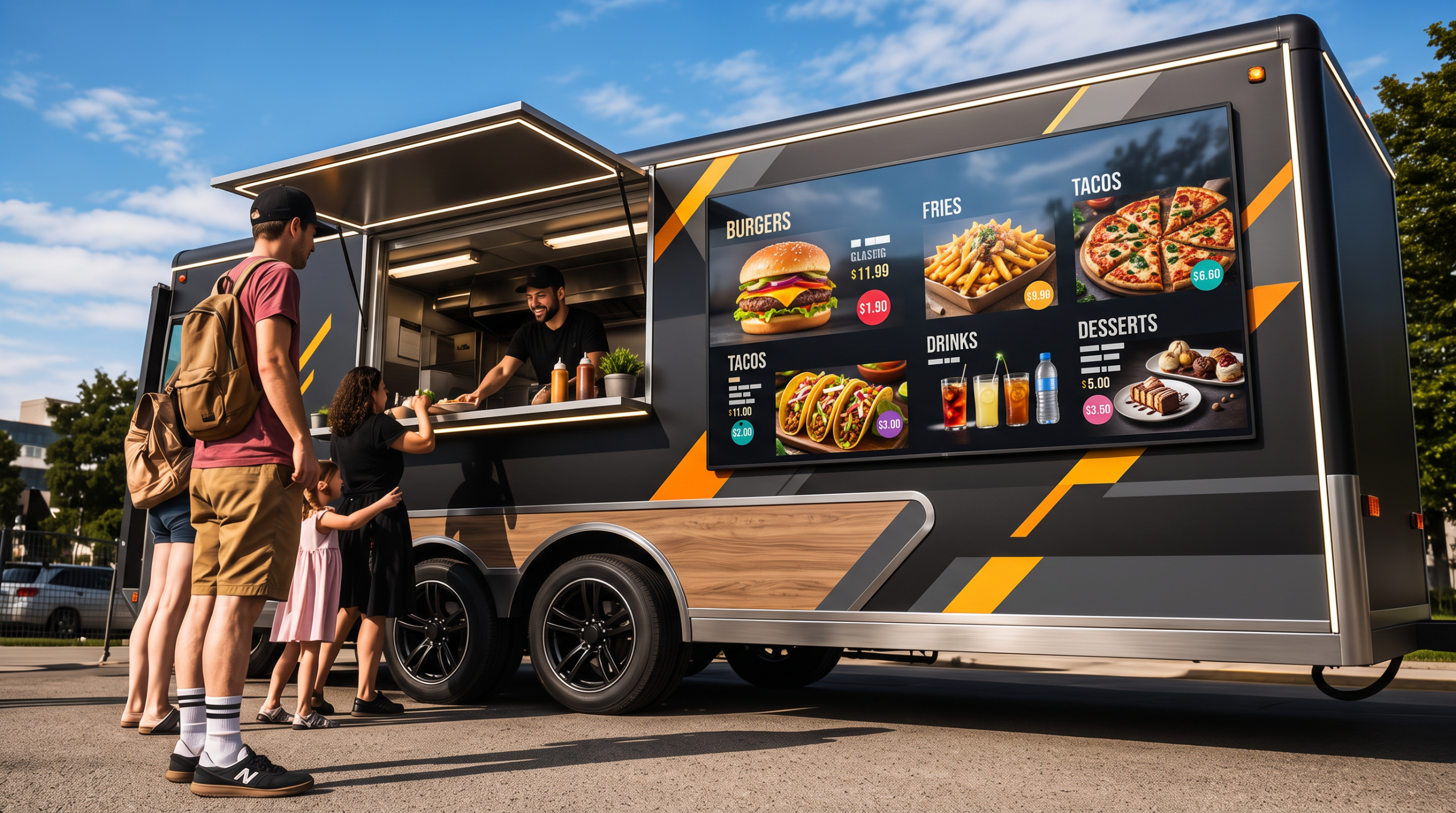
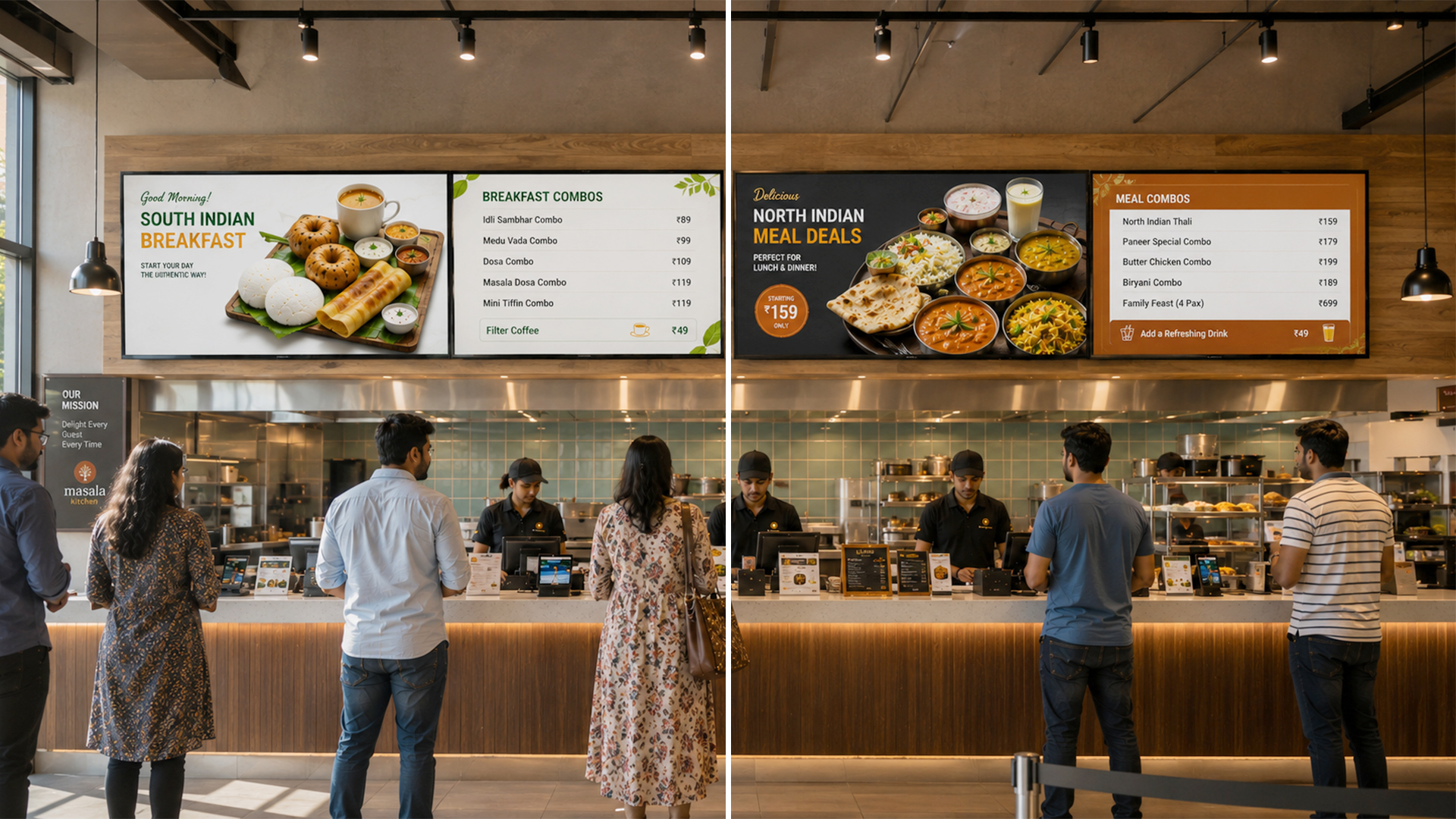
- Time-Sensitive Messages: Displaying breakfast food in the morning, switching to lunch deals at noon, and displaying happy hour at night.
- Inventory and Pricing Updates: This is when the existing inventory is reflected, or the prices are altered on-the-fly to maximize sales or to reduce losses.
- Contextual Relevance: Programmable activation of certain content based on literal variables, e.g., activation of advertising umbrellas in the rain or a cold drink when the ambient temperature goes up.
Mapping to Buyer Journey Screens
The customer journey conceptualization adopted by the marketers separates the customer journey into the marketing funnel that has been simplified into three main steps: Awareness, Consideration, and Decision (or Purchase).
Unlike fixed media or web-based advertisements, digital signage possesses a unique strength because it exists in the real world, and the location of ultimate purchase is often in that place. Thus, it is a very potent tool of behavior.
Catching Eyes in a Split Second and Building the Hook
The former is about the step of halting the stream of the shopper and getting the brand or the product into their head. Digital signage is appropriate in this situation since it is dynamic.
Dynamic Visual Interruption: The graphic of high contrast and motion graphics intrinsically comes to the peripheral vision of an individual. A biologically-programmed human eye has a natural tendency to focus on movement, and therefore animated displays are far better at attracting attention than a plain poster, which leads to immediate subconscious recognition.

- Hyper-Local and Contextual Relevance: The digital signage under modernity is no longer passive. It uses location-based triggers and real-time data integration to come up with an extremely relevant message. One of the examples is that a weather API can be accessed to access and display hot coffee promotion and soup promotion instantly when the weather is colder, or umbrella promotion when it is determined that it is raining around. This situational presentation takes an ordinary advertisement to the positive and timely message.
- Ambient Branding: It is not being physically marketed, yet giant, high-resolution TV screens with brand videos or thought-provoking pictures are employed to instill a feeling of presence and familiarity long before one thinks of making a purchase.
Consideration: Making sense, selecting, and mediating the Phygital Gap.
If a prospective customer realizes that he/she enters the comparison stage, where he/she weighs and attempt to seek more information. Digital signage is an in-store consultant, which provides very significant data without compelling the user to use his/her phone or a sales representative only.
- Simplified Product Comparison: At end caps or even passively, the comparisons of features, prices, and benefits of products can be presented in side by side format. Such access to comparison information in real time could help the shopper to weigh his choices effectively and eliminate friction and the need to draw out a smartphone with the aim of conducting research (the latter is a strategy that might easily send them to the competitor site).
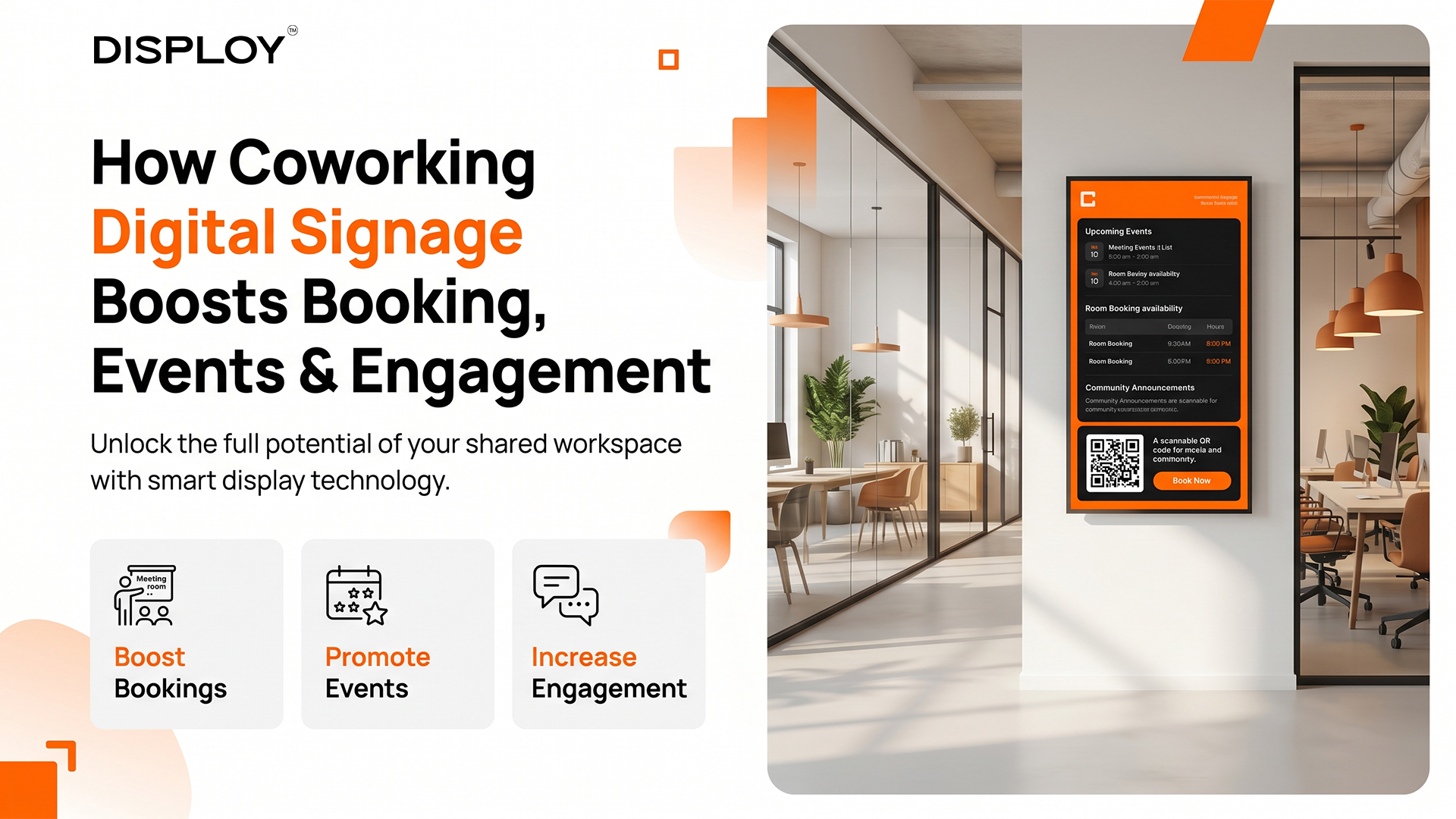
- The Phygital Bridge (Physical-Digital): The Digital screens mark the most opportune medium in overcoming the physical store and the unfiltered information of the online world. The sheer size of QR codes or NFC tags will enable the shopper to instantly access more product manuals, customer reviews, instructional video or even the inventory of other stores, which is exactly what the shopper wants to do with their research.
- Interactive Configurators: In complex purchases (cars, computers, custom-made furniture, etc.), huge touch-screen displays allow the shopper to assemble the object on the screen, with visual and price updates in real time, thereby being able to make the consideration more interactive and personal.
Decision: Nudge when Truth and Driving Conversion
The final stage is the one at which the distinction between a shopping session and purchase may be brought by the psychological nuances. The placement of digital signage will be most appropriate in influencing this moment of truth, particularly in point of purchase (POP) or point of sale (POS).
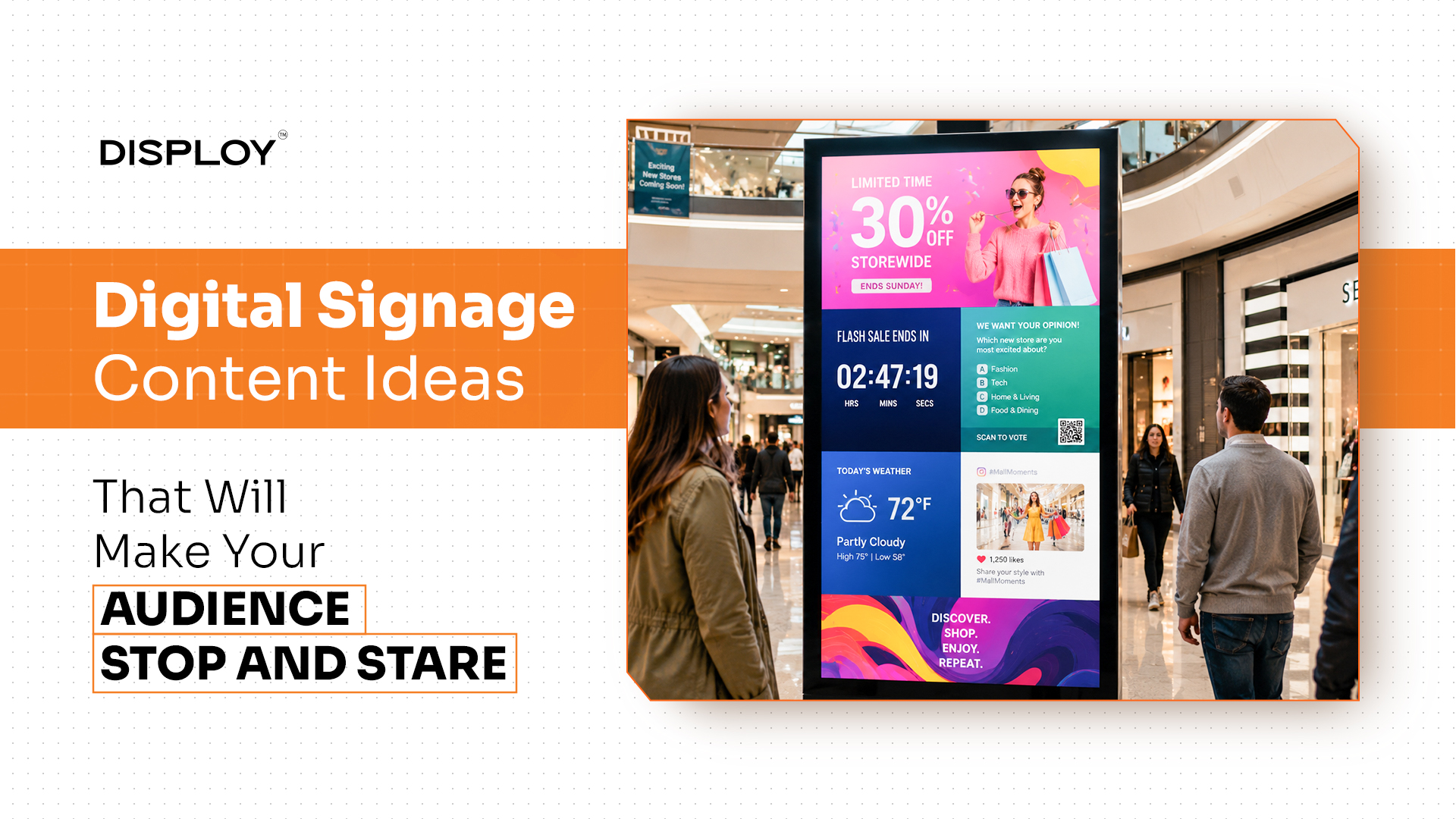
- Urgency: Psychologically Compelling: Urgency and scarcity are produced by a set of factors that act as psychological stimuli, such as limited time displayed on an electronic menu board or a monitor adjacent to the cash register. This will inspire one to act as opposed to procrastination.
- Value Perception (Price Anchoring): The best strategic pricing message is the display on the screen. A retailer can use price anchoring to show a high-priced product first (although this product will be shown afterwards). A further-on-shown middle-range product will seem to the customer a much better deal than the prior product itself.
- Cross-Selling, Up-Selling: At the cashier’s point, the dynamic screens will be capable of displaying any related add-ons or add-ons to purchase based on what the customer is purchasing (e.g., there will be batteries to a toy or a warranty to the electronics), and in that way, the total value of the commitment will be maximized at the last instance.
Gambling with Psychological Triggers
A good digital signage uses cognitive science to influence consumer behavior and boost sales, and not merely high resolution.3 Cognitive Triggers: The Digital Signage in Behavioral Influence.
Motion and Color Psychology
Visual design, encompassing movement and color, significantly influences purchasing decisions and desire.
Color as a Behavioral Cue:
Warm colors (reds, oranges, yellows) should be used in fast-service environments to encourage quick response times and increase add-on sales. This color palette generates a feeling of urgency and hunger (Deloitte, 2022). Conversely, cooler colors are more appropriate for environments intended for slower browsing.
The Power of Gentle Motion: Subtle motion can be an effective way to draw the eye when an aggressive advertising approach is not desired. It allows the advertiser to gently guide attention to the key point.
Finding Trust and Choosing Your Decision Correctly
Consumers are heavily influenced by social proof, which digital signage leverages to mitigate perceived risk and build trust.
How Digital Signage Builds Trust:
- Real-Time Validation: Displaying real-time sales counts confirms purchase decisions, creating a sense of urgency and validating the product’s popularity.
- Authentic Storytelling: User-Generated Content (UGC) is inherently more trustworthy and relatable than traditional corporate advertisements.
Scarcity & Urgency: Mobilization of Rapid Response
The primary psychological drivers are Fear of Missing Out (FOMO) and loss aversion.
Time-Based Offers and Loss Aversion:
Large countdown timers promote time-sensitive deals, reframing the situation to emphasize the potential loss of a saving rather than the cost of a purchase.
Scarcity and FOMO:
Signals indicating limited stock (e.g., “only 3 left”) generate a sense of scarcity, which in turn triggers a FOMO response.

Relevance and Content Customization on a One-to-One Basis
The goal of this technology is to achieve deep personal topicality for each viewer.
Dynamic Demographic Targeting: Systems utilize non-intrusive face-analysis software to estimate age and gender. This enables the dynamic tailoring of content, for example, showing an older person an espresso advertisement and a younger person a hot chocolate advertisement.
The Ethical and Privacy Debate: While personalized content is impactful, its implications must be considered from an ethical and privacy standpoint. This remains a significant, though constructive, debate. Sellers often assert that the information collected is anonymous. However, privacy advocates are calling for increased vigilance and tighter control over these systems. The core industry challenge is the delicate balance between maximizing personalization and ensuring user privacy.
Where Screens Make Choices: Screens Snapshots
Retail aisle online digital signage is an online selling application that is real-time and data-based. End-cap screens capitalize on POS data, e.g., optimized offers (e.g., BOGO offers) to sell through as many as possible, where it would otherwise have been unresponsive on fixed displays. Aisle screens provide contextual product learning (e.g., 15-second tutorials) and provide an alternate way of eliminating purchase friction, reportedly boosting average basket size by up to 20.
The use of digital menu boards by QSRs is effective and results in increased customer consumption. They produce high-margin products, on the spot, through the high-margin day parting and suggestive selling, which has been said to boost sales by 3-5 percent (McDonalds). The concept of AI is to leverage weather and previous data and create customized meal combinations to increase the average value of the order and do predictive selling.
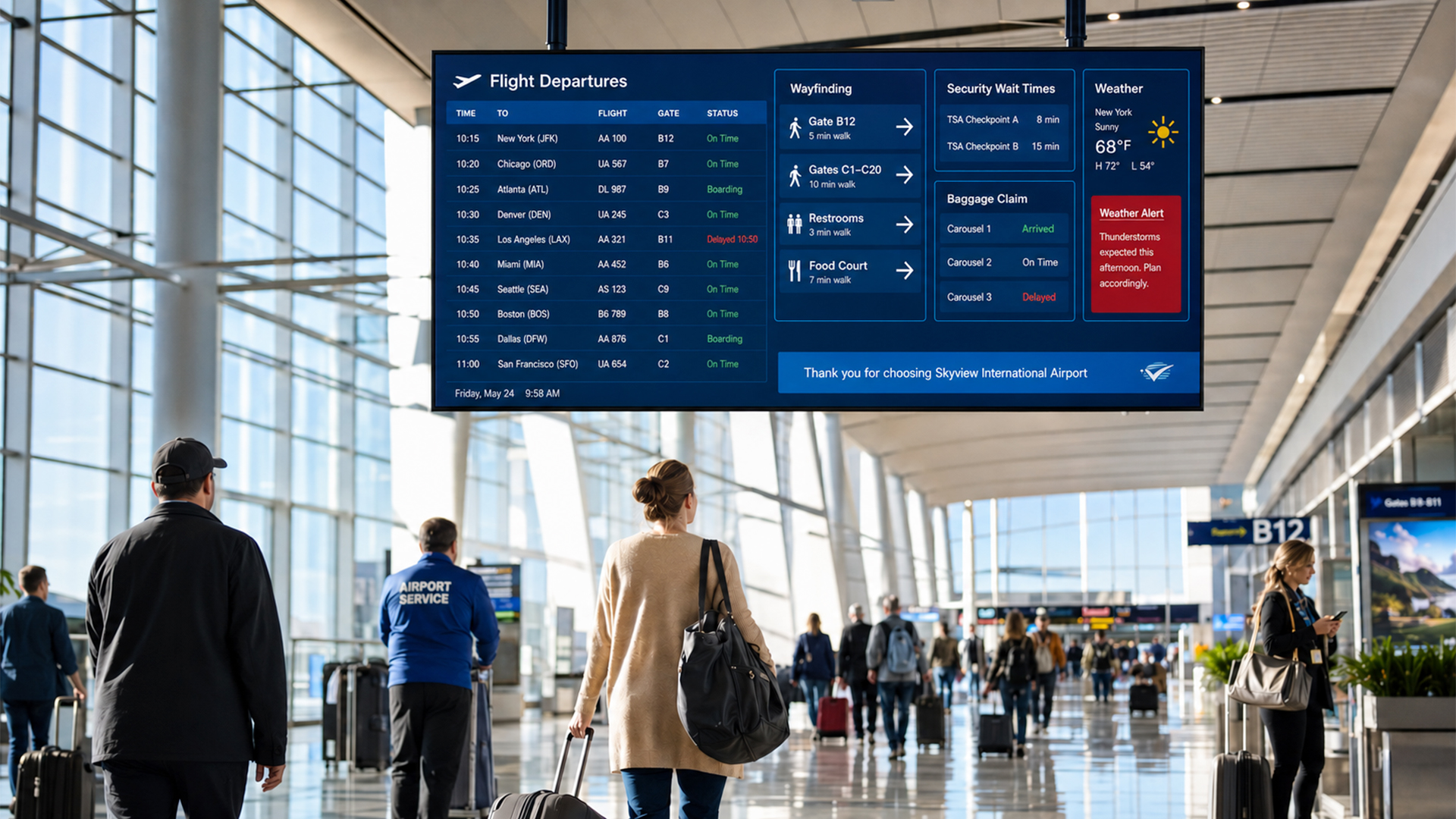
The digital signage is deployed at the airport and train stations so as to change the negative experiences and protracted dwelling time into positive conversions. The screens will be updated dynamically to service-related offers. In case of flight delays, the advertisements will give place to the lounge pass, and the irritation will be converted into high-margin money in real-time. Transit hubs are very lucrative with CPMs being as high as they offer a highly captive audience and guaranteed impressions, and, as a result, the Premium Digital Out-of-Home (DOOH) Networks are very profitable.
The interactive kiosk will bridge between online and physical store convenience to encourage impulse buying. It is one of the most effective examples of the use of persuasive technologies in the case of try-on mirrors, which apply Augmented Reality (AR overlays) to visualize the clothes without friction in changing rooms, so that people can buy a jacket after trying it on (in Seoul). This model is also used in personalized shoes, online make-up, and online product portals that will be utilized in fast and easy shopping.
Ethics check vs Manipulation Assistance
Business manipulation is on a continuum of ethics, which depends on the circumstances and motives.
- Authentically Helpful Persuasion: Being transparent and honest in applying data to make this process of shopping easier (like opt-in preferences regarding dieting) and to make value visible. This results in loyalty and is ethically correct due to agreement and righteousness.
- Ethically Questionable Manipulation: Opaque and advanced manipulation techniques can be applied to influence people to the advantage of the retailer based on emotional states or psychological drawbacks. Moving the prices based on the perceived mood of a customer due to facial recognition is one of the examples.
- Borderline Tactics (Manufacturing Urgency): Tactics that are based on triggers that are typical of hastening purchases. The misleading data, such as fake countdown timers that tell them that there are only a few failures, affects consumer confidence in the long term.
Moral demarcation falls between those strategies that are useful to the customer and those that are exploitative to the customer. The companies are supposed to ensure that their strategies do not control but facilitate consumer choice.
How to use Digital Signage (A Mini- Guide to Brands)
Go Transparent: Enlighten the user with the functionality of the cameras or sensors, and this may be done at times with an obvious method of iconography that is simple and easy to understand.
- Make User Control Manageable: Have simple: There should be easy ways where users can choose not to be tracked, such as a QR code that can direct them to privacy settings.
- Design Inclusion: Severe scrutiny of all information regarding inclusiveness, attentiveness to good color schemes, variety, and optimum readability.
- Always Keep It Fresh: Add a variety to the creative content to prevent the occurrence of banner blindness (a portion of creative content that has been ignored after a certain time)
- Broaden Measures of Performance: Measure the performance through measuring other significant signifiers of performance, such as customer sentiment and customer satisfaction.
Conclusion
The success of Digital Signage hinges not on the hardware itself, but on the purpose behind its implementation. By maintaining a clear strategy focused on delivering genuine customer value, these screens can transform a mundane transaction into an exciting experience. However, the line is fine: just one instance of using “dark patterns” can instantly destroy consumer trust built over decades.
Being a brand, the mission is to be a helpful guide and not a manipulator. Whether you are willing to experience how dynamic displays can promote your customer experience ethically, give Disploy a 14-day free trial. It is a risk-free means of not staying behind the walls of the wallpaper but getting down to serious business with the audience.
To the shopper, the next thing is: Was this display working on me, or was it only selection? The initial step to remain agency will be to remain conscious in a world of persuasive pixels.