
Hotel digital signage has brought major changes in the hospitality industry. This technology has transformed how hotels interact with their customers, enhancing customer experience.
Digital signage in the hospitality industry not only displays information but also creates an interactive, immersive atmosphere. Digital signage has been a crucial tool for hotels, providing vital information to guests and promoting their services and facilities.
Through digital signage, hotels will be able to streamline their operations, elevate customer satisfaction, and generate more revenue. Since this article discusses 10 applications of digital signage in hotels, we can conclude that it is a game-changer in the hospitality sector.
1. Welcome & Wayfinding Solutions That Work
Initial impressions are crucial in hospitality. Online welcome screens predetermine visitors’ outstanding experiences. The latest hotels include interactive wayfinding kiosks that not only indicate direction, but also make interesting tours within the hotel. These systems can display a personalized welcome message to VIP guests, provide real-time facility details, and even suggest options based on the preferences of guests registered in the hotel database.
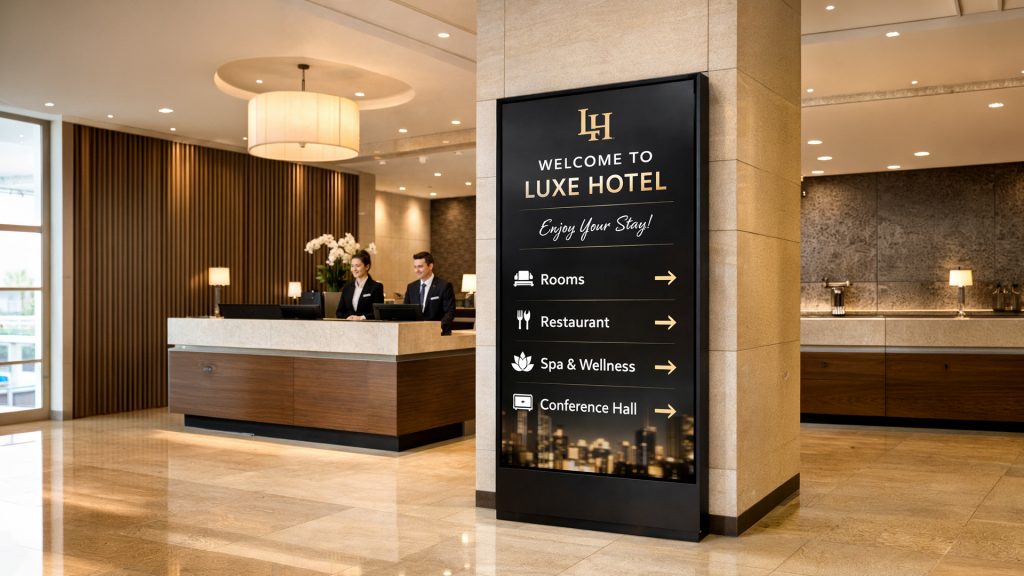
Interactive wayfinding is not just the floor plans. It is possible to have smart displays that indicate live occupancy rates in restaurants, show wait times for spa services, and even recommend alternative routes when busy. The guests can search for specific locations, obtain turn-by-turn directions, and find more information about the services they pass along the way. The technology is very useful, especially in large resorts where visitors may feel overwhelmed or lost.
Digital wayfinding is beautiful because it is flexible. The system will automatically refresh during conferences or special events, displaying temporary room assignments, event schedules, and special access routes. Hotels can also integrate these displays with their mobile apps, allowing guests to send directions to their smartphones, which can be accessed offline. This seamless connection of digital touchpoints forms a unified experience that guests will still be talking about even after they leave the hotel.
Think about the frustration of being in a hurry to get to the airport and not finding the hotel’s business center or shuttle pickup location. Digital wayfinding removes these pain points by delivering up-to-date, transparent information precisely when and where guests need it most.
2. Superior Restaurant and Menu Management Revolution
The work of restaurants in hotels is an endless challenge: menu changes, seasonal ingredient shifts, special food orders, and price changes. Digital menu boards address such issues and offer possibilities to generate more income by placing high-margin products in a strategic position. Online menus will enable instant changes across all restaurants in the building, as opposed to traditional printed menus, which are seen as outdated soon enough.
Smart menu management does not stop at listing menu items. Hotels can adopt dynamic pricing strategies in which prices increase or decrease depending on demand, time of day, or inventory. E.g., the breakfast menu can automatically switch to the lunch menu at a set time, and happy hour specials can be made visible or hidden according to the schedule. This flexibility will ensure guests always encounter new and relevant information, and the hotel will also be able to maximize revenue potential.
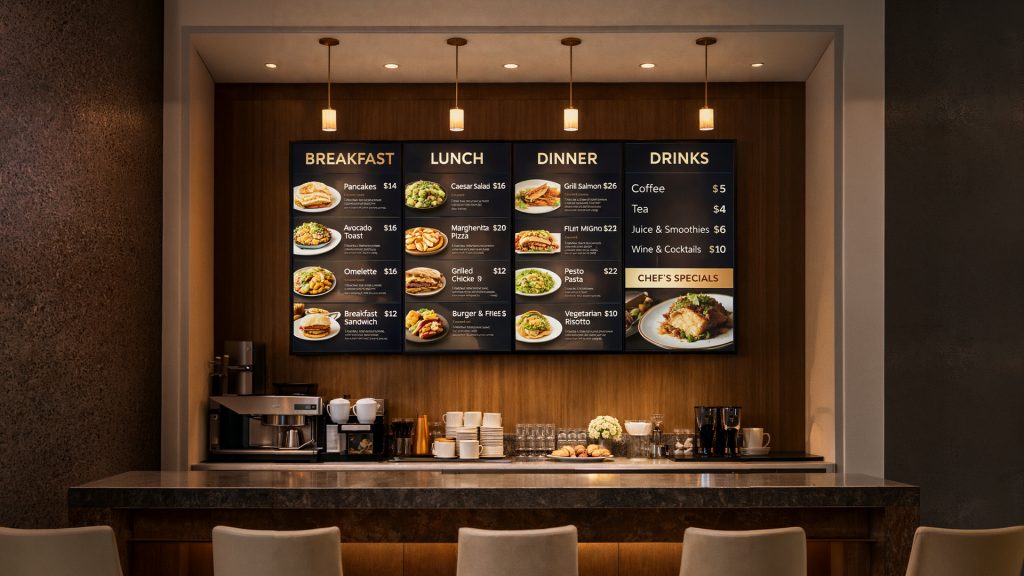
Digital menus are attractive, and this attribute greatly influences guests to place orders. Different allergen warnings, detailed nutrition information, and high-resolution images of dishes may be placed in a prominent place, enabling guests to make more informed choices. Hotels also have the opportunity to display a chef’s special, a wine pairing, or seasonal promotions in a format that cannot be achieved with static menus. The interactive components enable guests to use filters to narrow down menu items by dietary restrictions, price range, or preparation time.
Combining with kitchen administration systems generates greater efficiency. In the event of a shortage of certain ingredients, corresponding menu items can be automatically deleted or marked as out of stock. This helps avoid disappointing guests with products that cannot be prepared and eliminates wastage from ordering excess products. It is also possible to make revenue tracking more advanced by linking online menus to point-of-sale services, which can provide important information on guest preferences and purchasing habits.
3. Meeting and Conference Communications Hub in Real Time
Hotels of all sizes that host business meetings, conferences, and special events require adaptable communications systems that can adapt to their changing schedules and needs. Digital signage is changing the way events are managed because centralized platforms make all event-related information accessible. Those systems can represent a variety of events simultaneously, display live schedule changes, and present detailed information on speakers, sessions, and networking opportunities.
Digital signage is popular with event organizers since it removes the confusion of printing updates on last-minute materials. In case of a meeting room change or cancellation by the speaker, the change can be pushed instantly to all displays that are supposed to be notified. The given ability is most useful at large conferences, where participants use the signs to get around and arrange their schedules. The professionalism of digital displays also increases the value of events, which leads to satisfactory experiences among attendees.
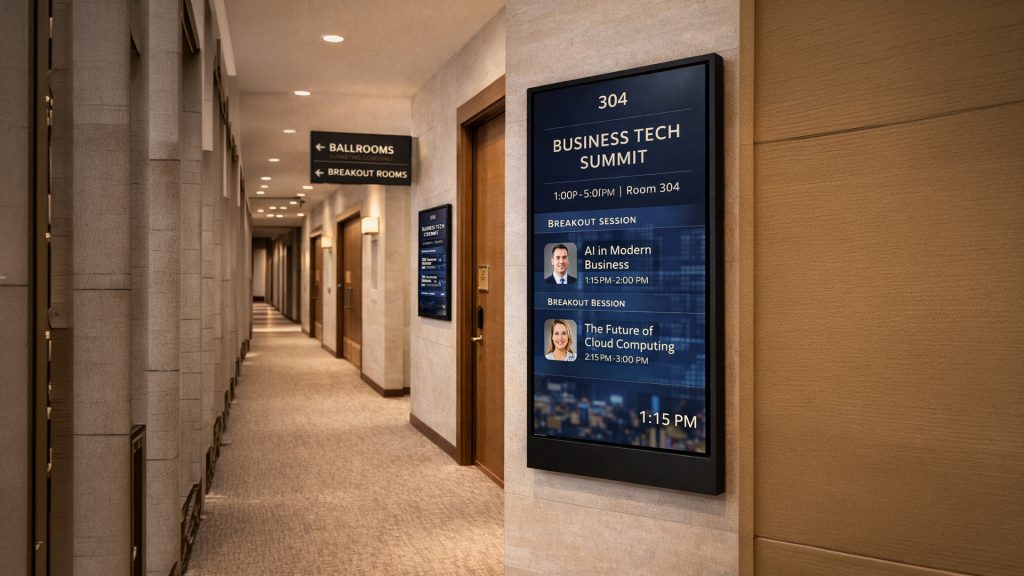
Display boards for interactive events may offer more functionality beyond basic scheduling data. Attendees could access speaker biographies, presentation materials, or even provide feedback using embedded survey tools. The integration of social media will enable real-time visualization of event hashtags, photos, and comments, generating interactions that are not limited to the event premises.
Digital event signage can be flexible, as is evident in multi-day conferences with complicated schedules. The color-coding and filtering of various tracks, breakout sessions, and networking events can be based on the interests of attendees. There should be integration with event management software to ensure that registration data, session capacities, and attendee preferences are mirrored correctly in the signage system. This kind of coordination produces smooth experiences, which are valued by event planners and professional guests.
4. Emergency and Safety Alert Systems: Instant
The hospitality industry places great importance on guest safety, and digital signage provides essential communication capabilities during emergencies. Unlike conventional PA systems, which are often hard to hear and comprehend, visual emergency alerts can present concise, multilingual instructions that guests can read and understand. These systems can take precedence over normal content, and safety messages are addressed immediately.
Digital signage in emergencies is not limited to fire alarms and evacuation. Hotels can send weather warnings, local emergency messages, or security messages that enable guests to make informed decisions about what to do. The displays may update in real time during severe weather, providing information on disrupted transportation, road conditions, and alternative options the hotel may offer.
Implementing emergency signage with the rest of the hotel systems makes holistic safety solutions. In the event of a fire, fire detection systems can automatically display evacuation paths at specific sites in the estate. Personalized evacuation instructions can be displayed via guest room displays, depending on the guest’s location and the type of emergency. Such a degree of customization can save lives in real-life emergencies.
Communication between staff in an emergency is also vital. The back-of-house digital displays may show the specific instructions for the various departments, coordinate responses, and update them as situations change. The communication system with guests and staff allows responding to them simultaneously, ensuring coordinated actions to protect the safety of all people. Automated testing and revision of emergency signage information can ensure the system’s safety during times of greatest need.
5. Marketing Adverts Which Transform Window Shoppers into Purchasers
In digital signage, hotel marketing is no longer about sharing information, but it is about making money. Placing promotional displays in strategic locations, such as high-traffic areas, can significantly increase adoption of hotel services, facilities, and partner offers. Compared with the boring printed text that is sometimes overlooked, active online content attracts attention through motion, color, and timely messages.
Effective promotional signage is far more than mere advertising; it can add value for guests by promoting the hotel’s services. On the weather displays, one can add promotional messages in rainy weather to offer indoor activities, and during sunny weather, to promote activities by the pool or outdoor trips. Such contextual marketing does not sound pushy, but it is more useful and more likely to make guests interested in promoted offerings.
Digital promotional signage is highly effective because it can target specific audiences. Business travelers who arrive on weekdays in the evenings may be offered express breakfast or late-night room service. Leisure visitors on a weekend may be informed about spa packages and local attractions, or offered an extended checkout so they do not feel rushed. This customization will generate meaningful experiences that will contribute to guest satisfaction and incremental revenue.
Hotel booking system integration enables real-time marketing of available services. Appointments to the spa, restaurant bookings, and activities can be advertised based on existing availability, which will generate a sense of urgency and stimulate on-the-spot purchases. Promotional campaigns are more likely to be followed when success measures are linked to reservation and point-of-sale systems, enabling continuous optimization of marketing messages.
6. Smoothed out the Check-in and Check-out Process
The digital signage technology used in self-service check-in kiosks reduces wait times and enhances operational efficiency during peak arrival times. Such systems are automated to handle routine transactions, allowing staff to focus on complex guest needs and relationship-building. Current check-in screens can handle room allocation, signatures, key card issuance, and provide welcome details without staff assistance.
The digital check-in is not just convenient in terms of time. Customers can check room options, upgrade their rooms, and add services to their booking without being in the queue. Multilingual support will allow all international guests to complete the check-in process without issues. Connecting with loyalty programs automatically implements member benefits and preferences. This degree of automation ensures consistent experiences, whether staff or guests are present.
Digital signage offers the same advantage as check-out procedures. Final bills, payments, receipts, and even transportation or future reservations can be displayed using express checkout kiosks. Visitors like that they can complete check-out at their convenience and are not limited by the front desk’s operating hours. The front desk congestion eases when many people are checking out, enhancing the experience for all guests.
Check-in/check-out system integration with other hotel technologies ensures smooth guest flow. The digital check-in process can automatically activate the room key, synchronize mobile apps, and enable customization of the in-room system. This coordination will also ensure that guests can access their rooms and services in real time, without having to install any extra setups or wait.
7. Local Area Information and Attraction Showcases
Only the guests select hotels as their place of stay, but also as destinations for local experiences and attractions. Digital signage offers dynamic platforms to present information about the area to maximize guest visits and may also generate commission income for the hotels. Local information kiosks can be interactive, with detailed descriptions of the attractions, their current prices, opening times, and the option to book them.
Local information displays are even more valuable when integrated with weather data. On rainy-day predictions, indoor activities, museums, or shopping centers may be promoted, whereas outdoor activities, beaches, or hiking trails may be promoted when it is sunny. Up-to-date news on local events, festivals, or seasonal activities is always available so that guests do not miss out on any opportunity to enrich their stay.
This transportation information, provided alongside local attraction displays, will offer comprehensive planning resources. The guests can view the distances, travel times, and modes of transport to various attractions, enabling them to make informed decisions about their itineraries. Direct booking should be possible through the hotel information screens by integrating it with ride-sharing or local transportation apps.
The collaborative services that the local information boards provide are beneficial to hotels and businesses in the area. Hotels can generate additional revenue by having restaurants, attractions, and service providers pay for premium placement or an upgraded listing. These collaborations tend to lead to mutual referrals, which attract new visitors to the establishment and develop a reciprocal relationship in the local tourism ecosystem.
8 Social Media Integration/ Guest Engagement Platforms
Contemporary users are willing to share their experiences on social media. Hotels can support such sharing and help build brand awareness by integrating digital signage. Social media walls are dynamic and show guests’ posts using specific hashtags, which are very interesting and present a true-life experience. Such shows motivate other visitors to share their personal content and provide social evidence of positive guest experiences.
User-generated content on digital signage platforms creates authentic marketing that appeals to prospective guests. Images of hotel facilities, tourist spots, and food experiences posted on the site by real patrons are more believable than the marketing resources. The quality of this content can be controlled by the hotels without losing the original voice, making social media sharing effective.
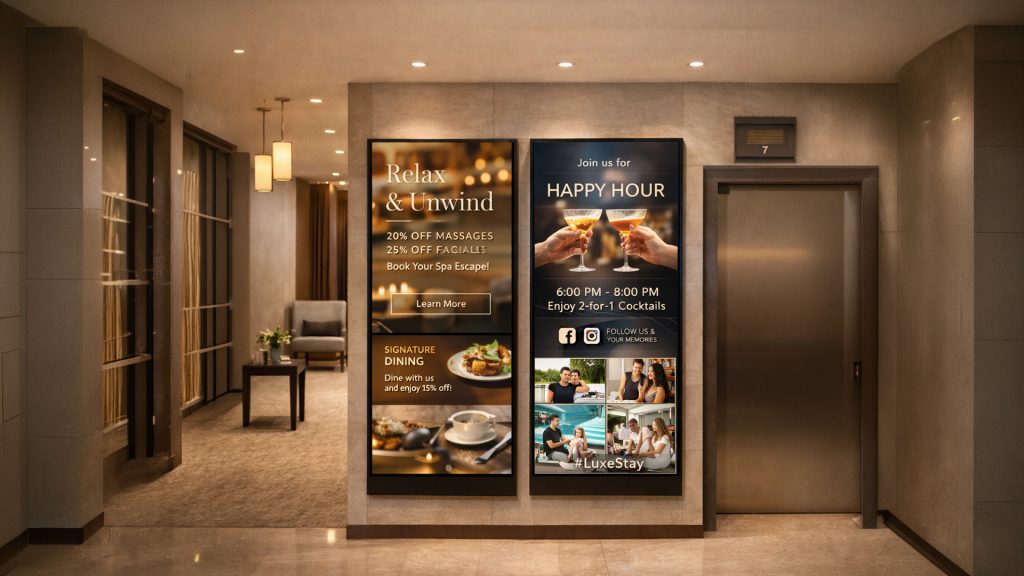
Social media interactive screens mean that visitors can post directly at hotel destinations, and the content usually has higher-quality lighting and composition. The photo booths can be personalized to include branded frames or filters and still make shareable content, which involves branding the hotels in the process. These interactive components become attractions in their own right, prompting visitors to spend more time in the common space and creating opportunities for further service sales.
The analytics from the social media integration will provide valuable feedback on guest experiences and preferences. Popular hashtags, shared locations, and shared themes in guest posts help a hotel know what is most likely to receive the most positive reception in its premises. This can inform marketing efforts, operations, and investments that would satisfy guests.
9 Communication and Internal Operations Improvement among the staff
Digital Signage is important in hotel operations because it enables communication and coordination among staff. Housekeeping assignments, maintenance schedules, shift changes, and other significant announcements can be displayed on back-of-house displays, keeping all departments informed and coordinated. This is internal communication that will lead to less confusion, increased efficiency, and consistent service delivery to all the guest touchpoints.
Real-time data on operational activities displayed on staff-facing screens helps teams make informed decisions during their shifts. Occupancy rates, special guest requests, and service requests may be relayed immediately to respective departments. This is because property management systems ensure that information flows freely across various areas of operation without manual input or telephone calls.
Digital signage content for training and development helps maintain service standards and introduce new procedures effectively. Consistency in displaying safety reminders, service methods, and policy updates can be maintained throughout areas where staff members congregate. In this manner, the crucial information will be communicated to every team member, regardless of their shift or departmental placement.
The advantages of employee recognition programs include digital signage that can highlight exemplary performance, commemorate employee achievements, and post positive guest reviews. These displays motivate, promote excellence, and foster positive work cultures that translate into enhanced guest experiences. The fact that recognition content should be updated regularly means recognition is always timely and relevant to prevailing accomplishments.
10. Multilingual Characteristics and Cultural Accessibility
Foreigners in the hotel are a key segment of hotel customers. Using digital signage can overcome language barriers that can otherwise affect guests’ experiences. Multilingual screens can identify guests’ preferences by integrating with registration systems or by offering language options that personalize the information presented to guests. This feature will ensure that key information is transmitted to all guests, regardless of their dominant language.
Cultural considerations involve not only translation but also proper imagery, color scheme, and content structure that appeal to various cultural orientations. Digital signage systems can modify these aspects based on guest demographics or regional variations, thus offering more inclusive experiences that help all guests feel welcome and accepted.
The accessibility features of digital signage systems provide both accommodations for disabilities and a more positive experience for all guests. High-contrast displays, large fonts, and audio integration can be used to address visual impairments. The interactive displays can also include features to accommodate mobility restrictions or cognitive differences, so all guests can access critical information and services.
Multilingual interchangeability in digital signage enables the hotel to experiment with and refine content based on real-world usage trends and client feedback. The most popular language choices may be displayed on the front line, with other less-used languages served via menu systems. It can be integrated with translation services, ensuring that information can be updated in real time across different languages, so the latest information is available to all guests, irrespective of their language preferences.
The Change in Hospitality by Smart Digital Integration
Digital signage has turned out to be not just a plain advertisement board, but a full communication network that improves all hotel operations. The ten apps discussed in this guide are only the tip of the iceberg when it comes to the capabilities of hotels that adopt technology to deliver better experiences to guests and make their operations more efficient. The secret is not in implementing all available features, but in selecting solutions based on a particular property’s needs and guests’ profiles.
Hotel digital signage offers numerous sources of return on investment: higher participation in services, improved operational efficiency, higher customer satisfaction, and lower printing and labor costs. Strategically placed digital signage on the properties is likely to increase guest satisfaction ratings, online reviews, and repeat booking rates. These advantages build over time as hotels refine their content strategies and implement systems across their operations.
In the future, new technologies such as artificial intelligence, facial recognition, and Internet of Things integration will provide even more advanced digital signage solutions. The hotels that set high standards for digital signage today will be better positioned to implement such sophisticated features, as they will be available and affordable.
The future of the hospitality industry lies in buildings’ ability to combine high-tech and high-touch service delivery. Digital signage gives this balance its technological core, allowing staff to focus on building relationships while ensuring that information and services are available to guests when they need them most and where they need them. Digital signage investment is an innovation for the future of hospitality excellence. Transform your guest experience and streamline your operations today. Discover the powerful impact and seamless integration of Disploy hotel digital signage with our exclusive 14-day free trial, allowing you to explore its full capabilities without any commitment.