
Imagine you walk into a hospital waiting room, & instead of feeling stressed and anxious, you’re greeted by calming nature videos, helpful health tips, & real-time updates about your appointment. Sounds too good to be true? Well, it’s happening right now in hospitals across the world. Smart hospitals are discovering that healthcare digital signage isn’t just about looking modern, it’s about creating spaces that actually help people heal faster & feel better.
Hospital waiting rooms have always been places where emotions run high. Whether you’re waiting for test results, visiting a loved one, or preparing for surgery, these spaces can feel overwhelming. The cold white walls, uncomfortable chairs, & endless uncertainty can make anyone feel panicked. But what if technology could change all that? What if a simple digital signage in healthcare could turn anxiety into calm & fear into hope?
Let’s explore how innovative hospitals are using healthcare digital signage to transform the patient experience. We’ll dive into:
- The science behind healing environments
- Discover real examples of hospitals making these changes
- Learn why this technology is becoming essential for modern healthcare
From reducing perceived wait times to providing crucial health information, digital signage is proving that small changes can make big differences in how patients feel & recover.
The Psychology Behind Waiting Room Anxiety
Have you ever noticed how time seems to crawl when you’re waiting for something important? In hospital waiting rooms, this feeling becomes even more intense. Medical professionals call this “white coat syndrome,” but it goes much deeper than just fear of doctors. When people enter healthcare facilities, their stress hormones spike, their blood pressure rises, & their minds race with worried thoughts. This isn’t just uncomfortable; it can actually interfere with healing & make medical procedures more difficult.
Research shows that stressed patients have weaker immune systems, experience more pain, & take longer to recover from illnesses & surgeries. The waiting room experience plays a huge role in setting the tone for a patient’s entire visit. Traditional waiting areas, with their bright lighting, outdated magazines, & silence broken only by the occasional cough or phone ring, can make anxiety worse instead of better. Patients often feel forgotten, uninformed, & helpless as they sit there wondering what’s happening with their care.
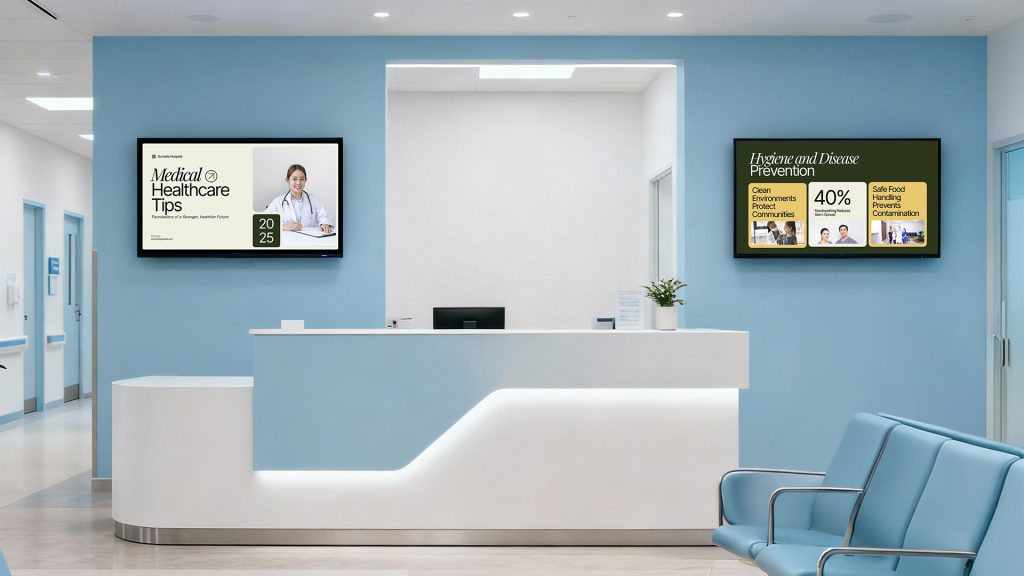
But here’s where it gets interesting, environmental psychology tells us that our surroundings have a direct impact on our mental & physical well-being. Colors, sounds, lighting, & even the information available to us can either increase stress or promote relaxation. Hospitals are learning to use this knowledge and transforming their waiting areas with digital signage in healthcare from sources of anxiety into tools for healing. They’re discovering that when patients feel calm & informed, everything about their healthcare experience improves, from their satisfaction scores to their actual health outcomes.
Healthcare Digital Signage: More Than Just Pretty Screens
When most people think of digital signage, they imagine fancy advertisements or basic announcements. But in healthcare settings, these displays serve a much more important purpose. Digital signage systems are advanced tools that can deliver personalized, real-time information while creating calming, therapeutic environments. They’re not just showing pretty pictures, they’re actively working to improve patient care & reduce healthcare costs.
Today’s healthcare digital signage can do amazing things. It can display live wait times so patients know exactly how long they’ll be waiting. It can display educational content about health conditions, helping patients better understand their care. Some systems even connect to hospital databases to provide updates about specific appointments or procedures. Interactive displays enable patients to access maps, locate departments, or check in for appointments without waiting in long lines at reception desks.
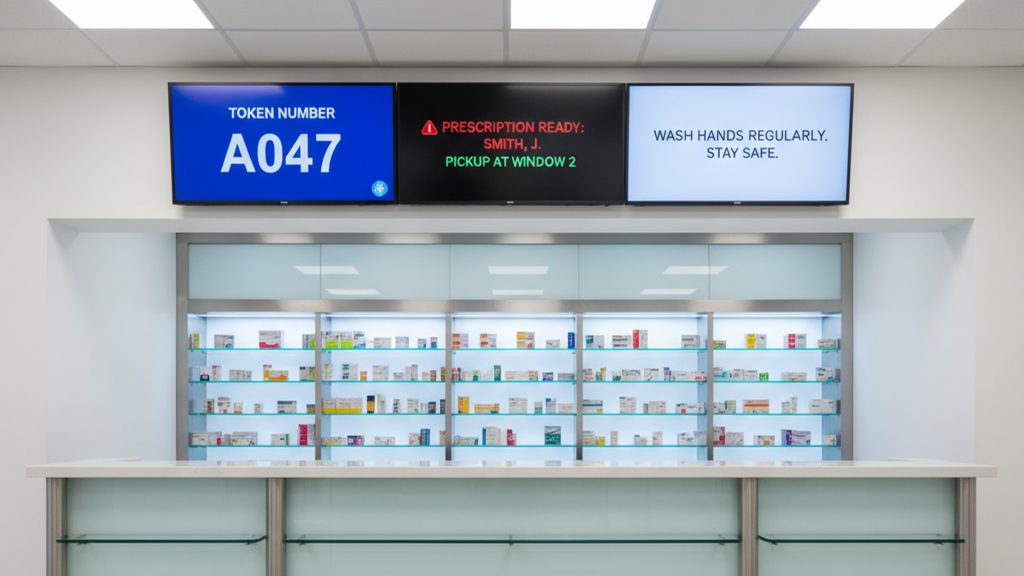
The technology behind these systems is constantly evolving. High-definition screens with anti-glare coatings ensure content is easy to read from any angle. Motion sensors can trigger different content when people approach, while built-in speakers provide gentle audio without disturbing others. Some hospitals are even experimenting with scent dispensers & temperature controls integrated with their digital displays to create complete sensory experiences that promote healing. The goal isn’t just to inform patients, it’s to create an environment that actively supports their physical & emotional well-being.
Creating Calm Through Visual Storytelling
Nature has an incredible power to heal, but many hospital patients can’t step outside to enjoy fresh air & sunshine. Digital signage in healthcare bridges this gap by bringing the outdoors inside through stunning visual content. Imagine sitting in a waiting room & watching gentle ocean waves, peaceful forest scenes, or beautiful mountain landscapes on large, crystal-clear displays. Studies show that even viewing nature scenes on screens can lower blood pressure, reduce pain perception, & decrease the need for pain medications.
But effective healthcare digital signage goes beyond just nature videos. The best systems tell stories that connect with patients on an emotional level. They might feature local landmarks that make patients feel connected to their community, or showcase inspiring patient recovery stories that provide hope during difficult times. Some hospitals create seasonal content, showing spring flowers during renewal times or cozy winter scenes during holidays, helping patients maintain their connection to the world outside the hospital walls.
The key is creating content that feels personal & meaningful rather than generic or commercial. Successful hospitals work with local artists, photographers, & even their own staff members to create unique visual experiences. They understand that healing happens not just through medical treatment, but through emotional comfort & psychological support. When patients feel calm & connected, their bodies are better able to focus energy on healing instead of managing stress & anxiety.
Real-Time Information: Reducing the unknown
One of the biggest sources of anxiety in healthcare settings is not knowing what’s happening. Patients wonder: “How much longer will I wait?” “Did the doctor forget about me?” “What should I expect during my procedure?” Healthcare Digital signage addresses these concerns head-on by providing real-time, relevant information that keeps patients informed & engaged throughout their visit.
Nowadays, hospital information systems can be integrated with healthcare digital signage to display live updates on appointment schedules, doctor availability, & even explanations of common delays. Instead of wondering why their 2 PM appointment hasn’t started by 2:30, patients might see a message explaining that the doctor is handling an emergency & will be available in approximately 20 minutes. This simple transparency can transform frustration into understanding & patience.
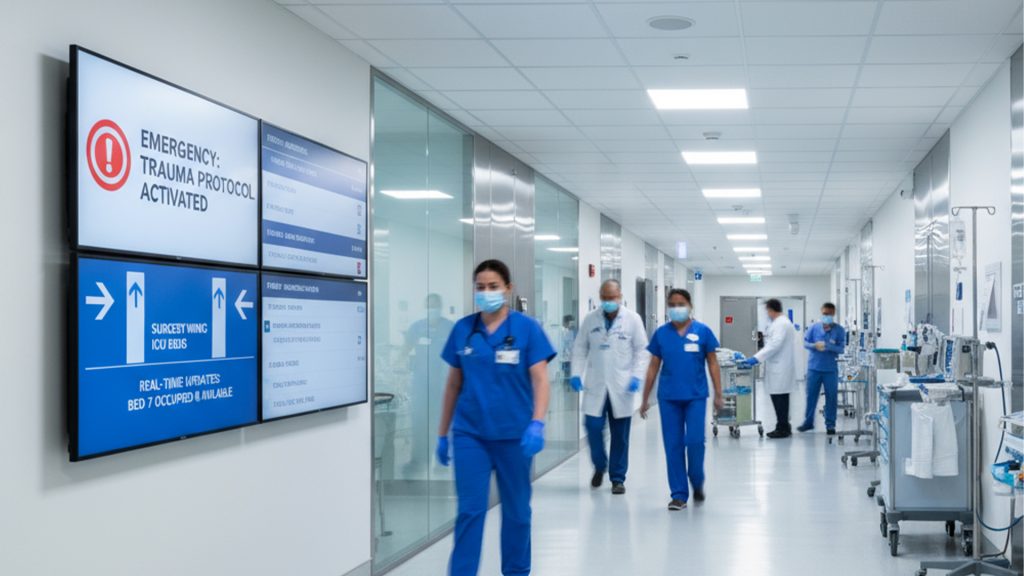
Interactive information kiosks take this concept even further. Patients can look up information about their specific conditions, learn about treatment options, or even access their own medical records & test results. Some systems provide virtual tours of operating rooms or procedure areas, helping patients feel more prepared & less anxious about upcoming treatments. Educational content on medication management, recovery tips, & healthy lifestyle choices empowers patients to take an active role in their own healthcare journeys. When people understand what’s happening to them & why, they feel more in control & less stressed about their medical experiences.
Case Study
Mayo Clinic, one of America’s most respected healthcare institutions, has been a leader in using digital signage in healthcare to improve patient experiences. Their waiting areas feature large displays showing calming nature scenes, educational health content, & real-time updates about services & amenities. Patient satisfaction scores increased significantly after installing these systems, & staff reported that patients seemed more relaxed & cooperative during their visits. The technology paid for itself through improved efficiency & reduced complaints.
Cleveland Clinic took a different approach, focusing on community connection through its healthcare digital signage. Their screens showcase local art, highlight community health events, & feature stories about patients who have overcome significant health challenges. One particularly moving display series follows patients through their cancer treatment journeys, from diagnosis through recovery, providing hope & inspiration to others facing similar battles. The response has been overwhelmingly positive, prompting other departments within the hospital to request similar installations.
The Children’s Hospital of Philadelphia created an interactive digital playground in its pediatric waiting areas. Young patients can play educational games, watch cartoons, & even participate in virtual art projects while waiting for appointments. Parents report that their children actually look forward to doctor visits now, & medical staff find it much easier to work with relaxed, entertained kids rather than scared, crying ones. The system has also reduced no-show rates because families are more likely to keep appointments when children view the hospital positively.
Measuring Success: Beyond Patient Satisfaction
How do hospitals know if their digital signage in healthcare investments are actually working? The answer goes far beyond simply asking patients if they like the pretty screens. Healthcare facilities track multiple metrics to measure the real impact of their healing environment initiatives. Patient satisfaction scores provide one important data point, but hospitals also monitor clinical outcomes, staff efficiency, & financial performance to get a complete picture of success.
Reduced anxiety levels can be measured through lower blood pressure readings, decreased requests for anxiety medications, & improved cooperation during medical procedures. Patients who feel calmer & more informed tend to follow treatment instructions better, show up for follow-up appointments more consistently, & have fewer complications during recovery. These improvements translate into better health outcomes & lower costs for both patients & healthcare systems.
Staff satisfaction is another key metric that often improves with the installation of healthcare digital signage. When patients are less anxious & better informed, they’re easier to work with & less likely to complain or become difficult. Nurses & administrative staff report feeling less stressed when working in environments where patients seem more comfortable & cooperative. This creates a positive feedback loop in which better patient experiences lead to better staff experiences, ultimately resulting in even better patient care.
The Future of Healing Environments
As technology continues to advance, the possibilities for healthcare digital signage settings become even more exciting. Artificial intelligence is beginning to personalize content based on individual patient needs & preferences. Imagine a system that recognizes when you enter a waiting room & automatically displays information relevant to your specific appointment, or adjusts the lighting & content based on your stress levels measured through wearable devices.
Virtual & augmented reality integration with healthcare digital signage could transport patients to entirely different environments during their wait times. Instead of sitting in a hospital, patients might virtually visit peaceful beaches, explore art museums, or even attend live concerts or sporting events. These immersive experiences could make wait times feel shorter while providing a powerful distraction from anxiety & discomfort.
The integration of healthcare digital signage with other smart hospital technologies promises even greater benefits. Systems that communicate with electronic health records, appointment scheduling software, & facility management tools could create seamlessly coordinated experiences where patients receive exactly the right information at exactly the right time. As hospitals continue to focus on patient-centered care, environmental design & technology will play increasingly important roles in achieving better outcomes for everyone involved.
The transformation from panic to peace in hospital waiting areas isn’t just about installing fancy screens; it’s about recognizing that healing happens in the mind as well as the body. Healthcare digital signage represents a powerful tool for creating environments that support both physical recovery & emotional well-being. As more hospitals embrace these technologies, patients everywhere will benefit from calmer, more informative, & more healing healthcare experiences. The future of medicine isn’t just about better treatments & procedures, it’s about creating spaces where healing can happen more naturally & completely. Hospitals understand that sometimes the most powerful medicine doesn’t come in a pill bottle, it comes from feeling safe, informed, & cared for in an environment designed specifically for healing.
Conclusion
The transformation occurring in hospital waiting rooms is more than a mere technological upgrade; it is a philosophical shift in how modern healthcare defines healing. Moving from panic to peace isn’t a hypothetical marketing slogan; it’s a measurable outcome delivered by the strategic implementation of healthcare digital signage. This technology serves as the connective tissue between the patient’s emotional state and the clinical environment, proving that the waiting room is not a necessary evil, but a critical part of the care chain.
The core success of healthcare digital signage lies in its ability to directly address the two biggest triggers of patient anxiety, uncertainty, and a lack of control. By offering real-time transparency about delays and appointment progress, hospitals replace racing minds with simple facts, allowing patients to mentally prepare and refocus their energy. Simultaneously, the provision of high-quality educational content transforms passive waiting time into an active, empowering learning opportunity. When patients understand their condition, procedure, or medication, they shift from feeling like helpless recipients of care to feeling like informed partners in their own health journey.
This investment outputs extraordinary returns that extend far beyond a bump in patient satisfaction scores. We’ve seen that a calmer patient is a healthier patient, demonstrating lower stress hormone levels, reduced pain perception, and improved compliance with treatment plans. These clinical benefits create a positive feedback loop, reducing patient anxiety, leading to less strained interactions with staff, boosting staff morale, and improving operational efficiency. The technology pays for itself not just through greater efficiency but also through improved clinical outcomes and reduced complications.
Looking ahead, the integration of healthcare digital signage with emerging technologies from AI-driven personalization to immersive VR environments promises to push the boundaries of compassionate care even further. Imagine a future where the waiting room experience is dynamically tailored to an individual’s physiological stress indicators, instantly projecting the exact sights, sounds, and information needed to maximize calmness.
Ultimately, the advanced use of healthcare digital signage confirms a profound truth: the environment is medicine. By intentionally designing spaces that prioritize emotional comfort, informed engagement, and a sense of welcome, hospitals are not simply installing new screens; they are nurturing the human spirit. They are proving that one of the most powerful contributions to a patient’s recovery is the simple, yet profound, act of making them feel safe, informed, and truly cared for, even before they see a doctor. The future of healthcare is one where technology and empathy work in perfect concert, making every minute spent in a hospital a minute dedicated to healing. The evidence is clear: the right digital experience can profoundly improve patient outcomes and operational efficiency. We believe every healthcare facility should be able to experience this transformation firsthand. That’s why join us Disploy is currently offering a free trial period for our healthcare digital signage solutions. This risk-free opportunity allows your institution to test our calming visuals, real-time data feeds, and intuitive digital signage system in your waiting areas. Take the critical first step toward reducing anxiety and fostering a truly healing environment. Visit our website or contact us today to begin your complimentary trial and start turning panic into peace.