
Nobody likes waiting in line at the bank. You walk in, grab a number, and settle into a plastic chair, staring at the ceiling, checking your phone, watching the clock. Five minutes feels like fifteen. Fifteen feels like forever. Somewhere in your mind, you’re thinking: there has to be a better way.
Here’s the thing: there is. Banks that have figured it out aren’t doing anything magical. They’ve simply invested in the right banking digital signage, and the results are impressive across the financial industry.
We’re talking about a 40% reduction in perceived and actual teller wait times, not by hiring more staff or remodeling branches, but through smarter, strategic use of screens.
The Waiting Room Problem Nobody Talked About
For decades, banks treated their lobbies as functional spaces: get in, get served, get out. The customer experience was an afterthought. A few potted plants, maybe a brochure rack, and a number dispenser that felt stuck in the 1980s.
But as customer expectations shifted, driven by seamless digital experiences of apps, e-commerce, and on-demand services, banks began to realize something uncomfortable: the lobby experience was quietly killing loyalty.
A 2023 survey by Forrester found that 57% of retail banking customers cited “waiting too long” as their top frustration with in-branch visits. More telling? Nearly a third said they’d switched banks or avoided branches altogether because of poor wait time management. That’s not a staffing problem. It’s a problem of perception and communication. Banking digital signage is solving it on both fronts.
What “Banking Digital Signage” Actually Means
When most people hear “digital signage,” they picture a TV on a wall playing ads. In a bank context, that barely scratches the surface. Banking digital signage is a network of strategically placed, dynamically updated displays serving multiple functions simultaneously:
- Real-time queue management displays that show wait times, ticket numbers, and teller availability
- Digital rate boards that replace outdated printed interest rate posters with live, always-accurate figures
- Loan and product promotion screens that surface relevant offers based on time of day, branch traffic, or even local market conditions
- Wayfinding and service directory displays that reduce confusion and unnecessary staff interruptions.
- Customer education content that fills idle wait time with genuinely useful financial information
Each of these serves a distinct purpose. Together, they transform a branch from a passive space into an active, intelligent customer environment.
The Psychology Behind the 40% Number
Here’s something fascinating about wait time reduction: a significant portion of it is psychological. MIT research on queuing behavior found that people consistently overestimate how long they’ve waited when they have nothing to do. Give someone something to look at, something relevant and engaging, and their perception of time changes dramatically. They feel like they waited less, even if the clock says otherwise.
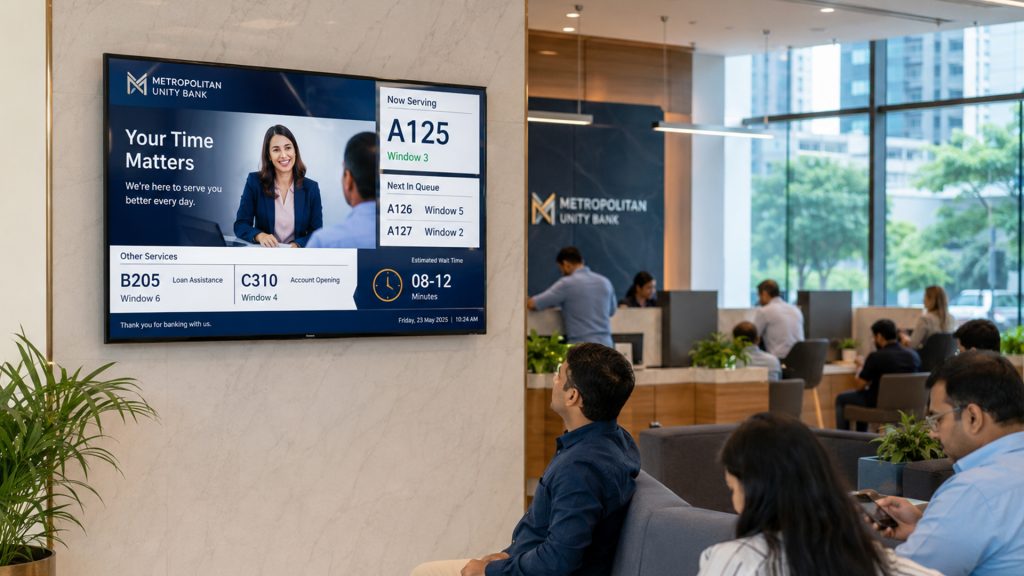
Banks that use queue-management digital signage tap directly into this effect. When a customer walks in and sees a screen that says “Current wait: approximately 7 minutes,3 customers ahead of you,” something shifts. The anxiety of not knowing reduces.
But it goes further than psychology. Operational integration with queue management software means that the same system that shows wait times also actively routes customers, flags when a teller is available, and prompts staff to open additional windows during peak periods.
That’s where the actual reduction in wait times, not just perceived, comes from.
Real Branches Real Results
TD Bank’s lobby transformation pilot (2022–2023) rolled out integrated queue display systems across select U.S. branches in high-traffic urban locations. Paired with their queue management backend, the screens showed real-time wait data and dynamically routed customers based on the type of service they needed. Branch managers reported a measurable drop in average transaction time and a notable uptick in customer satisfaction scores, specifically around the “branch visit experience” metric.
A regional credit union in the Midwest, with 14 branches across Ohio and Indiana, replaced its static rate boards with networked digital signage in early 2023. The impact was immediate on the lending side: loan inquiries at the teller window increased by 22% in the first quarter, because customers saw current home equity loan rates on a screen while waiting and asked about them. That’s not just operational efficiency. That’s revenue.
FirstBank Colorado has been a quiet leader in this space. Their branches use digital displays not just for queue information but for localized content, community announcements, local event sponsorships, and even weather. It keeps customers engaged, reinforces the bank’s community identity, and reduces perceived wait time. Their NPS scores in branches with digital signage consistently outperform those without banking digital signage.
These aren’t abnormal. They’re patterns. And they’re repeating across the industry.
Where Banking Digital Signage Makes the Biggest Impact
1. The Queue Display, Your Most Powerful Tool
The moment a customer sees their number on a screen, knows they’re fourth in line, and knows the estimated wait is eight minutes, you’ve done something powerful. They can sit down. Check their phone without anxiety. Maybe even look at that loan promotion on the screen next to the queue board.
Banks using dedicated queue display systems report that customers who know their wait time are 35% less likely to abandon the queue. That’s real business impact. Those are potential accounts, loans, and deposits walking back through the door instead of out of it.
2. Digital Rate Boards, The Overlooked Revenue Driver
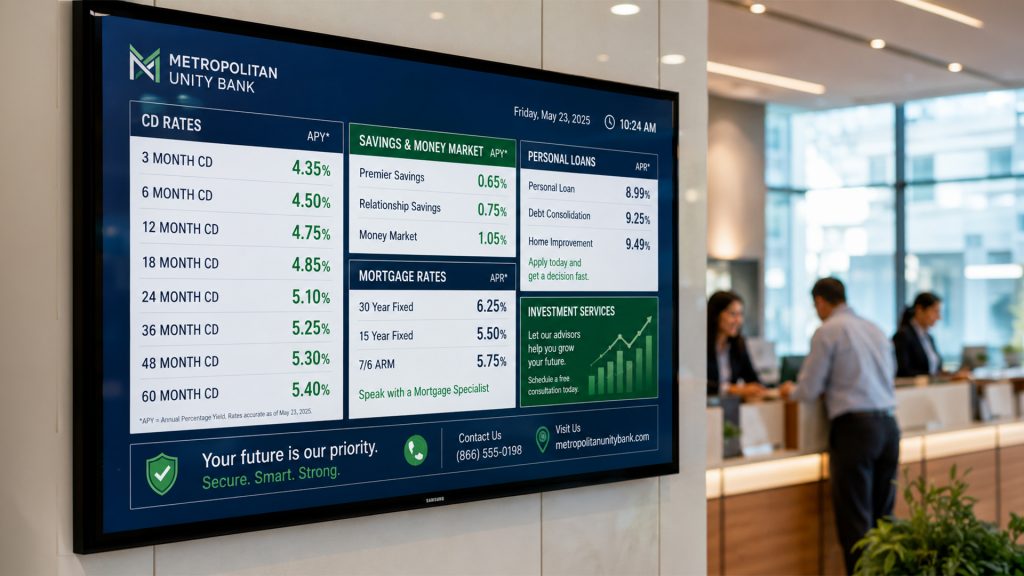
Rate boards seem boring. They’re not. A customer standing in line for seven minutes, staring at a static poster showing a 4.5% CD rate they saw three months ago, is a missed opportunity. A customer staring at a live digital display showing today’s CD rate, current savings account APY, and a comparison to national averages, that’s a conversation starter.
Banking digital signage for rate displays does two things: it builds trust (customers know the information is up to date) and it drives cross-sell conversations. Tellers report that customers arrive at the window already asking about products they saw on the screens, which dramatically shortens the consultation time and accelerates transaction flow.
3. Loan Promotion Screens, Right Message, Right Moment
Think about the context. A customer is in the branch. They’re already in a financial mindset. They have, statistically, between 5 and 12 minutes of wait time.
That is prime real estate for targeted messaging. Modern banking digital signage platforms allow branch managers or centralized marketing teams to schedule content based on time of day, day of week, or even local market triggers. Pushing a home equity promotion on a Friday afternoon in a suburban branch? That’s a calculated decision, not a guess. And it works.
One community bank in Texas reported that after deploying promotional loan screens in their waiting areas, in-branch loan application starts increased by 18% over six months, without any additional advertising spend.
The Operational Side: Integration Is Everything
Here’s where a lot of banks stumble. They buy screens. They install them. They put a slideshow on them. And then they wonder why nothing changed. The power of banking digital signage lies not in the hardware, but in the integration.
A queue display that’s disconnected from your actual queue management system is just a TV showing a number. But a display that’s connected to your CRM, your queue software, and your teller management platform? That’s an intelligent system. When these systems talk to each other, you unlock capabilities like:
- Automatically adjusting content based on branch traffic (promoting quick services during peak hours vs. complex products during slower periods)
- Flagging customers with appointments so tellers can greet them by name
- Showing real-time teller availability to reduce misrouted customers
- Generating branch-level analytics on dwell time, service duration, and customer flow
This is the difference between digital signage as decoration and digital signage as infrastructure. What Banks Should Look for in a Banking Digital Signage Solution
If you’re evaluating vendors or planning a rollout, here’s what actually matters:
Content management flexibility: Can your branch manager update a rate on a Tuesday morning without calling IT? It should be that simple.
Integration capabilities: Does the platform connect with your existing queue management, CRM, or core banking software? If not, you’re leaving the most valuable features on the table.
Reliability and uptime: A blank screen in a bank lobby is worse than no screen at all. Look for platforms with robust offline fallback content and remote monitoring.
Analytics and reporting: You should know which screens are being viewed, how long customers are spending, and whether your promotions are driving conversations. If the vendor can’t tell you this, keep looking.

Scalability: A solution that works beautifully in three branches should also work across three hundred. Make sure the platform scales without becoming a management nightmare.
The Human Element Doesn’t Go Away, It Gets Better
One thing worth saying clearly: banking digital signage doesn’t replace the human experience in your branch. It enhances it.
When a customer arrives already informed, they know the wait time, they’ve seen the rate, they’re thinking about that home equity loan, the teller’s job becomes richer. Less time explaining basics. More time having a real financial conversation.
Branch staff consistently report that digital signage reduces the volume of “what’s the wait?” and “what are your CD rates?” questions, the low-value interruptions that fragment attention and slow service. What’s left is more meaningful customer interaction.
That’s not a small thing. In an era when every bank is trying to justify the cost and relevance of physical branches, the quality of the in-person experience is the differentiator. Signage done right makes that experience feel smooth, professional, and genuinely customer-first.
The Bottom Line
The 40% wait time reduction figure isn’t a marketing trick. It’s a real, documented outcome that emerges when banks use banking digital signage thoughtfully, with real-time queue displays, live rate boards, and targeted loan promotion screens, all working together as a system.
The banks seeing these results aren’t necessarily the biggest or the most tech-forward. They’re the ones who took the lobby experience seriously. They asked: What does a customer see, feel, and think during those seven minutes in our branch? And then they did something about it.
In a world where your customer’s alternative is an app on their phone, the branch visit has to earn its place. Digital signage is one of the most cost-effective ways to make sure it does.
If your branches are still relying on static posters and a number dispenser, the gap between you and your competition isn’t narrowing. Afraid of how it will work for you? No worries, try Disploy 14 days free trial and learn, then invest.