
The restaurant and food service industry is experiencing a digital revolution, with technology playing a pivotal role in enhancing customer experience and operational efficiency. At the forefront of this transformation is digital signage, reshaping how businesses present their offerings, engage with customers, and streamline operations.
Gone are the days of static paper menus, outdated posters, and limited promotional opportunities. Digital menu boards and dynamic displays are revolutionizing the dining experience, providing real-time updates, interactive engagement, and visually appealing content. As consumer expectations continue to rise, demanding convenience, speed, and personalization, adopting digital signage has become a necessity rather than a luxury.
By embracing this innovation, restaurants can enhance brand presence, optimize menu management, and drive higher sales, all while creating a seamless and modern dining experience.
The Shift to Digital Menu Boards
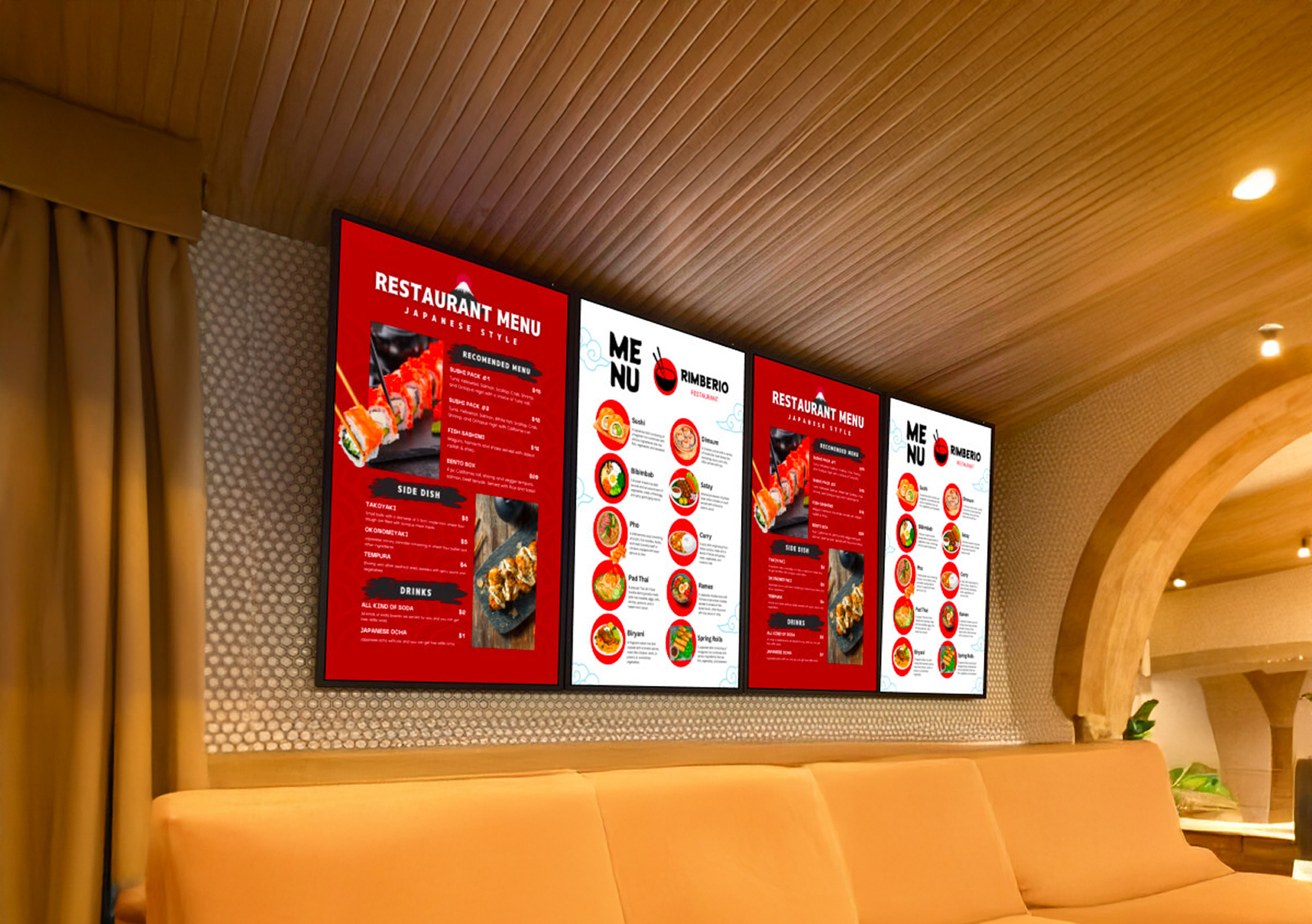
Restaurants, Quick-service restaurants (QSRs), and cafes are increasingly adopting digital menu boards to modernize their marketing efforts. Digital displays allow for real-time menu updates, targeted promotions, and interactive experiences that captivate customers. Unlike traditional printed menus and posters, digital signage is cost-effective in the long run, environmentally friendly, and enhances brand perception. The shift toward digital signage is fueled by several factors, including advancements in display technology, the widespread use of smart devices, and the growing preference for contactless services.
Key Benefits of Digital Menu Boards & Signage in Restaurants
The restaurant industry is evolving rapidly, and digital menu boards are at the forefront of this transformation. These dynamic displays not only enhance customer experience but also improve operational efficiency, drive sales, and support sustainability. Here’s why digital signage is a game-changer for modern restaurants:
1. Enhanced Visual Appeal & Customer Engagement
Traditional paper menus cannot captivate customers, whereas digital menu boards use high-definition images, animations, and videos to showcase menu items enticingly. Vibrant visuals of signature dishes, limited-time offers, and chef’s specials can drive impulse purchases and elevate the dining experience. Interactive touchscreen displays also allow customers to browse menus, customize orders, and access nutritional information, fostering a deeper connection between the restaurant and its patrons.
2. Easy & Instant Menu Updates with Pricing Flexibility
One of the biggest advantages of digital signage is the ability to update content instantly. Whether it’s a price adjustment, the addition of seasonal items, or the removal of sold-out dishes, restaurant owners can make real-time changes without the cost and hassle of reprinting menus. Additionally, businesses can leverage dynamic pricing, offering discounts during off-peak hours or adjusting prices based on demand to optimize revenue and enhance customer satisfaction.
3. Increased Sales & Upselling Opportunities
Strategically designed digital menu boards can drive additional sales by promoting high-margin items, add-ons, and combo meals. AI-powered recommendations personalize menu suggestions based on factors like time of day, weather conditions, and customer preferences. For example, on a hot day, the system can highlight cold beverages and ice cream promotions. This data-driven approach not only enhances the customer experience but also maximizes profitability.
4. Cost-Effective & Sustainable Solution
While the initial investment in digital menu boards may seem high, they offer significant cost savings in the long run. By eliminating printing costs, labor-intensive menu replacements, and revenue losses due to outdated pricing, digital signage proves to be a financially viable solution. Additionally, going digital reduces paper waste, supports sustainability initiatives, and minimizes the restaurant’s carbon footprint.
5. Faster Service & Improved Order Accuracy
Digital menu boards integrated with point-of-sale (POS) systems streamline the ordering process, reducing wait times and improving order accuracy. Self-service kiosks equipped with digital displays allow customers to place orders directly, minimizing human errors and enhancing efficiency. Quick-service restaurants (QSRs) benefit greatly from this technology, as it speeds up transactions and ensures a seamless customer experience.
6. Remote Management & Automation
With cloud-based digital signage solutions, restaurant operators can manage multiple locations from a single platform. This ensures consistency in branding, pricing, and promotional messaging across all outlets. Automated scheduling allows restaurants to display different menus based on the time of day, effortlessly transitioning between breakfast, lunch, and dinner offerings.
7. Better Brand Consistency & Customization
A well-executed digital signage strategy ensures a cohesive brand identity across all locations. Chain restaurants can remotely manage content updates, promotions, and menu designs, maintaining uniformity while allowing for localized marketing campaigns. Moreover, digital signage can be customized to complement a restaurant’s ambiance, creating an immersive and visually appealing dining experience.
Industries Benefiting from Digital Menu Boards
Digital menu boards have become an indispensable tool across various industries, revolutionizing how businesses present their offerings, engage with customers, and streamline operations. Their dynamic capabilities and flexibility make them a powerful asset for enhancing efficiency, boosting sales, and improving the overall customer experience.
1. Quick-Service Restaurants (QSRs)
Fast-food chains and drive-thrus are pioneers in leveraging digital menu boards. For QSRs, speed and efficiency are paramount. Digital boards significantly accelerate service by presenting clear, easily readable menus that can be updated instantly with daily specials, promotions, or sold-out items. This reduces order errors and wait times, leading to a smoother customer flow. Furthermore, QSRs use these boards to enhance the customer experience through visually appealing displays of food items, high-definition videos, and engaging animations that entice customers and influence purchasing decisions. They are particularly effective for promoting new products and limited-time offers, quickly capturing customer attention and driving impulse buys. Drive-thru lanes benefit immensely from external digital menu boards, offering a clear and well-lit presentation of the menu, even in varying weather conditions, and allowing for rapid content changes.
2. Cafes and Coffee Shops
Cafes and coffee shops thrive on atmosphere and a constantly evolving menu. Digital menu boards are perfectly suited for this dynamic environment. They allow cafes to elegantly showcase seasonal beverages, such as pumpkin spice lattes in the fall or refreshing iced teas in the summer, with attractive visuals and detailed descriptions. Special promotions, like happy hour deals or loyalty program offers, can be highlighted prominently to encourage repeat business. Beyond promotions, digital boards offer unparalleled flexibility for menu changes based on ingredient availability. If a particular pastry or coffee bean runs out, the menu can be updated in real-time, preventing customer disappointment and ensuring accurate information. This adaptability also extends to displaying nutritional information, allergen warnings, and even origin stories of coffee beans, adding value and transparency for health-conscious and discerning customers.
3. Fine Dining Establishments
While often associated with traditional printed menus, high-end restaurants are increasingly adopting digital menu boards to create a modern and sophisticated ambiance. Rather than simple price lists, these digital displays offer guests detailed descriptions of dishes, including ingredients, preparation methods, and even the inspiration behind the chef’s creations. This elevates the dining experience, providing a deeper appreciation for the culinary artistry. Crucially, digital menu boards in fine dining settings can feature expert wine pairings for each dish, guiding guests through an exquisite culinary journey. They can also subtly integrate stunning photography of the dishes and the restaurant’s interior, reinforcing the brand’s luxury image. The ability to easily update menus for daily specials, tasting menus, or ingredient changes without costly reprinting makes them an efficient and elegant solution for the refined dining experience.
4. Convenience Stores and Supermarkets
Retail food service providers within convenience stores and supermarkets are finding immense value in digital menu boards. These are strategically placed at deli counters, where they can display the daily specials for sandwiches, salads, and hot meals, along with clear pricing. For grab-and-go sections, digital boards are used to showcase prepared meals, snacks, and beverages, often with enticing images that highlight freshness and convenience. Furthermore, in the growing trend of self-service ordering kiosks, digital menu boards are integral, providing an intuitive and interactive interface for customers to browse options, customize orders, and complete transactions independently. This not only streamlines operations but also reduces labor costs and empowers customers with greater control over their ordering experience.
5. Hotels and Resorts
The hospitality sector, encompassing hotels and resorts, leverages digital menu boards to enhance guest experiences across various dining touchpoints. For room service menus, digital boards can be integrated into in-room entertainment systems, offering guests a visually rich and interactive way to browse and order food and beverages. At buffet stations, digital displays can clearly label dishes, highlight allergens, and even provide information about the ingredients or origin of the food, adding a layer of transparency and guest confidence. Beyond static menus, hotels and resorts utilize interactive digital boards to create engaging guest dining experiences. These might include interactive wine lists, cocktail menus with detailed recipes, or even personalized recommendations based on guest preferences, contributing to a more memorable and sophisticated stay. The flexibility to update menus for special events, banquets, or seasonal offerings without reprinting is a significant operational advantage in this dynamic environment.
Implementing Digital Signage: Best Practices
Adopting digital signage in restaurants is more than just installing screens; it requires strategic planning and execution to maximize its impact. From choosing the right technology to optimizing content and integration, here are the best practices for seamless implementation.
1. Invest in High-Quality Displays
The effectiveness of digital signage begins with the right display technology. Restaurants should invest in HD or 4K LED/LCD screens that offer high brightness, sharp contrast, and wide viewing angles for clear visibility in various lighting conditions. Touchscreen capabilities enhance interactivity, allowing for self-service ordering and customer engagement.
2. Keep Content Fresh & Relevant
Dynamic content is key to keeping customers engaged. Rotate promotions, highlight seasonal or high-margin items, and schedule updates based on the time of day or trending menu items. Breakfast, lunch, and dinner menus should transition seamlessly, ensuring customers always see relevant options.
3. Leverage a Robust Content Management System (CMS)
A powerful CMS enables remote management, real-time updates, and integration with third-party applications like POS systems. This ensures menu changes, promotions, and pricing adjustments can be made effortlessly across multiple locations.
4. Strategic Placement for Maximum Visibility
Digital menu boards should be strategically positioned in high-traffic areas to optimize visibility and customer interaction. Ideal placements include:
- Above ordering counters to streamline decision-making.
- Drive-thru lanes for fast, clear communication of menu options.
- Entrance areas to highlight specials and promotions before customers place orders.
5. Ensure Brand Consistency & Accessibility
Maintaining a consistent brand identity across all locations enhances professionalism and customer trust. Digital signage should align with a restaurant’s color schemes, typography, and logo design.
Additionally, accessibility features such as high-contrast text, large fonts, and text-to-speech functionality cater to visually impaired customers, ensuring inclusivity.
6. Leverage Data & Analytics for Optimization
Utilize digital signage analytics to measure engagement and optimize content. By tracking key metrics such as:
- Dwell time (how long customers interact with the screen)
- Click-through rates (on interactive displays)
- Sales impact of displayed promotions
Restaurants can refine their content strategies to improve customer conversion and maximize revenue.
7. Seamless System Integration for Operational Efficiency
To create a frictionless experience, digital signage should be integrated with POS, inventory management, and customer loyalty programs. This synchronization ensures that menu pricing and availability remain accurate, automating updates and reducing manual efforts or human errors.
The Path to a Smarter, More Engaging Dining Experience
Implementing digital signage effectively requires a blend of cutting-edge technology, engaging content, and smart integration. By following these best practices, restaurants can enhance customer experiences, streamline operations, and drive higher sales, ensuring they stay ahead in an increasingly digital dining landscape.
The Future of Digital Signage in Restaurants
The future of restaurant marketing is undeniably digital, with AI-driven menus, interactive kiosks, and augmented reality (AR) food previews poised to redefine the dining experience. Restaurants that adopt these innovations will stay ahead of the competition, creating a more immersive, customer-centric environment while enhancing efficiency and engagement.
1. AI-powered personalization & Voice Ordering
Advancements in artificial intelligence (AI) and machine learning will enable personalized menu recommendations based on customer preferences, purchase history, and even real-time factors like weather conditions. AI-driven voice assistants integrated into digital menu boards will allow customers to place orders using natural language commands, making ordering more convenient and accessible.
2. Augmented Reality (AR) Food Previews
AR technology will revolutionize menu interaction by enabling customers to see 3D visualizations of dishes before ordering. This immersive experience helps diners make informed choices, increasing confidence in their selections and enhancing overall satisfaction. Restaurants can leverage AR to showcase ingredients, portion sizes, and plating presentations, bridging the gap between expectation and reality.
3. Seamless Integration with Smart Technologies
The next generation of digital signage will be fully integrated with:
- Point-of-sale (POS) systems for real-time pricing and availability updates.
- Loyalty programs that offer tailored promotions and discounts.
- Inventory management to dynamically adjust menus based on stock levels, reducing waste and improving operational efficiency.
4. Interactive Ordering Kiosks & Self-Service Innovations
Self-service kiosks will become even more advanced, incorporating touchless technology, facial recognition, and AI-powered chatbots for a faster, more intuitive ordering process. Customers will be able to customize their meals effortlessly, reducing wait times and improving overall service flow.
5. Data-Driven Insights for Smarter Decision-Making
Future digital signage solutions will leverage real-time analytics to track customer behavior, measure engagement, and optimize content strategies. Metrics like dwell time, popular menu items, and peak ordering hours will allow restaurants to refine their offerings, maximizing sales and customer satisfaction.
A Digital-First Future for Restaurants
As digital signage technology continues to evolve, restaurants that embrace these advancements will lead the industry in innovation, efficiency, and customer engagement. By integrating AI, AR, and smart automation, businesses can elevate the dining experience, streamline operations, and drive profitability, making digital signage an indispensable tool for the future of food service.
Conclusion
The transition from paper menus to digital signage is more than just a technological shift; it’s a strategic investment that enhances customer engagement, streamlines operations, and drives revenue growth. Digital menu boards are not just about displaying menus; they are a powerful marketing tool that enables restaurants to deliver visually engaging content, real-time updates, and personalized experiences that keep customers coming back.
As consumer expectations continue to evolve, investing in digital signage is no longer optional; it’s essential for staying competitive in the modern restaurant industry. Businesses that embrace this transformation will benefit from reduced costs, increased efficiency, and improved sustainability, all while providing a more interactive and immersive dining experience. The future of restaurant marketing is digital, and those who adopt these innovations today are setting themselves up for long-term success in an increasingly dynamic marketplace.