
Have you ever been at a bus stop and not known whether your bus is late, on time, or has already gone? Or stood at a train station with no clue which train station your train is coming to? We all have been in that situation, and it is extremely frustrating. Millions of people travel daily using public transportation. However, this experience remains outdated, confusing, and stressful to many commuters. The good news? That is evolving, and transporting digital signage is at the frontline.
This blog will guide you on how digital signage in the modern world is transforming how individuals commute by public transport, why it is important, and how your transit system can benefit from it.
What Is Transport Digital Signage?
Transport digital signage just refers to the utilization of digital screens and displays in transport locations such as bus stops, train stations, airports, metro systems, and ferry stations to provide real-time information to passengers.
Imagine the sunny, clear screens at the airport that display your flight’s boarding gate. Or the light screens of a city bus telling you the next destinations. That’s transport digital signage in action. Digital signage can be changed on the spot, show dynamic content, and even interact with passengers, unlike the old-fashioned printed signs or fixed boards, which are difficult to understand, can be of little use, and may not even be interesting.
Why Public Transport Requires Digital Signage?
Public transportation is used by all members of society, including the working classes, students, older citizens, tourists, and people with disabilities. The one thing all these passengers share is the need for reliable, easy-to-understand information to get them from point A to point B.
This is why it is no longer a luxury to transport digital signage but a necessity:
1. Real-Time Information is expected by Passengers
In the era when we can monitor the delivery of a pizza in real time, people want the same with their bus or train. Transport digital signage enables transit authorities to display live arrival and departure times, delays, and route changes as they occur.
2. It Decreases Confusion and Anxiety
It is stressful when you are not aware of when to expect your bus. A transparent, bright display reading “Bus 42 Arriving in 3 minutes” is a sure way to put passengers at ease. Some research has found that even when wait times are the same, passengers equipped with real-time information experience higher overall satisfaction with public transport.
3. It Improves Safety
Transport digital signs can rapidly send emergency alerts, evacuation messages, or platform shutdowns. Quick communication during a crisis is a lifesaver. A system that relies on printed announcements or human announcements is just too slow.
4. It Makes Transit More Accessible
Visual presentation is important for hard-of-hearing people. For tourists who don’t speak the local language, multilingual digital signs make navigation possible. Good transport digital signage has a wide audience of all passengers, not a select few.
The Evolution of the Passenger Experience by Transport Digital Signage
To take a closer look at how digital signage is improving everyday commuter transportation, we can explore some real-world applications of transport digital signage.
- Bus Stops and Shelters
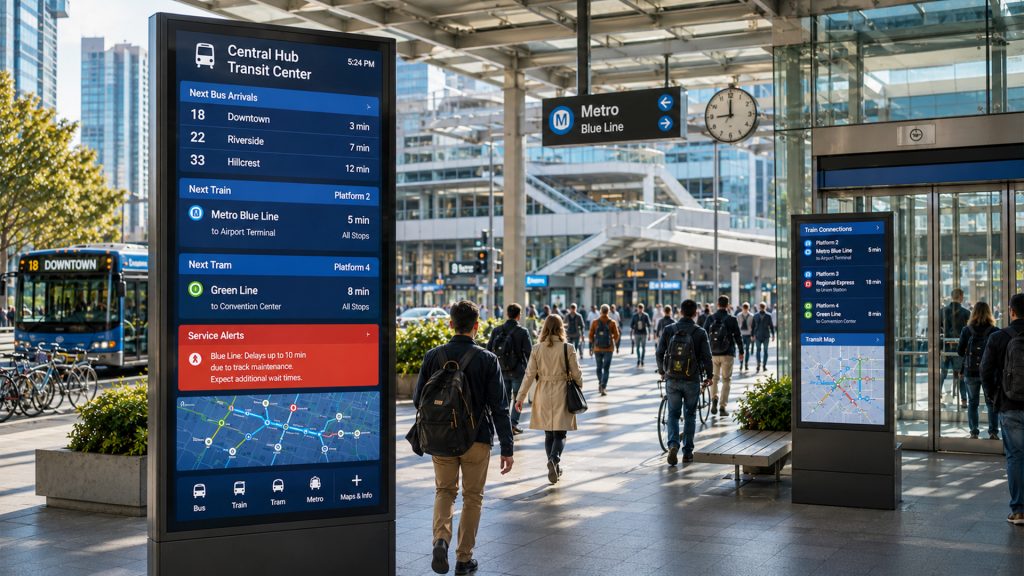
It used to be waiting and hoping to see a bus going down the street. Smart bus stops have now been indicated:
- Countdowns of bus arrivals in real time.
- Service updates and route maps.
- Weather forecasts
- Emergency or safety messages.
- Even local news or public service announcements
This makes a dull waiting time an informed, stress-free break in your day.
- Within Train and Metro Stations
Train stations can be very crowded, loud, and confusing, particularly for new visitors. Transport digital signage assists in displaying:
- Platform numbers for the next trains.
- Live train schedules and delays
- Clarity of direction on wayfinding maps.
- Ticket information and guidelines.
- Signs of safety and compliance.
By making all this manifest on screen and in real time, the passengers have less time to waste figuring out what to do and more time to walk with their heads held high.
- In Airports and Transit Hubs
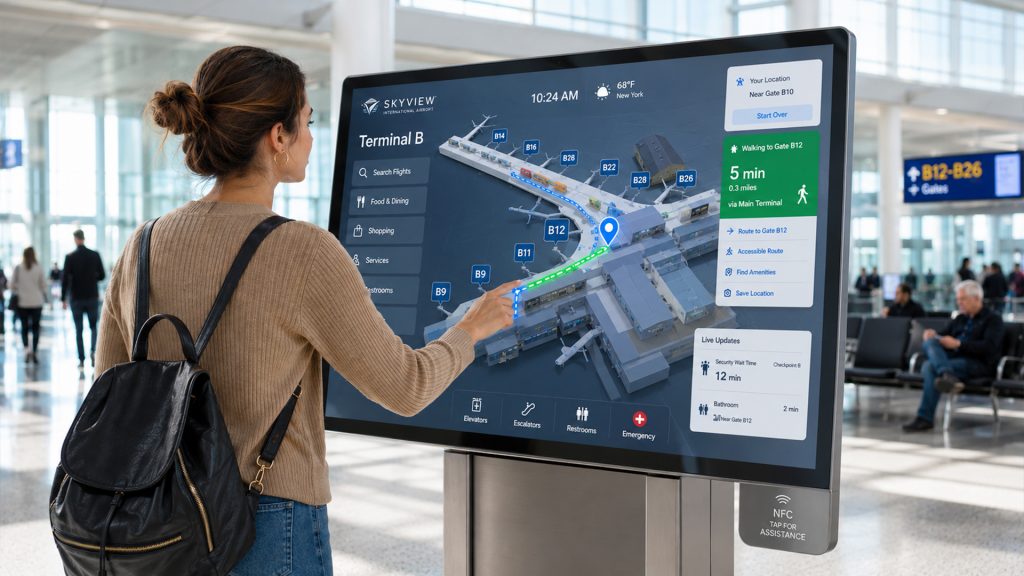
The most famous example of digital transport signage is likely airports. Big departure and arrival boards, gate change messages, baggage claim messages, and so on, all of this makes millions of travelers move in huge volumes every day.
It is now exporting the same technology to smaller transit hubs, ferry terminals, and intermodal stations to provide all travelers with a smooth, easy, and enjoyable, well-informed experience.
- On Buses, Trains, and Metros
Transport digital signage does not halt within the vehicle. On screens in buses and trains, it is possible to display:
- The next stop announcement (visual + audio)
- The entire route map with the existing location marked.
- Making links between routes in future destinations.
- Promotions and advertisements to finance public transit.
- Public health messages or safety reminders.
Passengers can be sure of their positions and destinations, eliminating missed stops and exits.
The Business and Operational Benefits of Transport Digital Signage
It’s not just passengers who benefit. Transit authorities and transportation companies also benefit greatly from switching to digital signage.
- Better Control of Content: Discover modern digital signage software, such as Disploy, and replace all of your displays with a single dashboard; you no longer have to physically change printed signs in hundreds of locations.
- Cost Savings Over Time: Although there is an initial cost to purchase screens and software, transporting digital signage eliminates the recurring costs of printing and installing new signs whenever a route, schedule, or price changes.
- Advertising Revenue: Third-party advertisements can be displayed on digital screens, generating a new revenue stream for transit operators. This revenue can be used to invest in service enhancements.
- Data and Analytics: Modern digital signage systems provide feedback on what is shown, when, and how passengers use it. This helps transit teams make smarter decisions.
- Brand and Image: A tram system that appears clean, well-organized, and modern inspires confidence in the people. Smart digital signage will help a transit authority appear professional and progressive.
The Important characteristics to consider in a Transport Digital Signage Solution
Not all digital signage platforms are the same. When you consider taking transport digital signage to your system, the following are some of the key features that you would want to consider:
- Live data integration – Does the platform support your live transit data feeds and display live arrival times?
- Remote content management- Could you manage all the screens in your network with a single platform, without having to go to each address?
- Multi-screen/Multi-zone support – Does it support multiple content on the same screen or hundreds of screens simultaneously?
- Scheduling and automation: Would you like content to automatically change at specific times of day, such as rush hour or late night?
- Emergency alert broadcasting – Does it support broadcasting urgent messages to all screens when something goes wrong?
- Multi-language support – Do your displays support multiple languages to cater to different passengers?
- Simple to use interface – Does your team have to be technical to make use of it?
Why Select Disploy to meet your Transport Digital Signage Requirements?
At Disploy, we realize that operating a transportation system is not easy. You have to handle multiple routes, hundreds of destinations, various passengers, and ensure everything is on time.
This is why we designed a digital signage solution that is robust enough to support large transit networks, yet easy enough for anyone on the team to use without advanced technical expertise.
Using Disploy you can:
- Manage and deploy screens across your entire network from a single location.
- Send real-time updates and emergency alerts in real time.
- Plan the time and place of the schedules.
- Keep in touch with live data feeds to have accurate, up-to-date information.
- Design gorgeous, branded displays that show the face of your transit system.
Be it a city bus network, regional rail system, or an intermodal transit hub, Disploy provides the means to provide a passenger experience of clarity, modernity, and true utility.
Conclusion
Transport digital signage isn’t just about putting screens in stations. It is about providing all its passengers, whether daily commuters or first-time visitors, with the assurance of traveling without confusion, stress, or uncertainty. The future of transportation systems is in progress today. And those who invest in smart, connected, real-time digital signage will be the passengers who trust them and return to them. Don’t leave your transit system behind.
Begin Your Free Trial with Disploy. At the moment, install your initial screen within minutes and experience how simple it is to make your transport digital signage and transform your passengers’ experience.