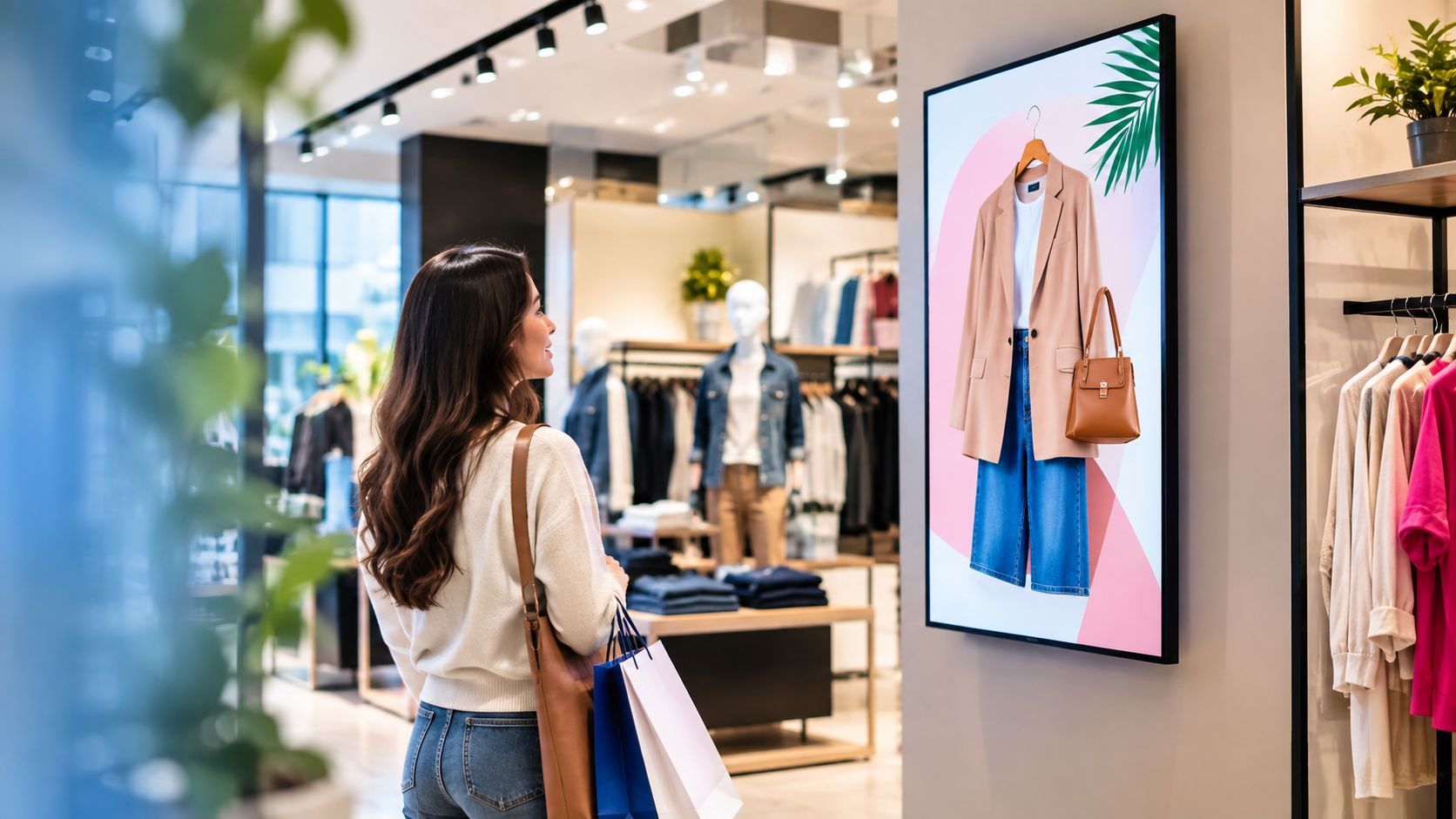
In the retail industry, you have just a few moments to convince your buyers to buy your product, and it is important to impress them, or they will move on to another shiny object. Modern stores are very distressing to the senses. Between all the chaos of physical banners and overhead music, you have to attract consumers to buy products from your store.
In situations like this, you can stay stress-free by using Retail digital signage for your store. This article shows 5 strategic ways to launch your products.
Strategy 1: Dynamic Storytelling
Retailers often make the mistake of focusing on listing features, dimensions, and prices. But in a post-commodity world, where functional equality exists, products are distinguishable by the methods used in their advertising. Retailers have to understand that Benefits and emotions drive the “Buy” button in the brain.
Don’t just show the Prices, show the Lifestyle
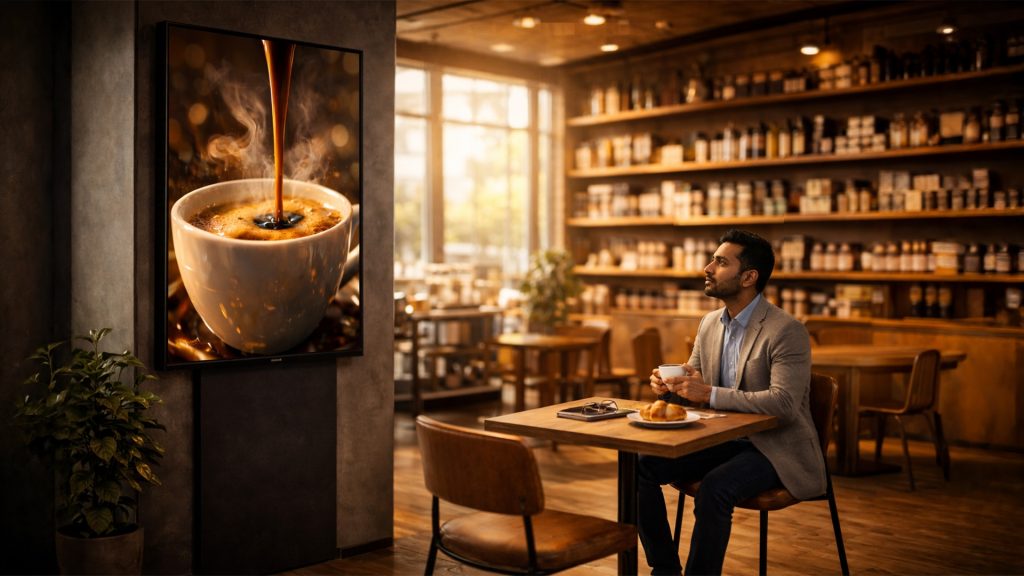
For example, why do you think people buy a high-end espresso machine? It isn’t because they want a stainless steel boiler. They buy it because they want the ritual of a quiet, luxurious morning before a chaotic workday. They buy the feeling of being a expert.
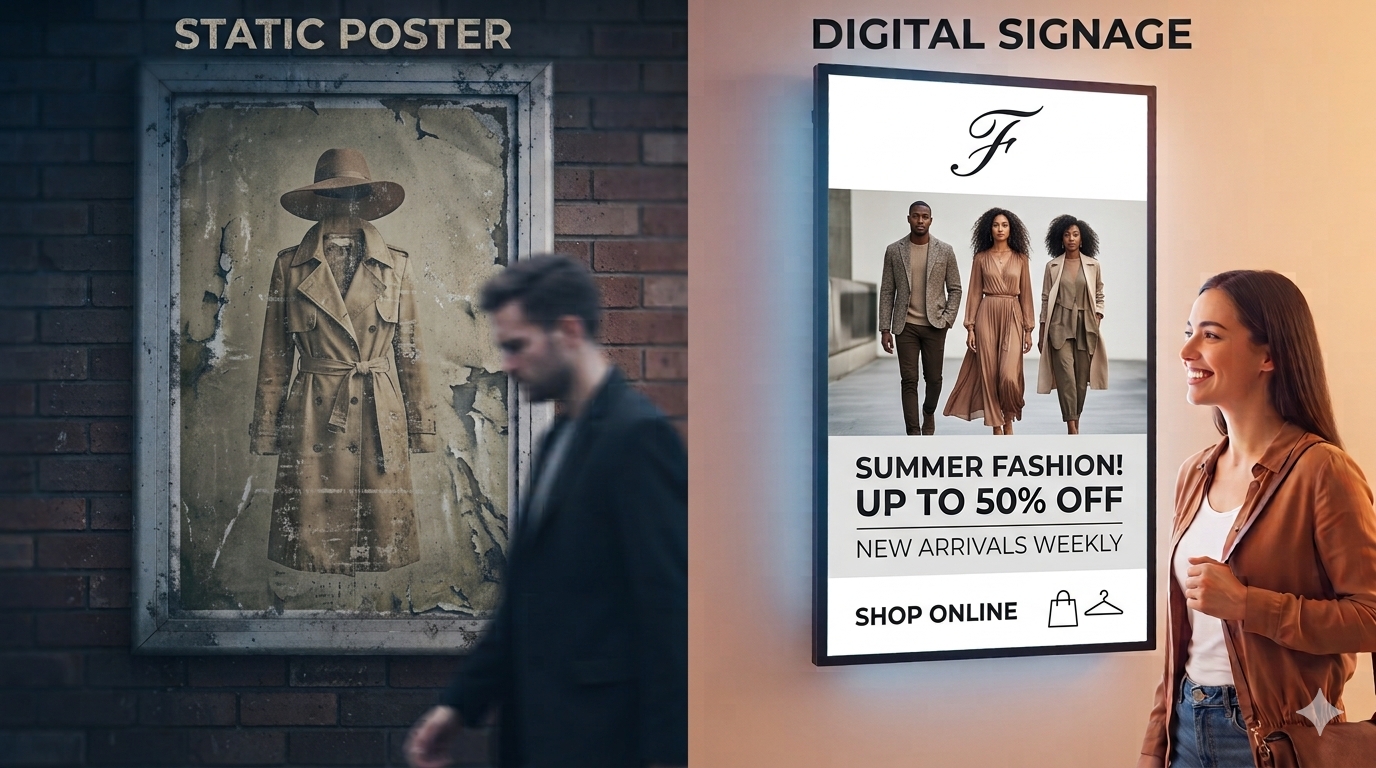
Retail digital signage lets you sell that “morning ritual” through high-definition video that static signage can’t. When a customer sees the steam rising from a cup in 4K resolution, their brain activates mirror neurons, and they can almost smell the coffee.
HOW TO DO THIS:
- Spend the first 3 seconds highlighting a pain point, for example, a person struggling with a messy, complicated coffee person.
- Spend 7 seconds showing the new product(espresso machine), solving that problem with effortless elegance.
- Spend the final 5 seconds showing the emotional payoff, like a smile or relaxation.
Strategy 2: Social proof and Real-time validation
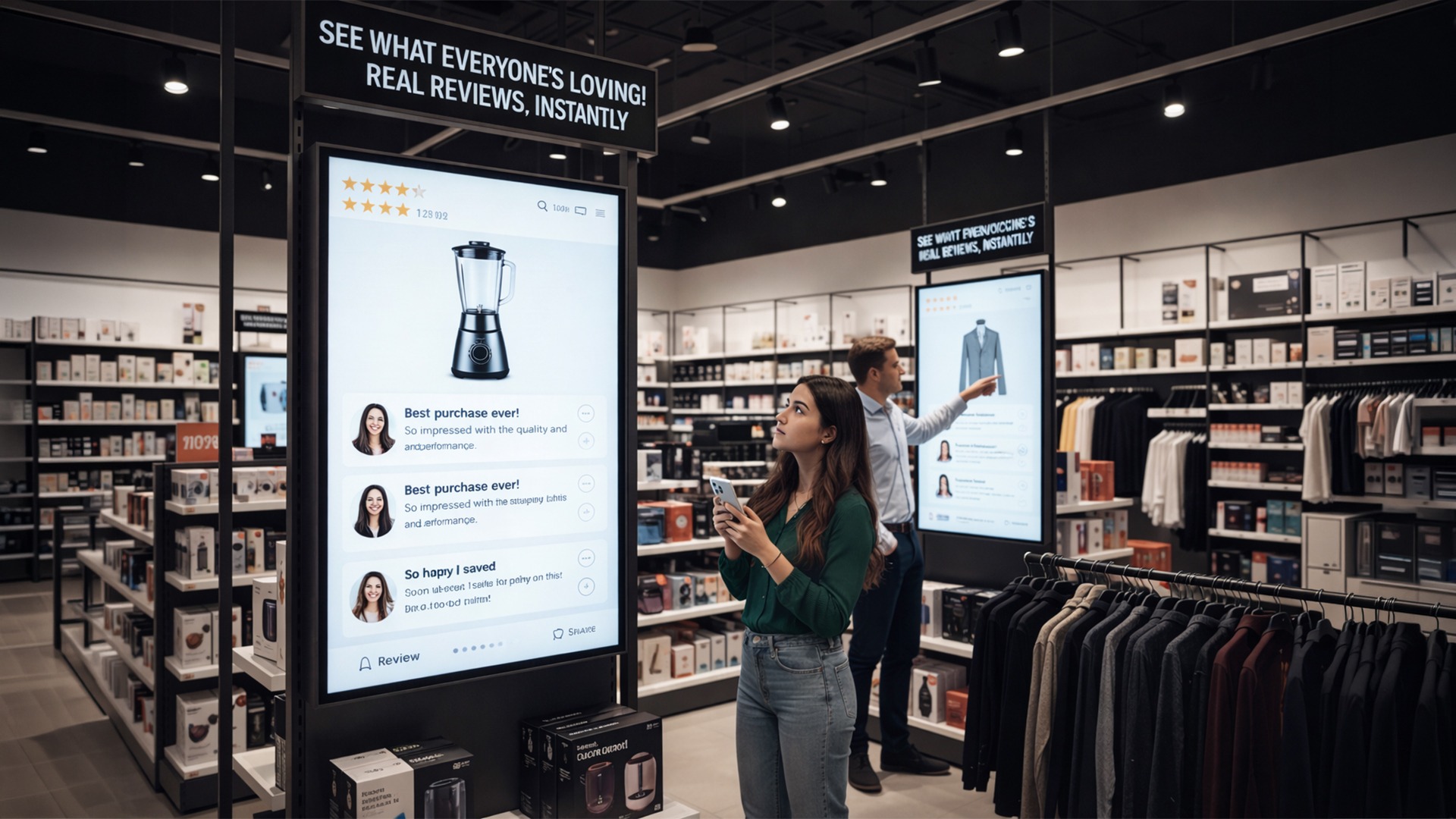
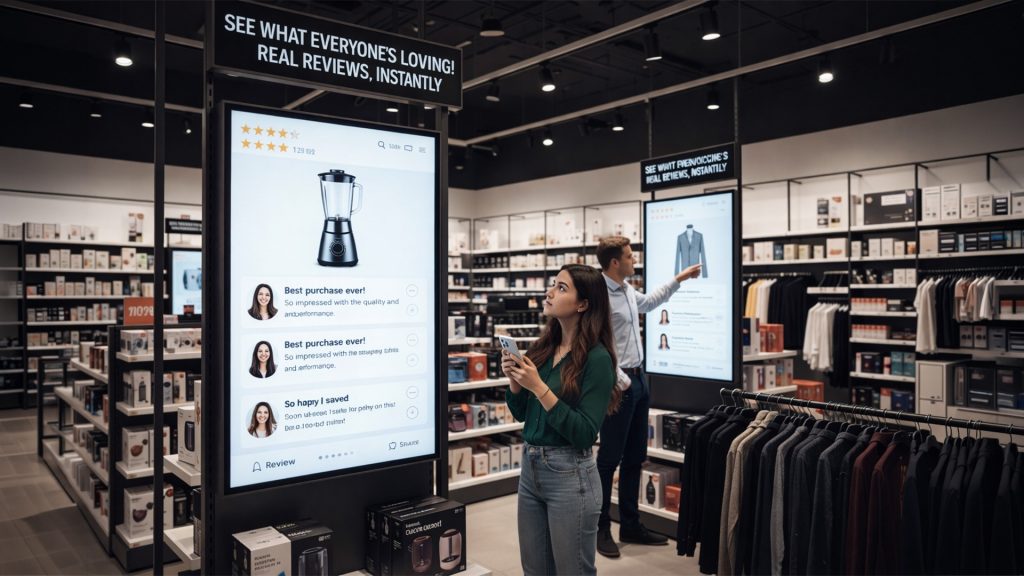
One of the greatest psychological barriers to purchasing a new product is social risk. Nobody wants to be the first person to buy a “lemon.” So, customers automatically pull out their phones to check online shopping platforms for reviews while standing in your store, and through retail digital signage, you bring this social proof directly to your store’s floor, keeping your customers’ eyes on your store rather than on their phones.
For example, imagine a retail digital signage display dedicated to a new skincare line. The left side of the signage features a curated feed of Instagram posts showcasing the new skincare line, and the right side shows verified 5-star reviews.
Psychological Impact:
This example uses a tactic ‘Informational Social Influence”. When customers are uncertain of what to buy, they look to other’s behaviour to make a decision. By seeing people using and enjoying the product, their brain categorizes their purchase as a “safe purchase”, you are essentially taking over the guilt or doubt from a customer’s mind that often leads them to put the product back in the shelf.
Strategy 3: Scarcity and “Live” inventory triggers
Strategy 3 is all about “Action”; a lack of urgency is a disadvantage for the store owner, as customers will postpone their decision, leading them to walk away. Once they leave, the likelihood of a sale converting drops by more than 80%. Retail digital signage is no longer a standalone loop. It is an extension of your store’s nervous system, connecting your signage software to your point of sale (POS) and inventory management systems and reflecting your store’s heartbeat.
For example, when a newly launched product with great reviews drops from 10 to 4 units, signage suddenly shifts from a lifestyle showing display to a scarcity overlay: “Hurry! Only 4 units left in stock”.
Strategy 4: Dayparting and the “Contextual Relevancy” Engine
Many retailers make the mistake of running the same 2-minute loop from 9:00 AM to 9:00 PM. A customer walking into a store at 10:00 AM on a Tuesday has vastly different needs than the customer rushing in at 5:30 PM on a Friday. Retail Digital Signage allows for Dayparting, the ability to change your content automatically based on the time of day or day of the week, ensuring that your “silent salesperson” is always pitching the right product to the right customer.
Tactics for retailers to win this battle of “Time-of-Day.”
| Shopper Segment | Peak Time | Core Focus | Content Strategy |
| The Morning Rush | 9 AM - 11 AM | Ease of Use & Efficiency | Demonstrate how the product, such as a new kitchen appliance, saves valuable time during a busy morning routine. |
| The Lunchtime Browser | 12 PM - 2 PM | Quick Inspiration & Attention Grab | Utilize high-energy, fast-paced visuals to immediately capture the attention of shoppers on a short break. |
| The Weekend Explorer | Saturday/Sunday | Deep Dive & Storytelling | Offer longer-format content and detailed storytelling loops that delve into the craftsmanship, heritage, or full product experience, as these shoppers have more time to think about the product. |
The core of this approach is Contextual Priming, aligning your retail digital signage message with the customer's immediate mindset or situation. For example, a "Ready for the weekend?" message displayed on a Friday afternoon capitalizes on their current state of mind. This reduces the mental effort required for a purchase, making your product seem like an intuitive and natural solution rather than an unwanted advertisement. This sales strategy is easy to implement and requires no additional hardware.
Strategy 5: The “Phygital” bridge (QR Integration)
The biggest challenge with a physical retail store is always attribution, like how would you know if that $5,000 screen actually sold any product? The QR code, once an artifact, has become the primary bridge between a physical store and the digital marketing funnel. Your retail digital signage should be the “top of the funnel”, and customers’ smartphones the “bottom of the funnel”.
Tactics:
- Exclusive Discounts: Scan the screen for a 15% 'Launch Day' coupon." This gives the customer an immediate incentive to engage.
- Loyalty Sign-ups: Use the screen to drive newsletter sign-ups. The customer scans their receipt, enters their email, and receives a digital receipt or a discount code.
- Tracking the Journey: By using unique UTM parameters in your QR codes, you can track exactly which screen, in which store, at what time of day, led to a conversion. This turns your retail digital signage from a "cost center" into a "data center.
For example, a customer isn't ready to buy a $1,200 sofa today. A QR code on your retail digital signage lets them "Scan to save this setup to your wishlist." Now, you have their data, and you can retarget them with Facebook or Google ads the moment they get home.
Ready to Bring Your Retail Launch to Life?
Theory is a great starting point, but the true power of digital signage is seen in the results on your store floor. You don’t need a massive hardware overhaul or a team of engineers to start driving higher conversions today.
Experience the Disploy difference for yourself, completely risk-free.
- Get instant access to the Disploy platform and see how easy it is to schedule dynamic loops and inventory triggers. No credit card required.
- Use our disploy studio to build a "Phygital" bridge in minutes and start measuring your real-world ROI.
Conclusion
Retail digital signage nowadays is not about “putting a TV on the wall”; it is about contextual communication. It is about knowing your customers, like what they are looking at, what they care about, and what they need to hear to move from “curious” to “committed”.
Retail is no longer just about the exchange of goods for currency; it is about delivering information in a high-friction world. By leveraging storytelling, social proof, real-time data, interactivity, and mobile bridges, you turn your store into a living, breathing sales environment that adapts to customers in real time. A new product launch is fragile. Don't let it get lost in the noise. Give it the voice it deserves through a strategic rollout of digital retail signage.