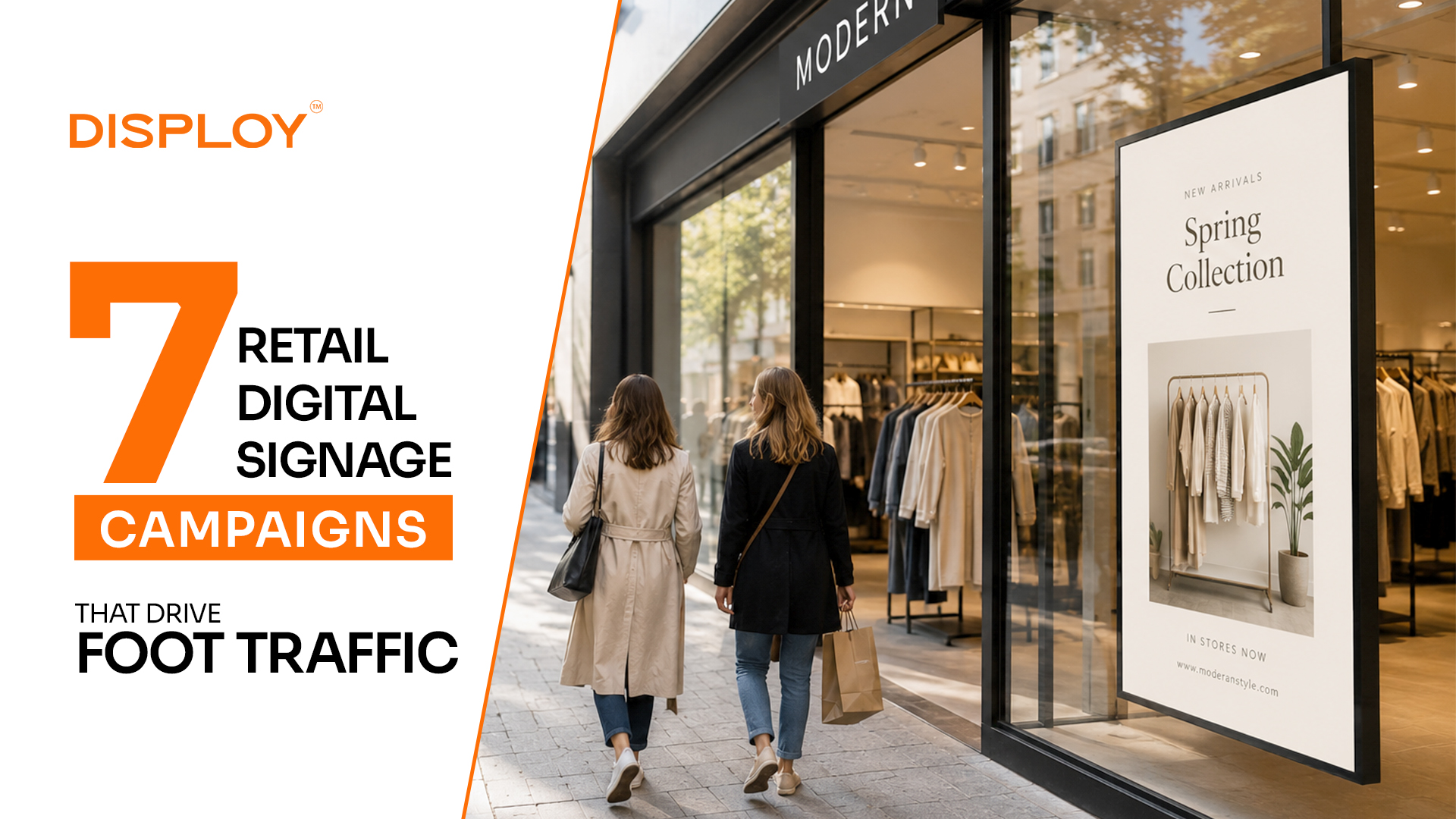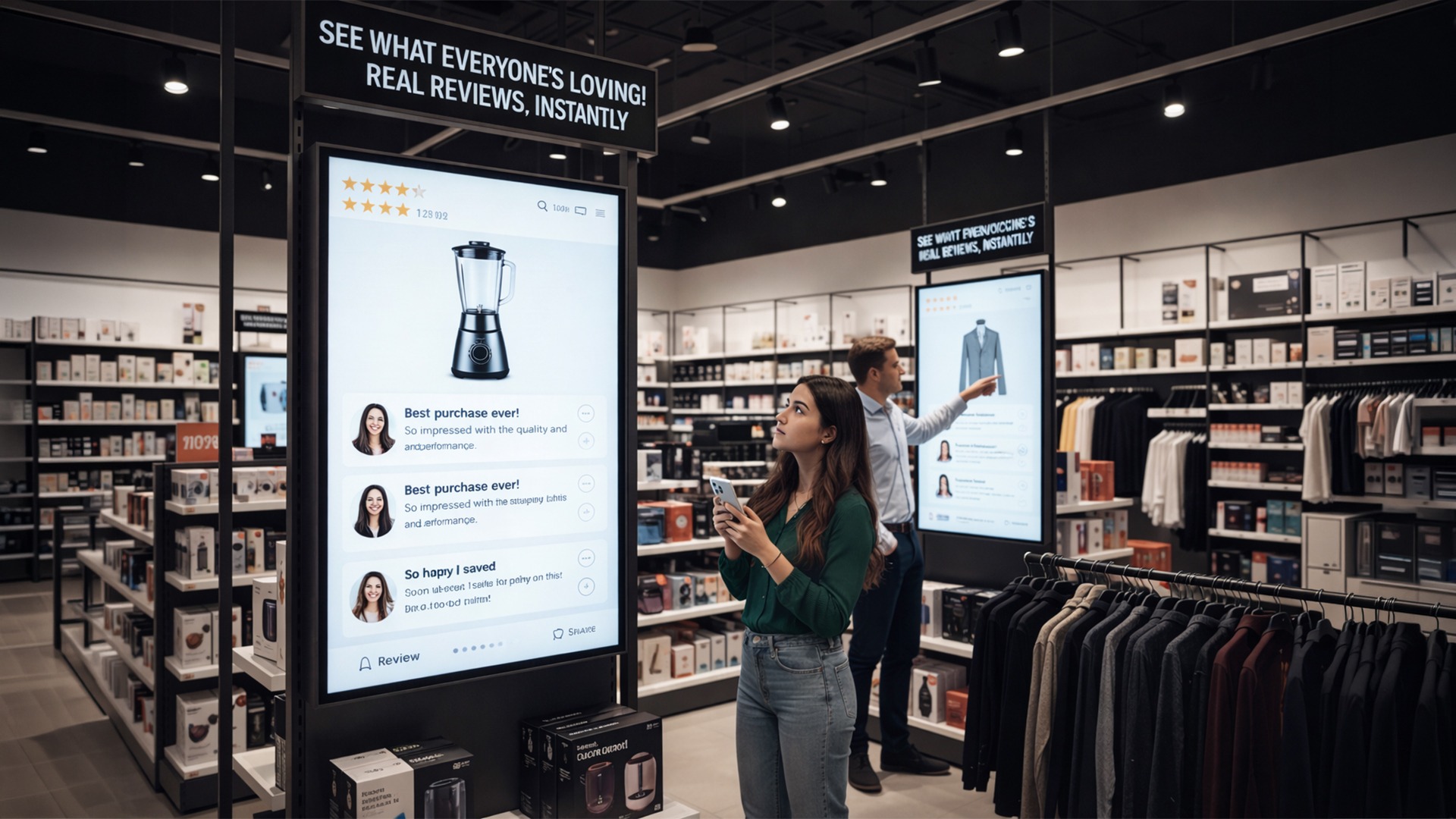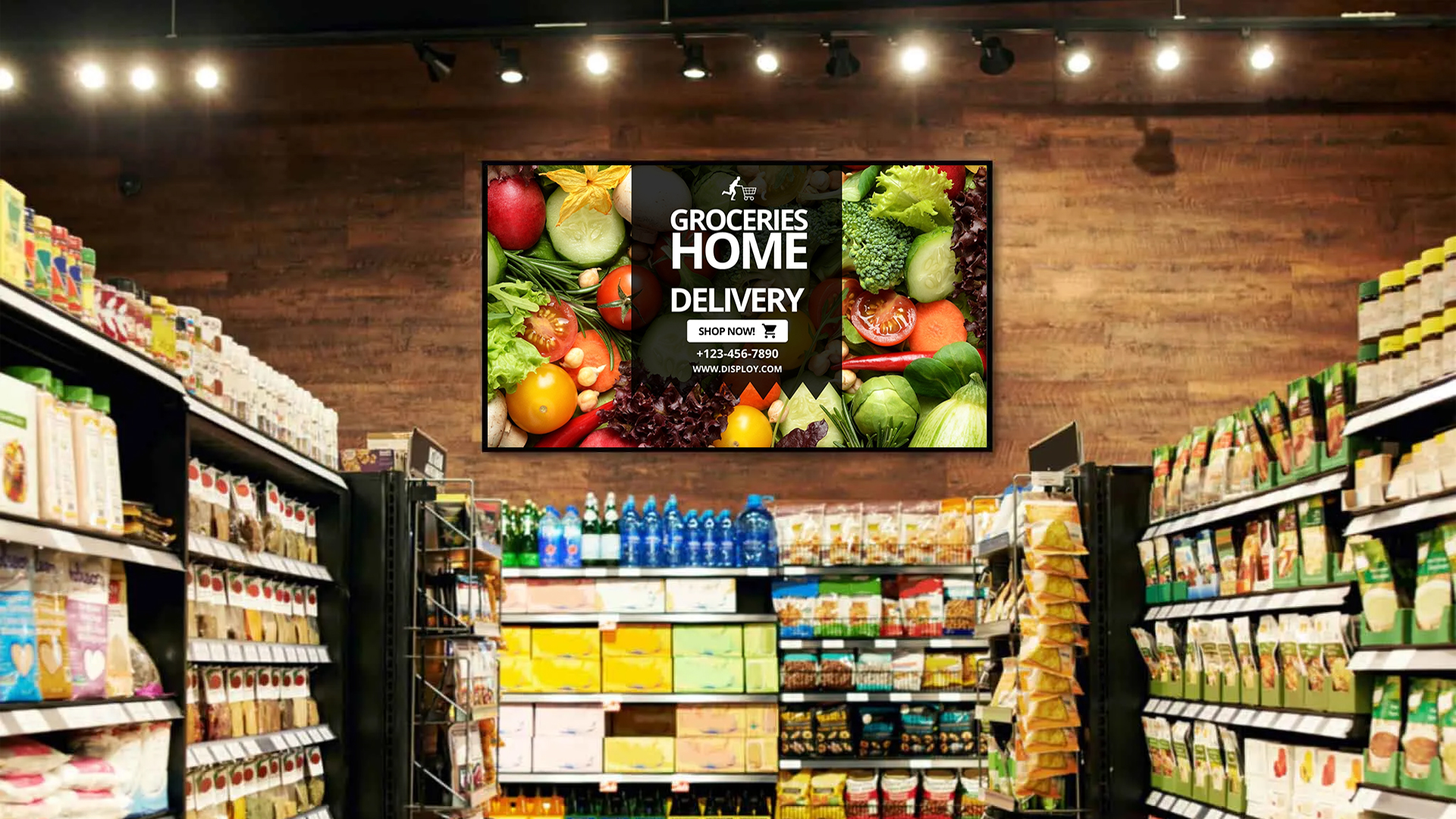

There's a phrase that comes up a lot when business owners talk about signage: "it's just a sign." It's usually said when someone's deciding whether to spend money upgrading from a printed poster to a digital screen, with the underlying assumption that a sign is a sign and customers barely notice the difference either way.
That assumption is wrong, and it's an expensive one to hold onto.
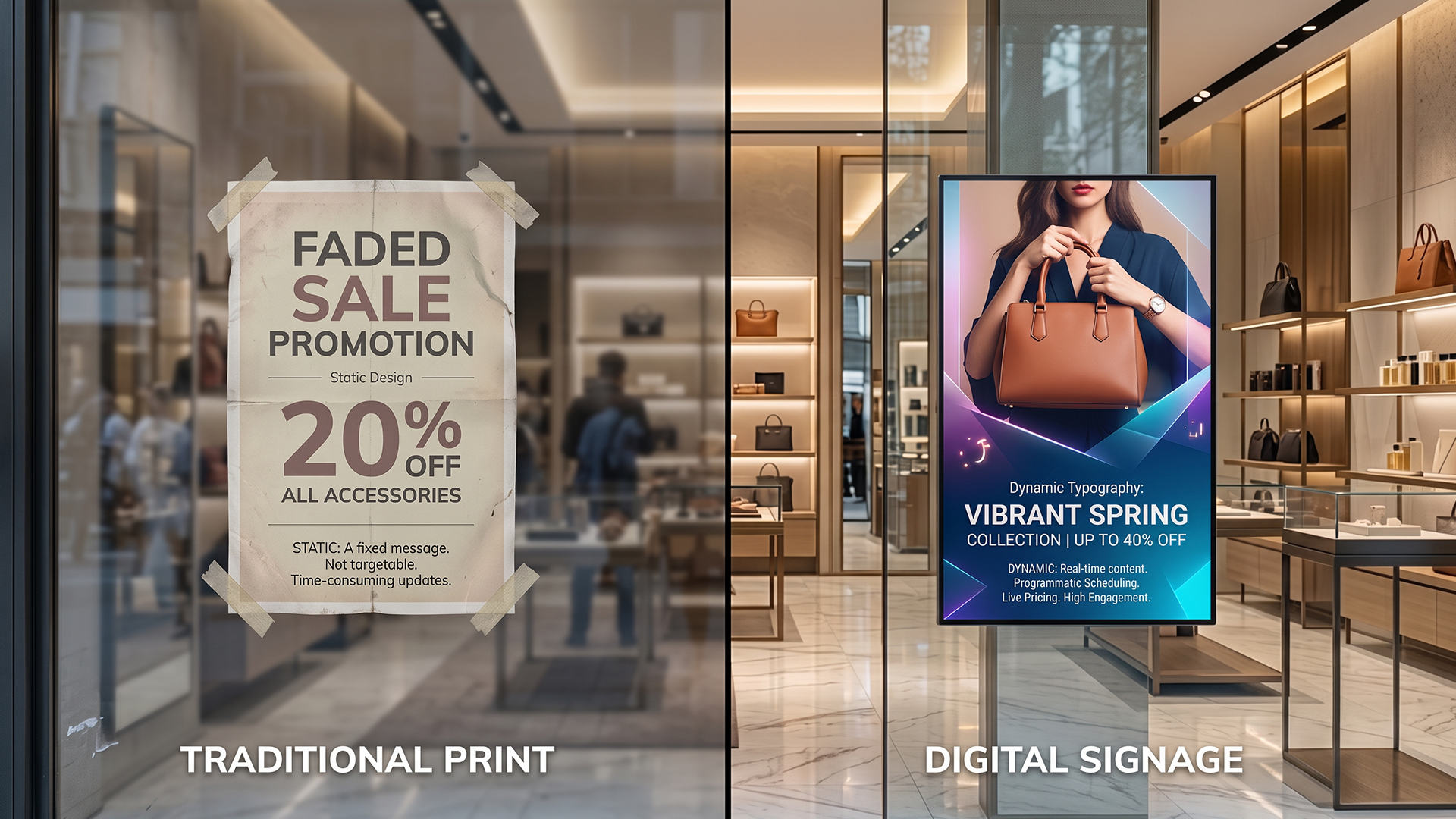
A sign isn't just decoration hanging near your entrance or checkout counter. It's one of the last things a customer sees before deciding to buy, walk past, or walk out. And the difference between a static sign and digital signage isn't cosmetic. It's the difference between a message that sits there hoping to be noticed, and one that actively works to convert attention into sales.
The Problem With "It's Just a Sign" Thinking
Static signage was never designed for how people actually shop today. A printed poster gets put up once, and then it stays exactly the same until someone remembers to change it, which in a lot of businesses means weeks or months go by with the same tired promotion sitting in the window.
Customers notice that. Not consciously, maybe, but repetition breeds invisibility. The brain is wired to filter out things that don't change. A static sign that's been in the same spot for three months has effectively become part of the wallpaper. It stopped working long before anyone thought to take it down.
There's also the flexibility problem. If a retail chain wants to promote a flash sale, update pricing, or push a seasonal offer across 50 locations, static signage requires physically printing, shipping, and installing new materials at every store. That takes time, costs money, and almost guarantees inconsistency, since some locations will get the update sooner than others, and a few will inevitably forget entirely.
And then there's the biggest issue: static signs can't respond to anything. They can't reflect what's happening right now, whether that's a live inventory count, the time of day, weather outside, or a limited-time offer that needs urgency. They just sit there, saying the same thing to everyone who walks by, regardless of whether it's relevant.
What Digital Signage Actually Changes
Digital signage flips all of this. Instead of a fixed message, you get a living one that updates, adapts, and responds in real time. And the impact of that shift isn't theoretical. It shows up directly in purchase behavior.
Movement is the first thing that matters. Human attention is drawn to motion almost instinctively, which is why a screen playing subtle animation, transitioning offers, or short video content pulls the eye in a way a static poster simply can't compete with. Retailers who've switched from printed signage to screens consistently report the same pattern: more people actually stop and look.
Then there's relevance. Digital signage lets a business change what's showing based on context. A coffee shop can display breakfast items in the morning and switch to afternoon specials by 2 p.m., automatically, without anyone touching a ladder or a print shop invoice. A clothing store can highlight a new arrival the moment it hits the floor, rather than waiting for the next printing cycle. That kind of responsiveness keeps messaging fresh, keeping customers engaged rather than tuning out.
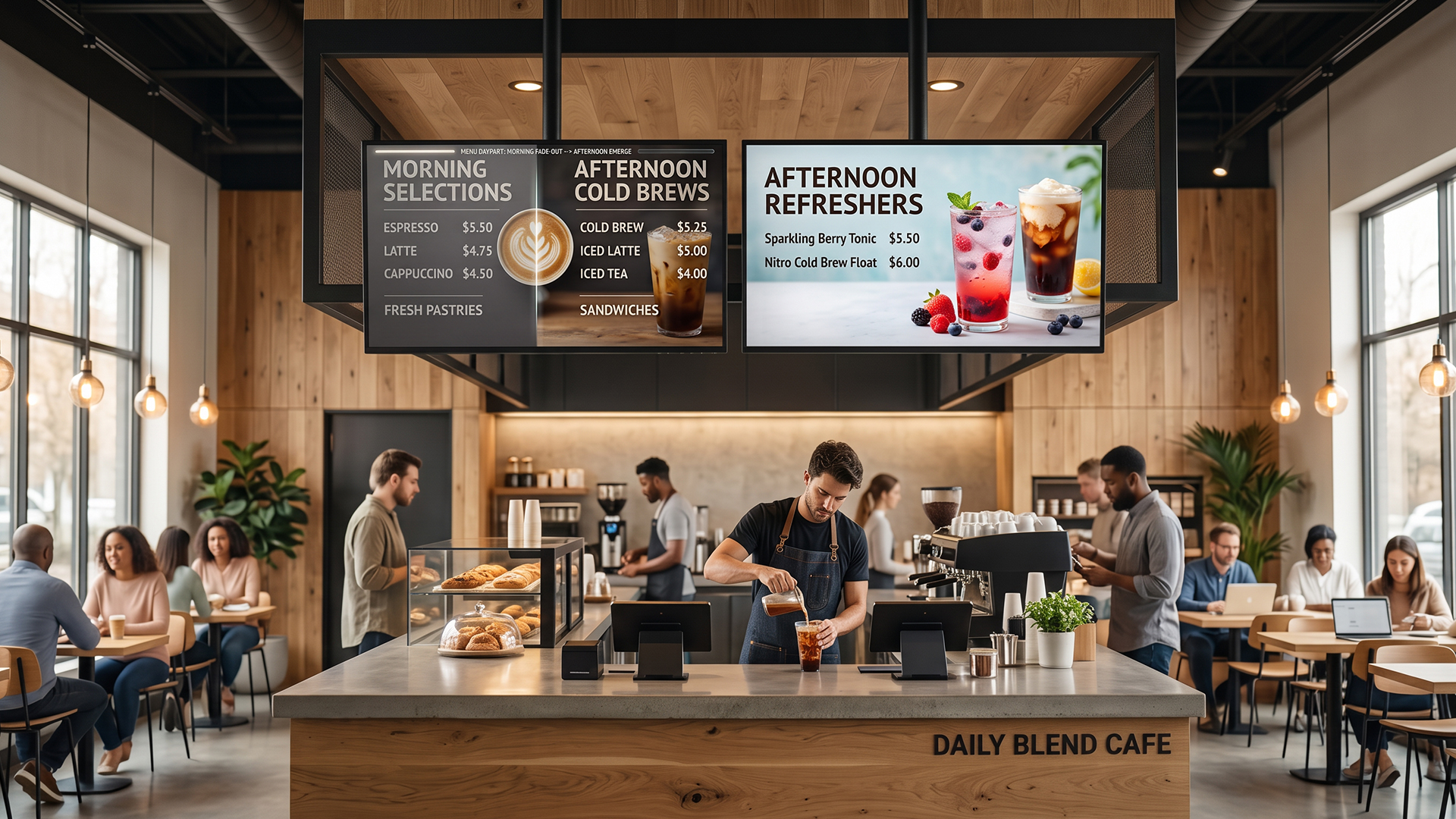
Urgency is another lever static signage just can't pull. A countdown timer on a digital screen showing "Sale ends in 3 hours" creates a psychological nudge that a printed "Sale This Week" sign never will. People respond to real-time urgency far more than they respond to a static deadline they can mentally shrug off.
And then there's the sales-floor advantage that gets overlooked the most: digital signage can highlight exactly what a business wants to move. If a store has excess inventory in a certain product line, that's what the screen shows. If margins are better on one item than another, the screen can be weighted toward that item. Static signage locks in a decision the day it gets printed. Digital signage lets a business keep adjusting its pitch as conditions change.
The Sales Impact Nobody Talks About Enough
A lot of the conversation around digital signage focuses on how it looks, but the real story is what it does to purchase decisions.
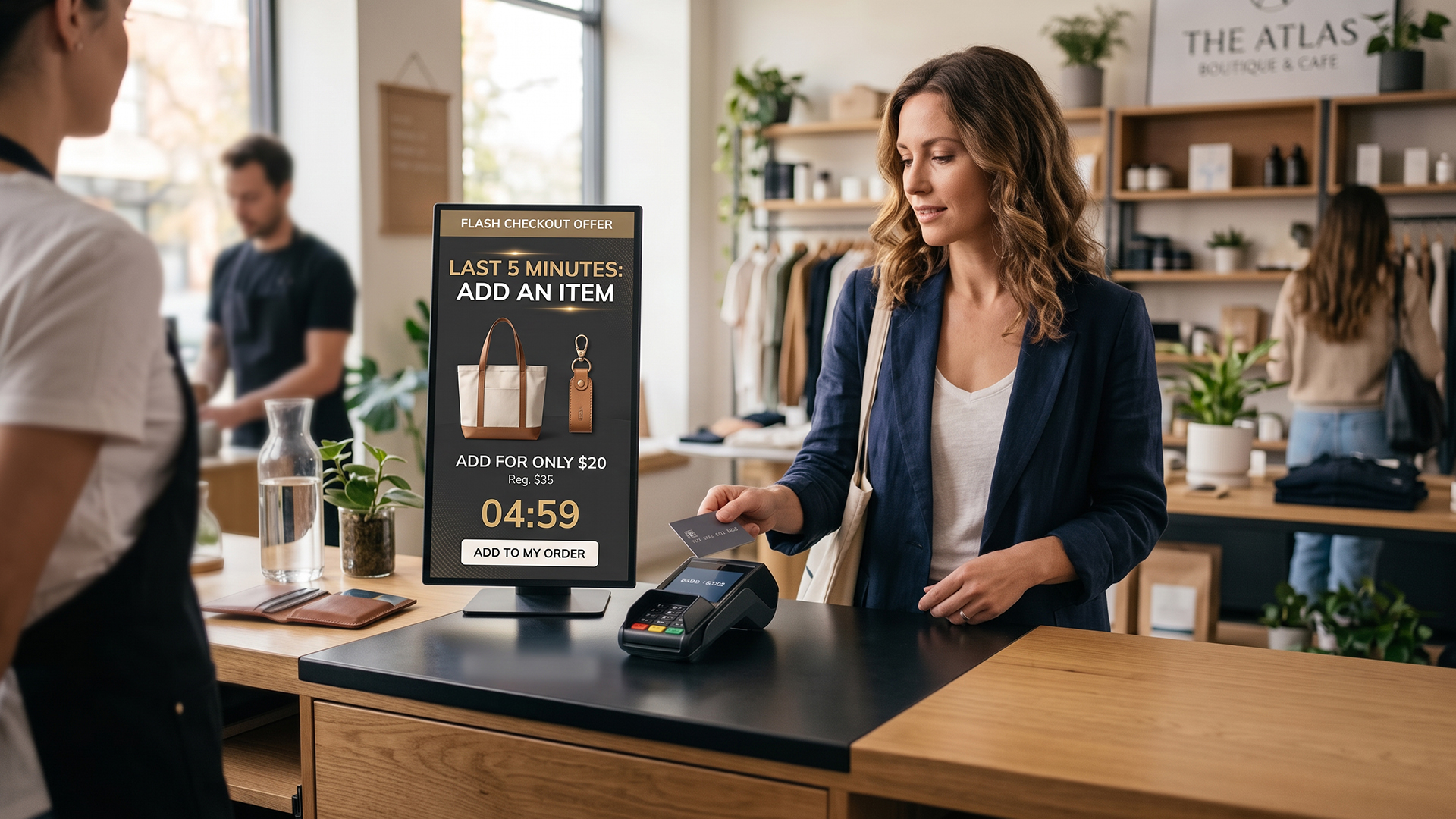
Point-of-sale digital signage has repeatedly been shown to influence impulse purchases, particularly at checkout counters, where customers are already in a buying mindset and just need one more nudge. A screen showing a limited-time add-on offer at checkout captures attention at exactly the moment a customer is deciding what else to grab before paying. A static sign in that same spot has to compete with distraction, checkout lines, and general lack of attention. Movement wins that fight almost every time.
There's also a brand perception effect that's easy to underestimate. Businesses using clean, modern digital displays tend to be perceived as more current and more trustworthy than ones relying on printed signs that look like they've been there since the store opened. Customers make snap judgments about a business's quality based on small visual cues, and outdated signage is one that quietly signals "this place hasn't kept up."
And then there's the data layer. Digital signage platforms can track what's being displayed, when, and how that correlates with sales performance. A business can actually test which promotions perform better, adjust content based on real results, and stop guessing which message is working. Static signage offers none of that visibility. Once it's printed, it's a fixed cost with an unknown return.
Why the Cost Comparison Is Misleading
The most common objection to switching from static to digital signage is cost. A printed poster is cheap. A digital display, especially across multiple locations, requires hardware, software, and setup.
But that comparison misses the bigger picture. Static signage carries hidden ongoing costs that rarely get factored in: design fees for every new promotion, printing costs that recur every time content changes, shipping to multiple locations, labor for installation, and lost sales while an outdated sign sits there doing nothing.
Digital signage front-loads the cost but then dramatically reduces the ongoing expense of updating content. Once the screens are set up, pushing a new promotion to every location takes minutes and costs nothing extra. Over the long term, especially for a multi-location business, the total cost of ownership usually favors digital signage once print and labor costs are properly accounted for.
There's also a scalability difference that matters more as a business grows. Static signage costs scale linearly; more locations mean more printing, more shipping, more coordination. Digital signage scales far more efficiently, since adding new screens to an existing network doesn't require rebuilding the entire system from scratch.
Making the Shift Without Overcomplicating It
Switching to digital signage doesn't mean overhauling everything at once. A lot of businesses start with high-traffic areas, entrances, checkout counters, or window displays facing foot traffic, and expand from there once they see how content performs.
The businesses that get the most out of digital signage treat it as an active sales tool rather than a passive decoration. That means updating content regularly, testing different promotions, and paying attention to what actually moves the needle instead of setting a screen once and leaving it running on autopilot, which just recreates the same stagnant problem static signage had in the first place.
The Real Cost of "It's Just a Sign"
Every business has a version of this conversation at some point: is it really worth upgrading something as simple as signage? But signage was never simple. It's a direct line of communication with every customer who walks through the door, and the format of that communication either works for the business or quietly works against it.
Static signage isn't just less exciting than digital. It's structurally limited in ways that cost real sales, lead to missed impulse buys, result in outdated promotions, create inconsistent messaging across locations, and leave the brand impression feeling a step behind. Digital signage closes that gap by turning a passive fixture into an active, adaptable part of the sales process.
The phrase "it's just a sign" undersells exactly what's at stake. The right signage doesn't just inform customers. It influences what they do next, and that influence is either working for a business or quietly costing it money every single day it doesn't.