Think about the last time you rushed through an airport. You probably glanced at a screen, hunted for your flight, found it, and then realized the gate had changed. Now you’re power-walking with a backpack digging into your shoulder.
That moment is exactly why airport digital signage matters. And the same goes for train stations, metro platforms, and bus terminals. People in these places are almost always short on time and long on questions. Where do I go? Is my train late? Which exit do I take?
Paper signs and printed timetables can't keep up. Information changes by the minute, and passengers need to see it as it changes. Let's look at how digital signage in transit hubs and airports solves this, and what operators should consider before setting it up.
Why Passenger Information Is Such a Big Deal
Travel hubs are stressful by design. Thousands of people move through them at once, many unfamiliar with the layout, some speaking a different language, and nearly all watching the clock.
When information is missing or out of date, the problems stack up quickly. Passengers crowd around help desks. Staff spend their day answering the same five questions. People miss connections, and a small delay becomes a bad experience they remember long after the trip.
Good passenger information does the opposite. It calms people down. It spreads crowds more evenly. It lets staff focus on real problems instead of pointing at the departures board for the hundredth time.
That's the gap digital signage fills. It puts the right information in front of the right person at the right moment, and it can change in seconds.
How Digital Signage in Airports Helps Passengers

Airports are probably the most information-heavy environments we ever walk through. A single trip involves check-in, security, boarding, and baggage claim, and each step raises its own questions. Here's where screens do the heaviest lifting.
Flight information displays
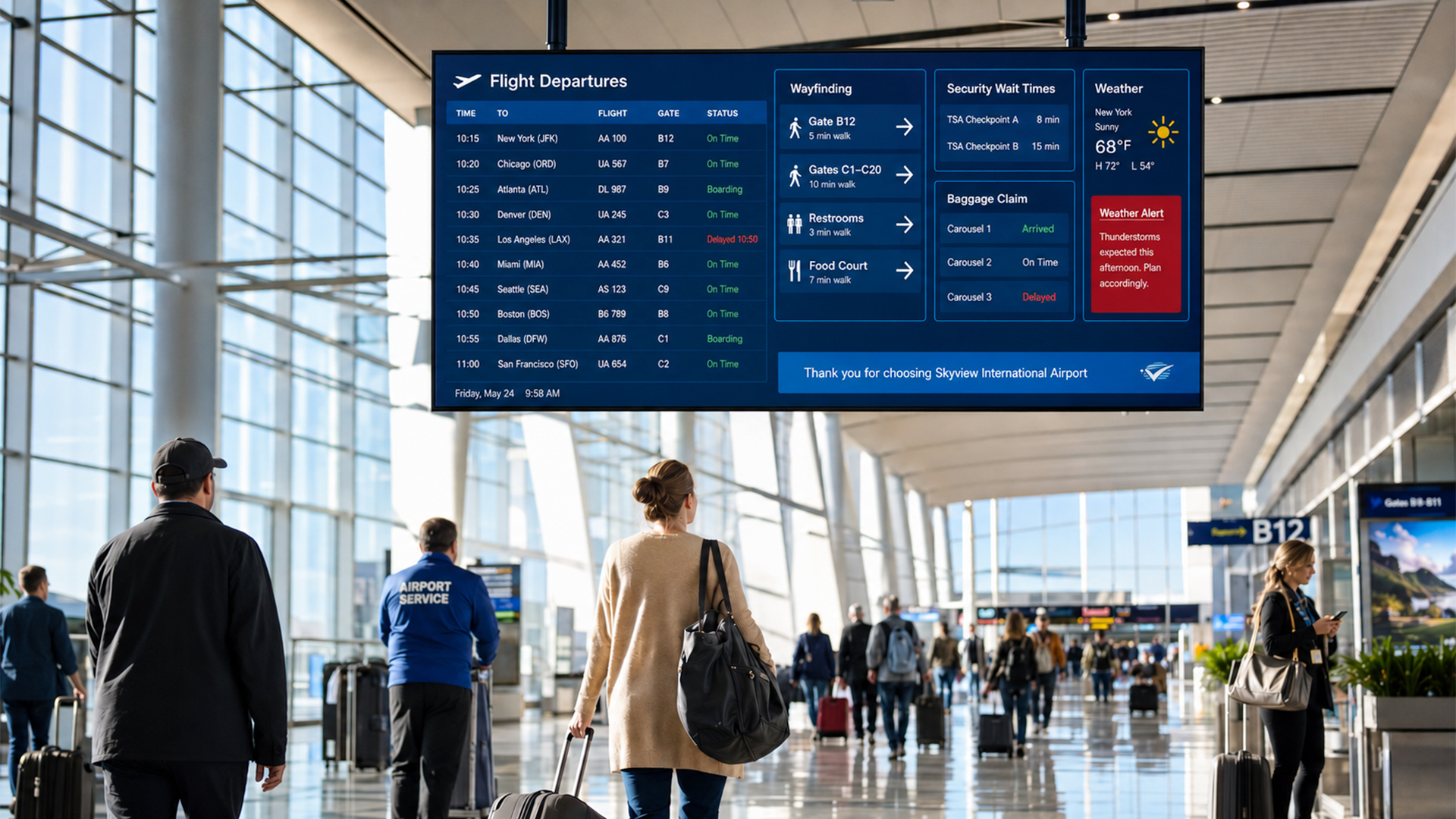
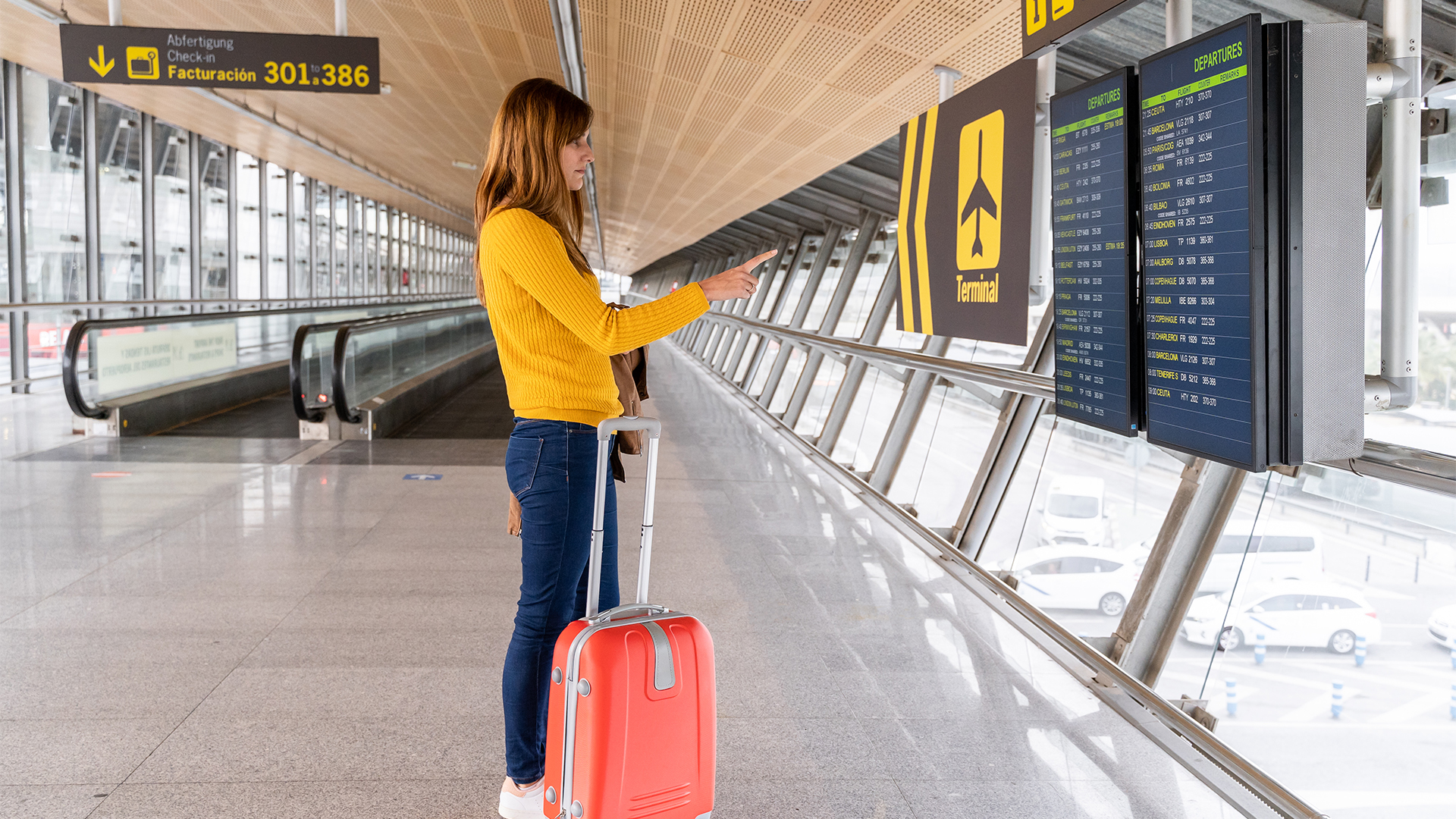
This is the classic one. Departure and arrival boards show flight numbers, destinations, gates, and status. Modern displays beat the old split-flap boards because they connect to live data. When a flight is delayed or a gate changes, the screen updates automatically. Nobody has to walk over and swap anything.
Screens can also be tailored by location. The display near gates 1 to 10 doesn't need to show everything in the terminal. Showing only what's relevant keeps the screen readable at a glance, which is the whole point.
Wayfinding
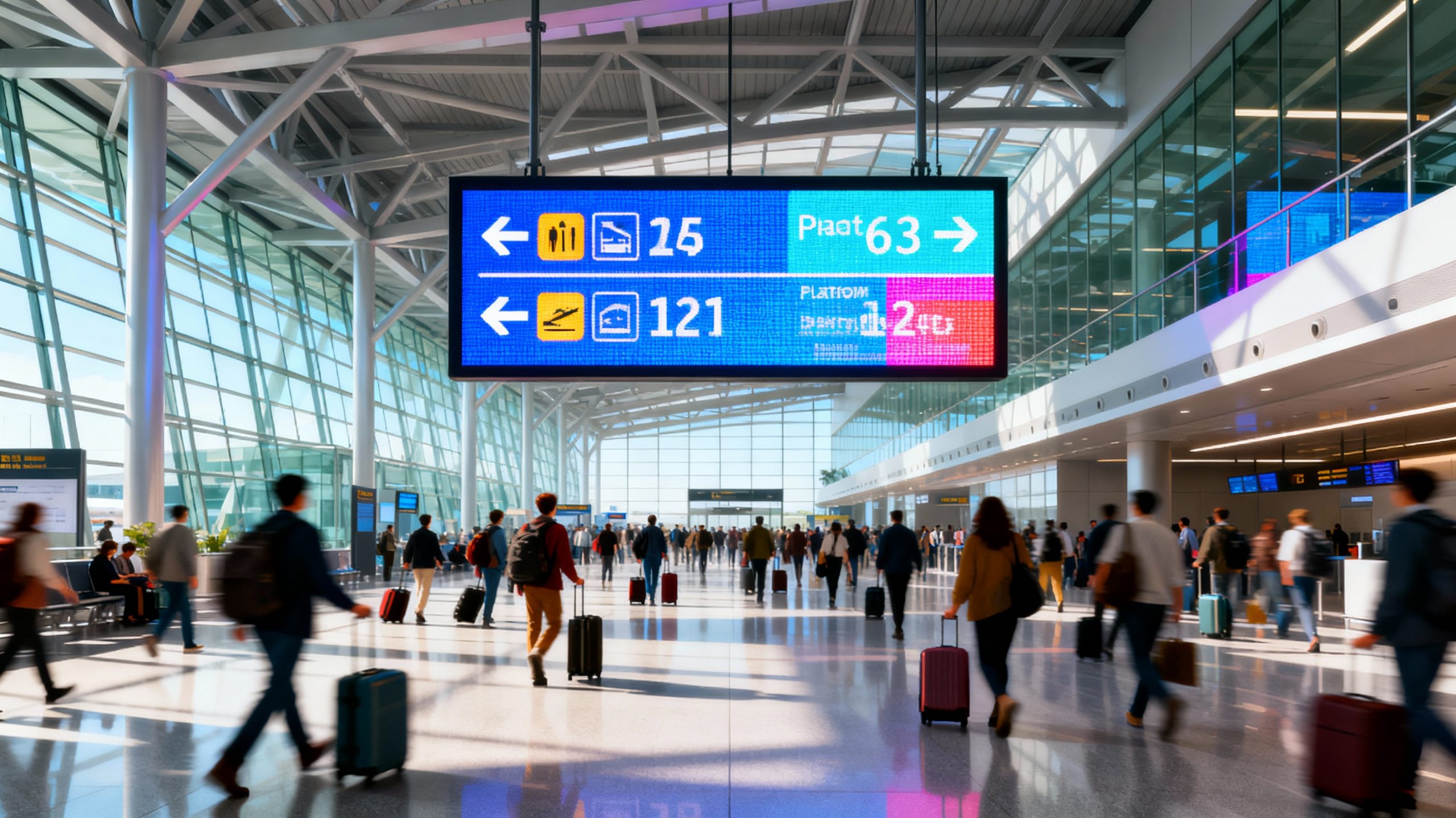
Airports are big, and they're confusing. Digital wayfinding screens and interactive maps help passengers find restrooms, lounges, food courts, and connecting gates without asking. Some screens show a "you are here" marker with a suggested walking route and estimated time. For a traveler with a tight layover, that small detail is a huge relief.
Security and queue updates
Nobody likes standing in a line without knowing how long it will take. Displays near security checkpoints can show estimated wait times, open lanes, and reminders to remove certain items from your bag. It sounds minor, but when passengers know what to expect, queues move faster, and tempers stay cooler.
Baggage claim
Few things make people more anxious than watching an empty carousel. Baggage-claim screens can show which carousel belongs to which flight, along with an estimated arrival time for the first bags. It's a simple fix for a very common frustration.
Digital Signage in Transit Hubs: Trains, Metros, and Buses
The needs are a bit different in a transit hub, but the core idea is the same. Journeys are shorter, trains and buses run more frequently, and passengers decide fast.
Real-time arrivals and departures
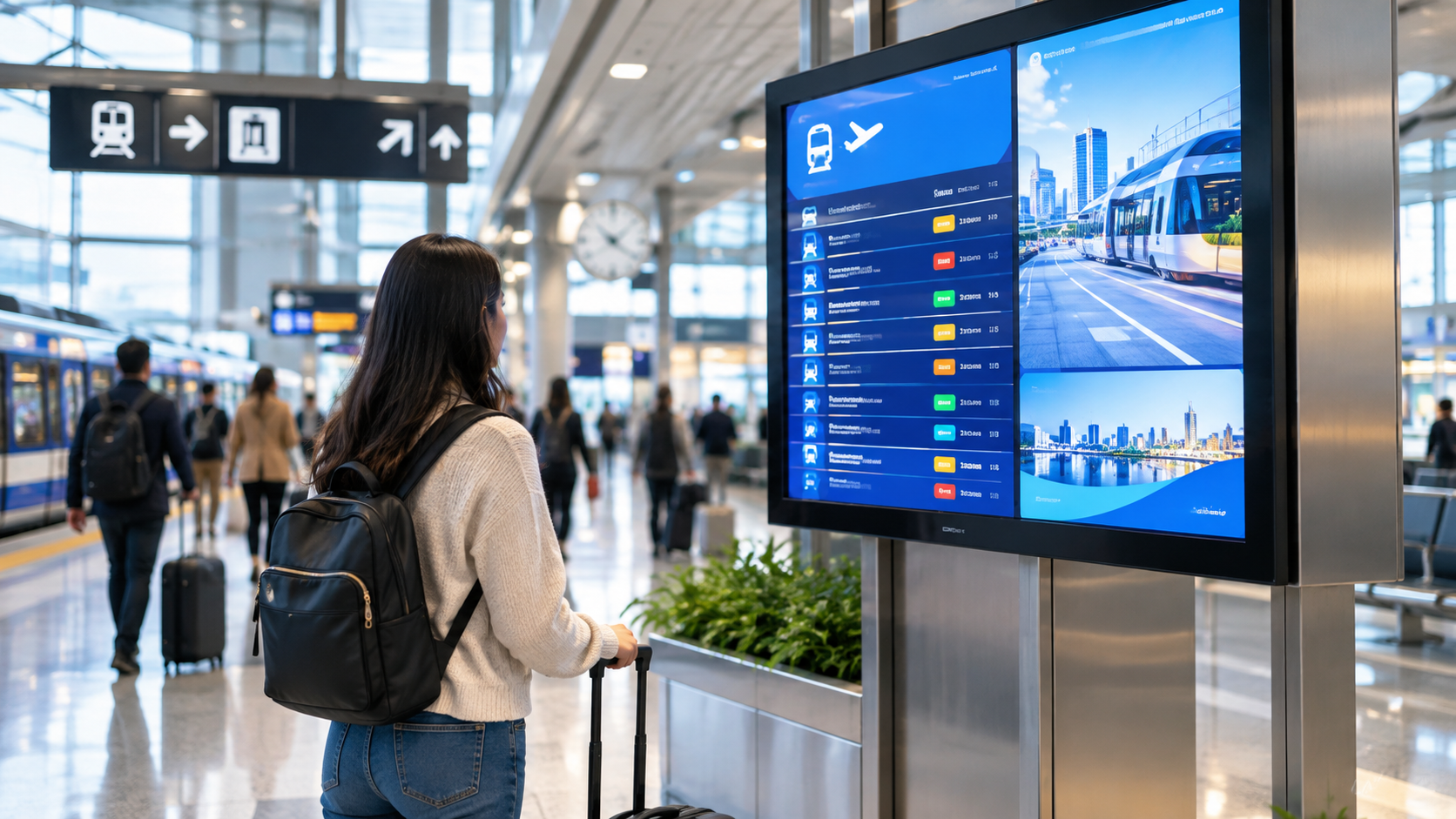
At a metro or bus station, people mostly want to know one thing: when's the next one? Live arrival boards answer that and reduce uncertainty. Waiting feels shorter when you know exactly how long it'll be.
Platform changes and delays
When a train is moved to another platform at the last minute, a printed notice just doesn't work. Digital displays can push the update to every relevant screen at once, on the concourse, at the platform entrance, and on the platform itself. That means fewer people sprint across a station at the last minute.
Service alerts and disruptions
Track maintenance, weather, strikes, a signal failure. Disruptions happen, and how you communicate them says a lot about your service. Signage lets operators share clear updates quickly, along with alternatives such as replacement buses or a different route. Honest, timely information goes a long way toward keeping passengers on your side, even when things go wrong.
Connecting modes of transport
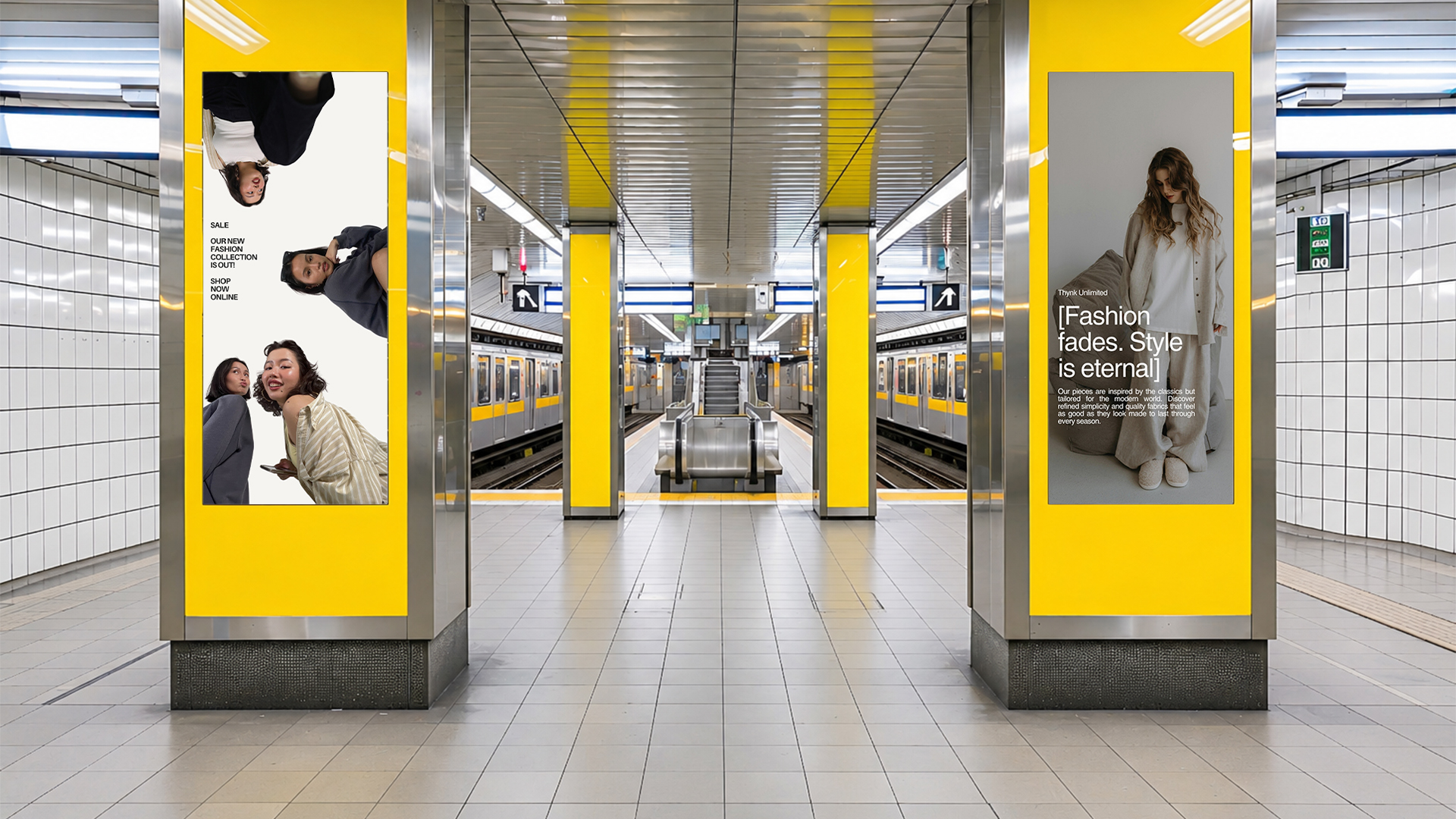
Many large hubs bring together trains, buses, metros, taxis, and sometimes bike or ride-share points. Signage can tie these together and show passengers how to reach the next leg of their trip, including walking directions and timings. That's a big help for anyone who's new to the area.
Safety and Emergency Messaging
This is the part nobody hopes to use, and it might be the most important one.
In an emergency, speed and clarity matter more than anything else. Digital signage can override regular content and instantly display evacuation routes, exit directions, or safety instructions across the whole building. Staff can trigger it centrally, so they don't need to rush from screen to screen.
Even on a normal day, signage supports safety. Reminders about unattended luggage, platform-edge warnings, and crowd-management notices help keep large numbers of people moving safely.
Accessibility and Multilingual Information
Airports and transit hubs serve everyone, including travelers who don't speak the local language, people with hearing difficulties, and passengers with visual impairments or reduced mobility.
Digital screens make this much easier. Content can rotate between languages, or switch based on the screen's location. High-contrast designs, large fonts, and simple icons help people read information quickly. Screens can also highlight step-free routes, lifts, and accessible facilities, which is something printed signs rarely do well.
Where announcements are made over speakers, matching text on a screen helps anyone who can't hear them clearly, or who simply can't make them out in a noisy terminal. That alone is worth the investment.
Turning Information Into Revenue
Here's something many operators appreciate once they get started. Passenger-information screens can also earn money.
Between flight updates and service notices, there's room for advertising, promotions for airport shops and restaurants, or messages from local tourism partners. Because the same screens are already in the right place and the audience is already looking, it's a natural fit.
The key is balance. Passenger information always comes first. If ads start crowding out the departure times, people will stop trusting the screens. A smart content schedule keeps essential information prominent and uses the gaps for promotions.
What to Think About Before You Install
Digital signage in airports and transit hubs isn't plug-and-play. A few things are worth planning early.
Reliability. These screens run all day, every day, and an outdated or blank display in a busy terminal causes real problems. You need stable hardware and software, plus a way to spot issues quickly.
Live data integration. Your screens are only as good as the data behind them. Flight systems, train schedules, and alert tools must feed the display accurately and without delay.
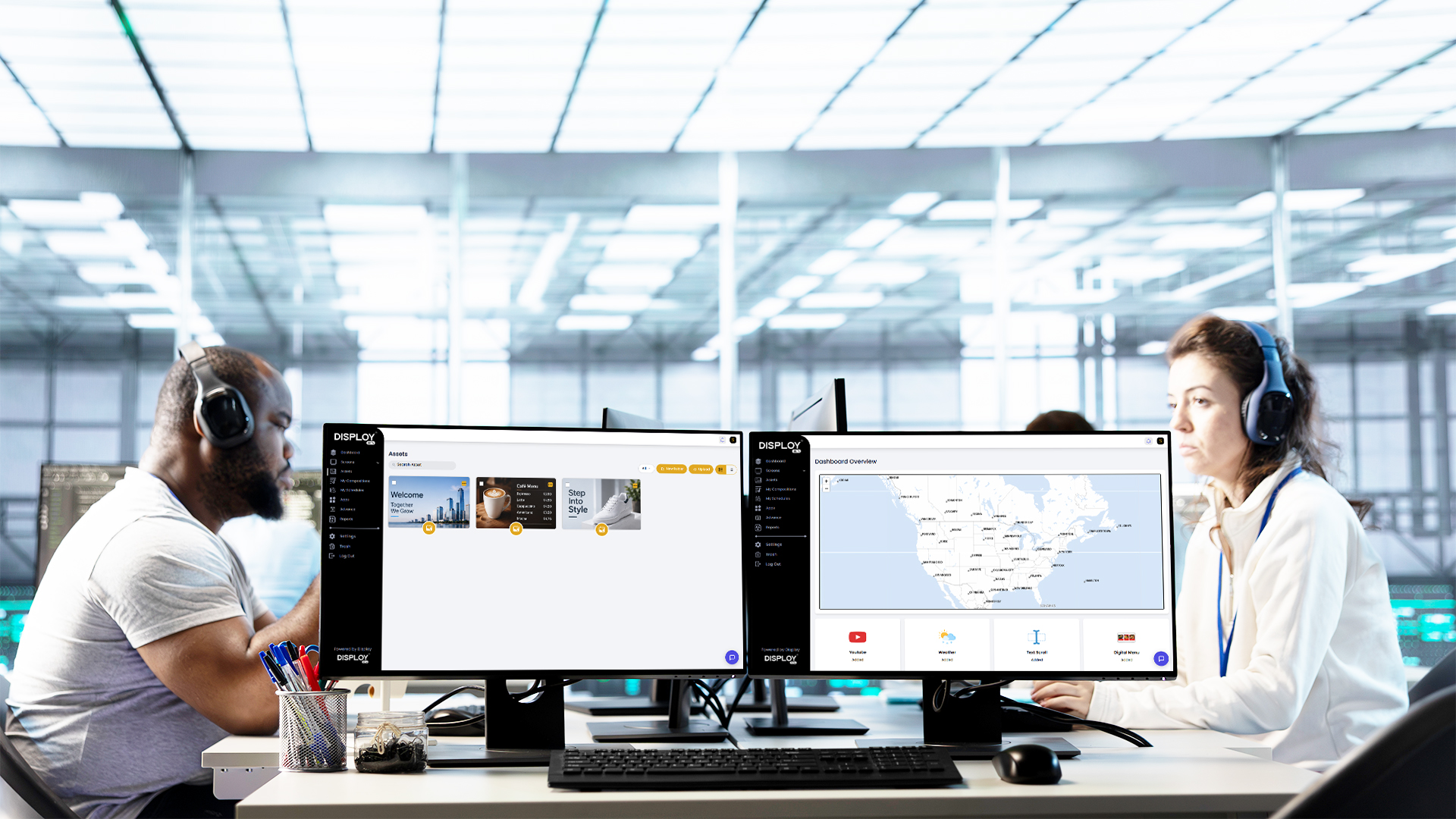
Central control. A big hub may have hundreds of screens spread across terminals, platforms, and entrances. Updating each one manually isn't realistic. You'll want one dashboard where your team can manage content, schedule it, and push urgent messages everywhere at once.
Readability. Screens should be easy to read from a distance and in different lighting. Think brightness, text size, contrast, and how long each message stays up. A beautiful design that nobody can read in two seconds isn’t doing its job.
Scalability. Hubs grow. New terminals open, new routes are added. Your system should be able to grow without starting from scratch.
Where Disploy Fits In
This is where a cloud-based platform makes life easier. With Disploy, teams can manage screens from one place, no matter how many locations or displays are involved. Teams can schedule content in advance, update it in real time, and send it to specific screens or groups of screens.
For a transit operator, that might mean showing platform updates on the concourse while pushing a service alert to every station on a line. For an airport, that could mean running wayfinding content near arrivals, promotions in the retail zone, and urgent notices wherever they're needed, all from the same dashboard.
Because it's cloud-based, there's no need to visit each screen to make a change. Your team can respond to delays or disruptions in moments, which is exactly what passengers expect.
Conclusion
People pass through airports and transit hubs when they're most rushed, and sometimes most anxious. They don't want to work hard to find information. They want it to be right there, clear and accurate.
That's what digital signage in airports and transit hubs delivers. It cuts confusion, eases the pressure on staff, supports safety, and gives passengers a smoother trip from start to finish. And when it's set up well, it can create new revenue opportunities.
If you're planning to upgrade how your hub talks to its passengers, start with the basics: live data, clear design, and one place to control it all. The rest builds on that.